
INVITED ARTIST 2026
Carolina Vélez
MEXICO
Binary Weaves: The Technological Decolonization of Carolina Vélez
During her residency at Lagos, Carolina Vélez has unfolded a liminal investigation where material tradition and virtual immateriality converge. Her point of departure is a fascinating structural encounter-translation: the exact analogy between the warp and weft of traditional textiles and the digital space governed by the ones and zeros of a screen. From this correspondence, Vélez inhabits a sublime conceptual space where code and weaving reveal themselves as kindred languages entrusted with structuring our visible realities.
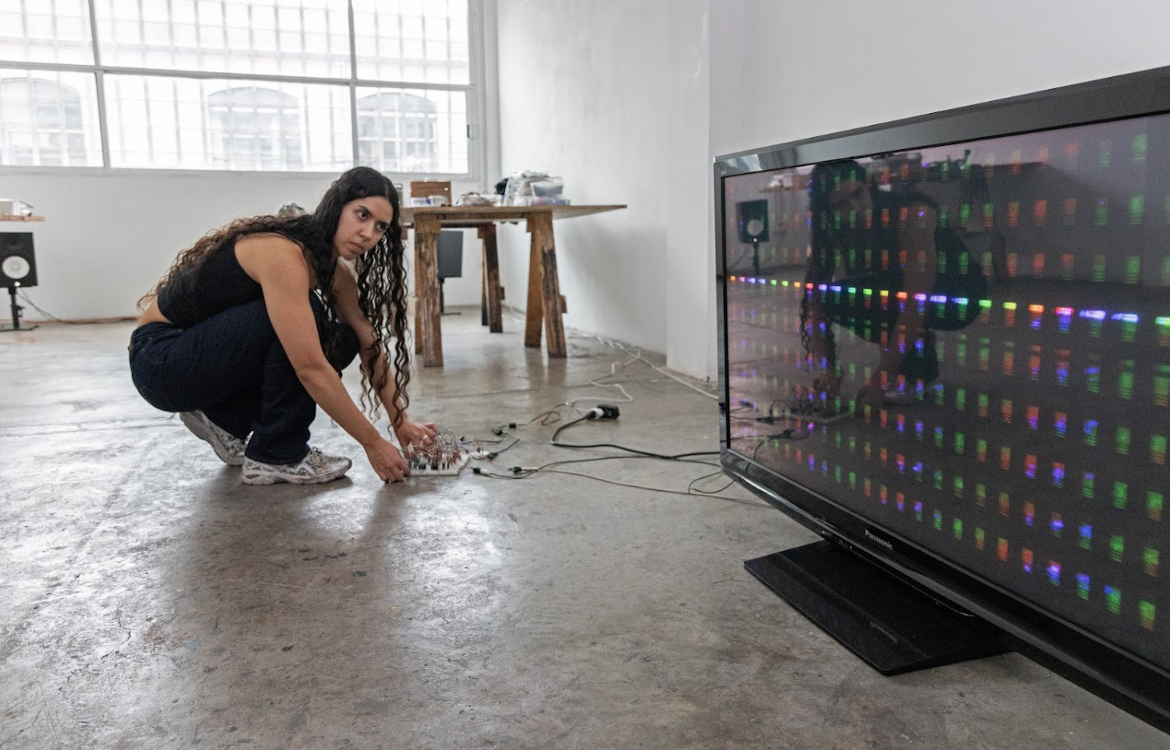
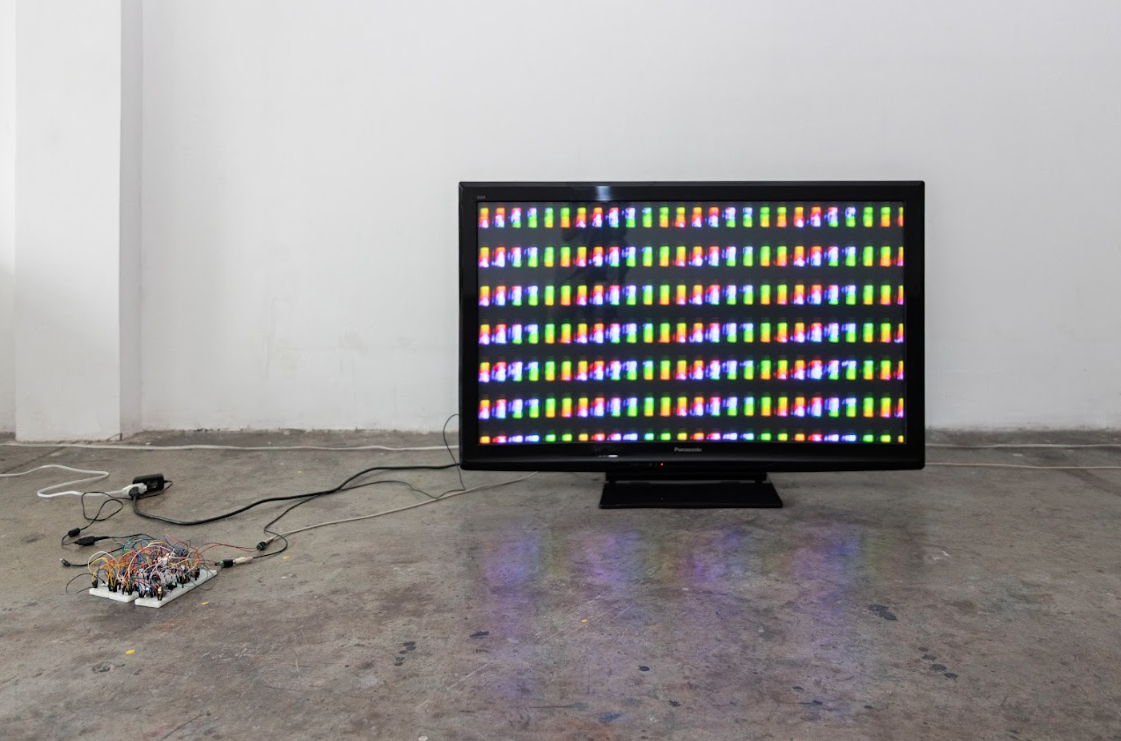
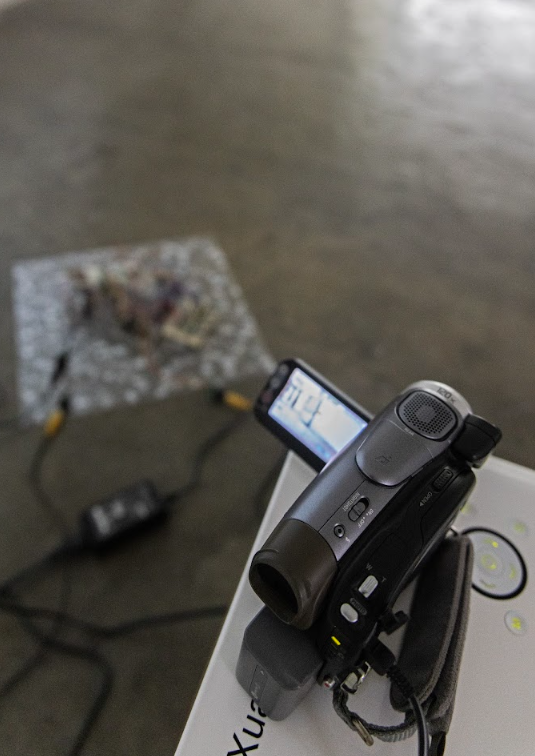
In this residency, the creative act becomes a performativity of knowledge — an exercise where theory turns into body and solder. Vélez does not limit herself to using technology as an aesthetic end, but deconstructs it from its physical foundations. Through the meticulous assembly of integrated circuits — using base electronic components such as analog switches and ceramic capacitors — the artist has built her own video synthesizer.
This device allows her to: directly and organically manipulate the aesthetic possibilities of digital construction; intervene in the flow of data to make visible the electrical pulse behind the image; and expose the invisible architecture that sustains our hyperconnected culture.
Carolina's artistic process is a putting-into-practice that makes evident the structure of the world we currently inhabit — a reality where the binary matrix is the foundational building block of our interactions. Taking Frantz Fanon's concepts of colonization as a critical axis, Vélez identifies how contemporary digital structures and black-box technologies inherit and perpetuate dynamics of domination, standardization, and epistemic control. By concealing their inner workings, these technologies impose themselves as unquestionable dogma. The artist's proposal involves opening these devices, hacking their logic, and democratizing their understanding in order to erode that hegemonic narrative.
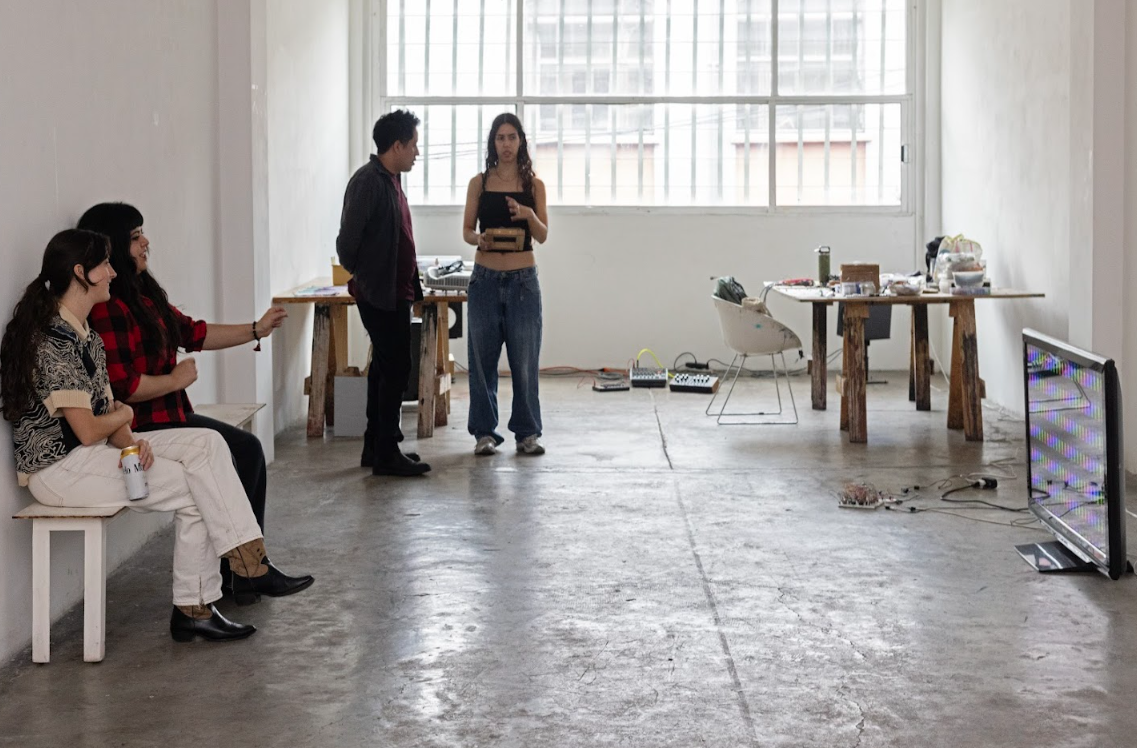
For her Open Studio, Carolina Vélez proposes an environmental display of these technological elements, transforming the space of Studio 5 at Lagos into a living, resonant installation. This environment does not seek mere passive contemplation, but aims to awaken in the viewer an awareness of the structures that condition us daily.
By laying bare the circuits and connecting them to the logic of communal weaving, the project seeks to activate our collective spirit. The ultimate goal of this experience is profoundly emancipatory: to dismantle the spirit of domination imposed by modern colonial technique and transform it — through artistic creation — into an expansive curiosity capable of reimagining the future of our tools.
olgaMargarita dávila
Chief curator
.