MEXICO CITY RESIDENT 2026
Gina Santos
MEXICO
The Warp of the Liminal: Gina Santos, a Ch'ixi Anatomy*
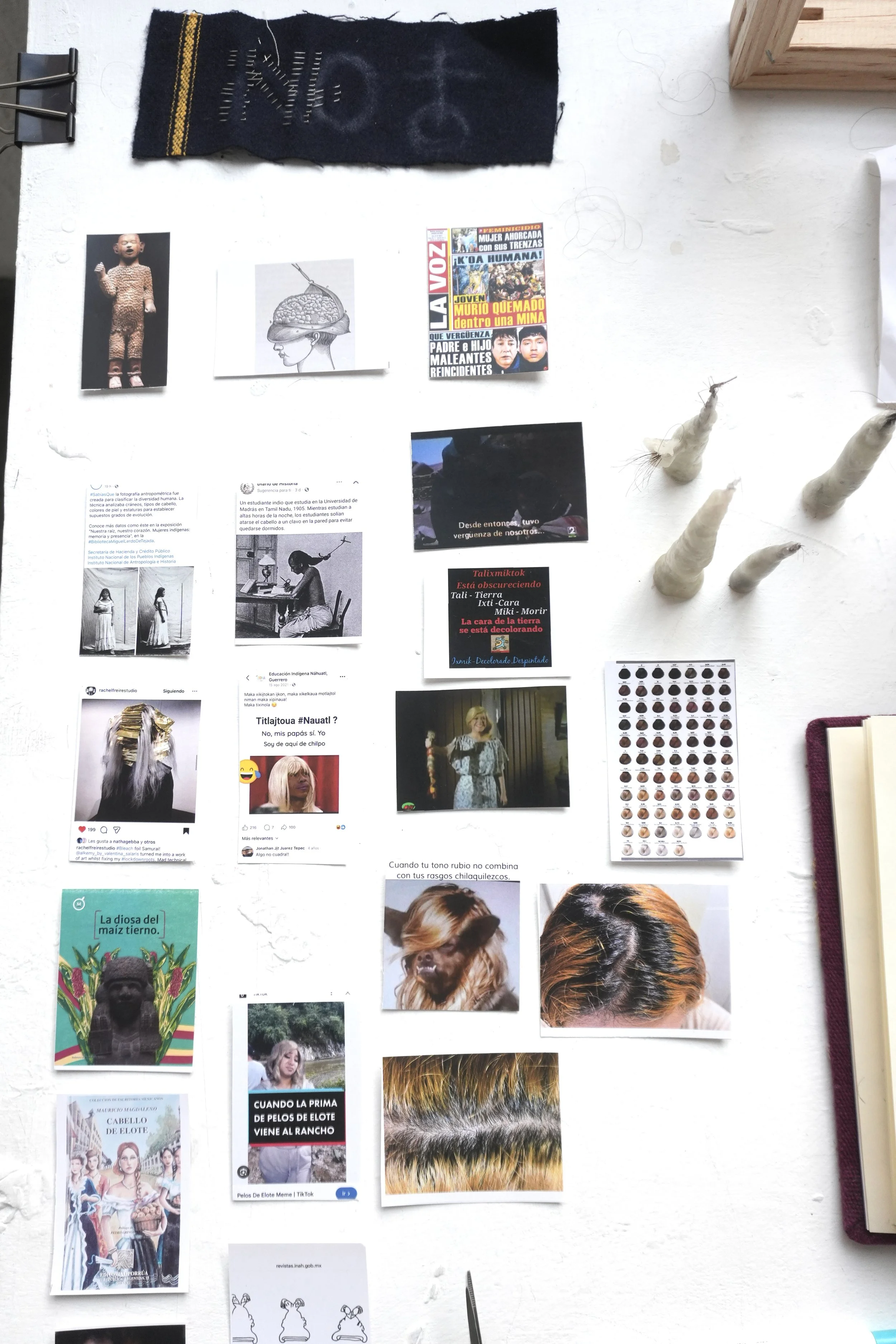
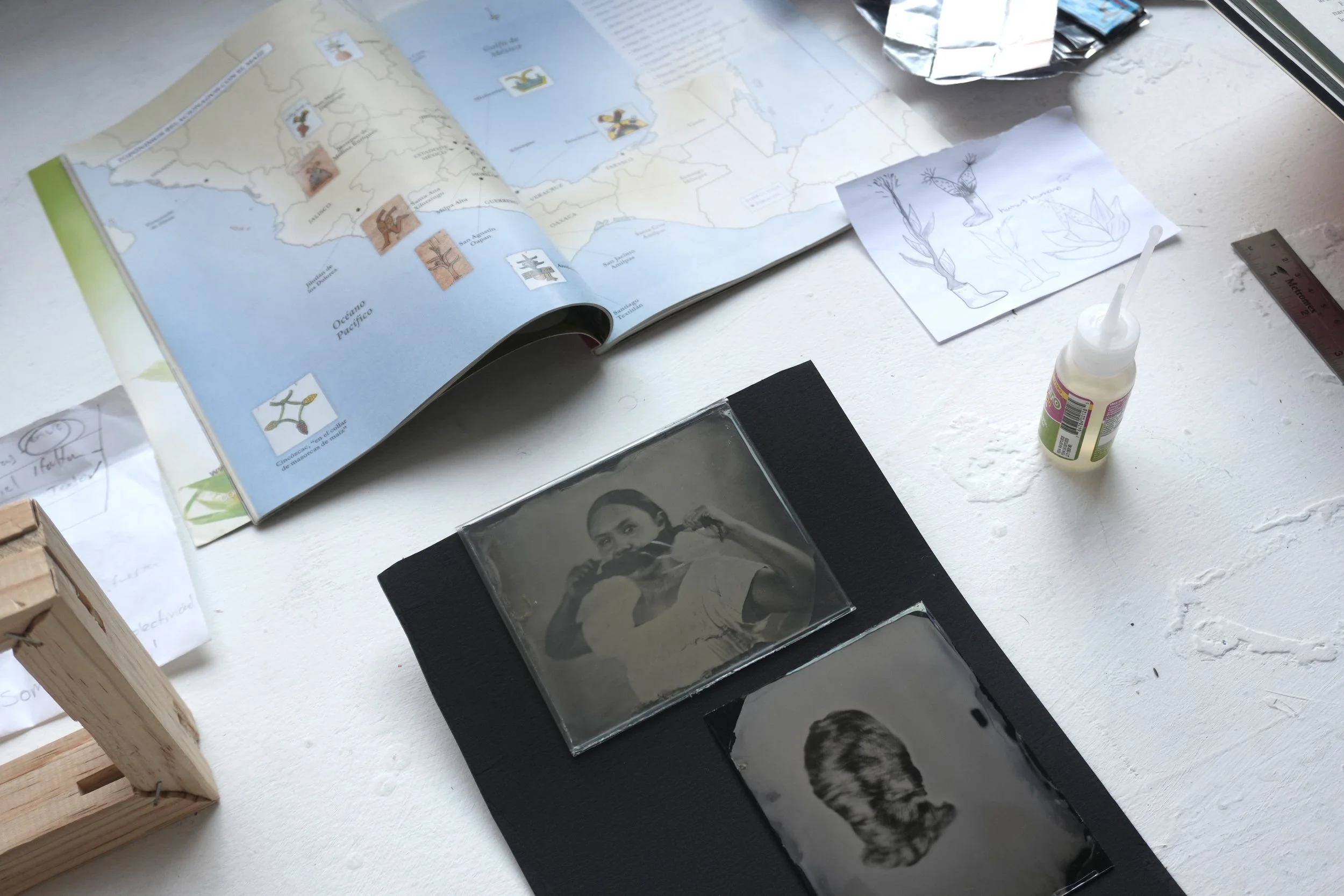
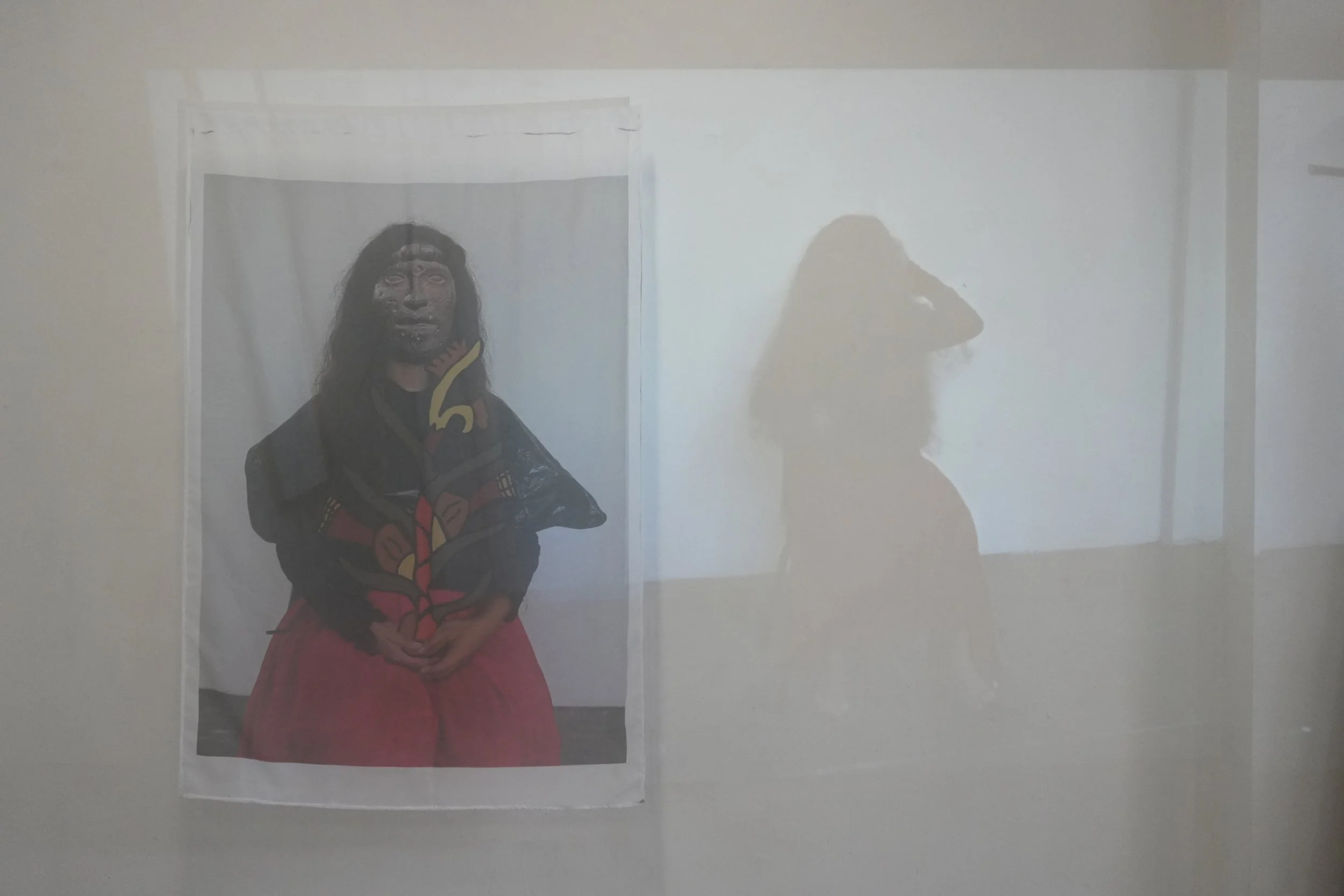
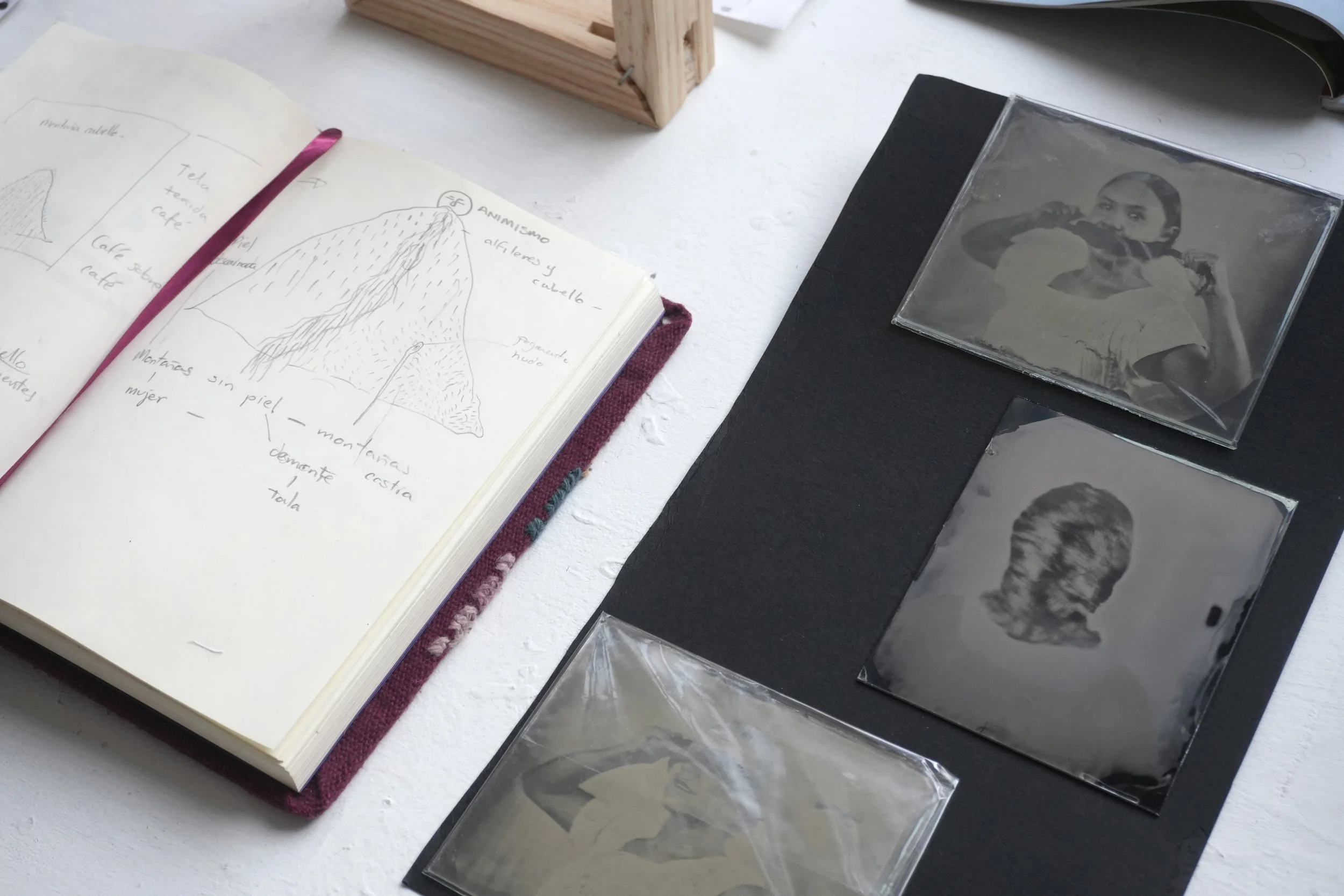
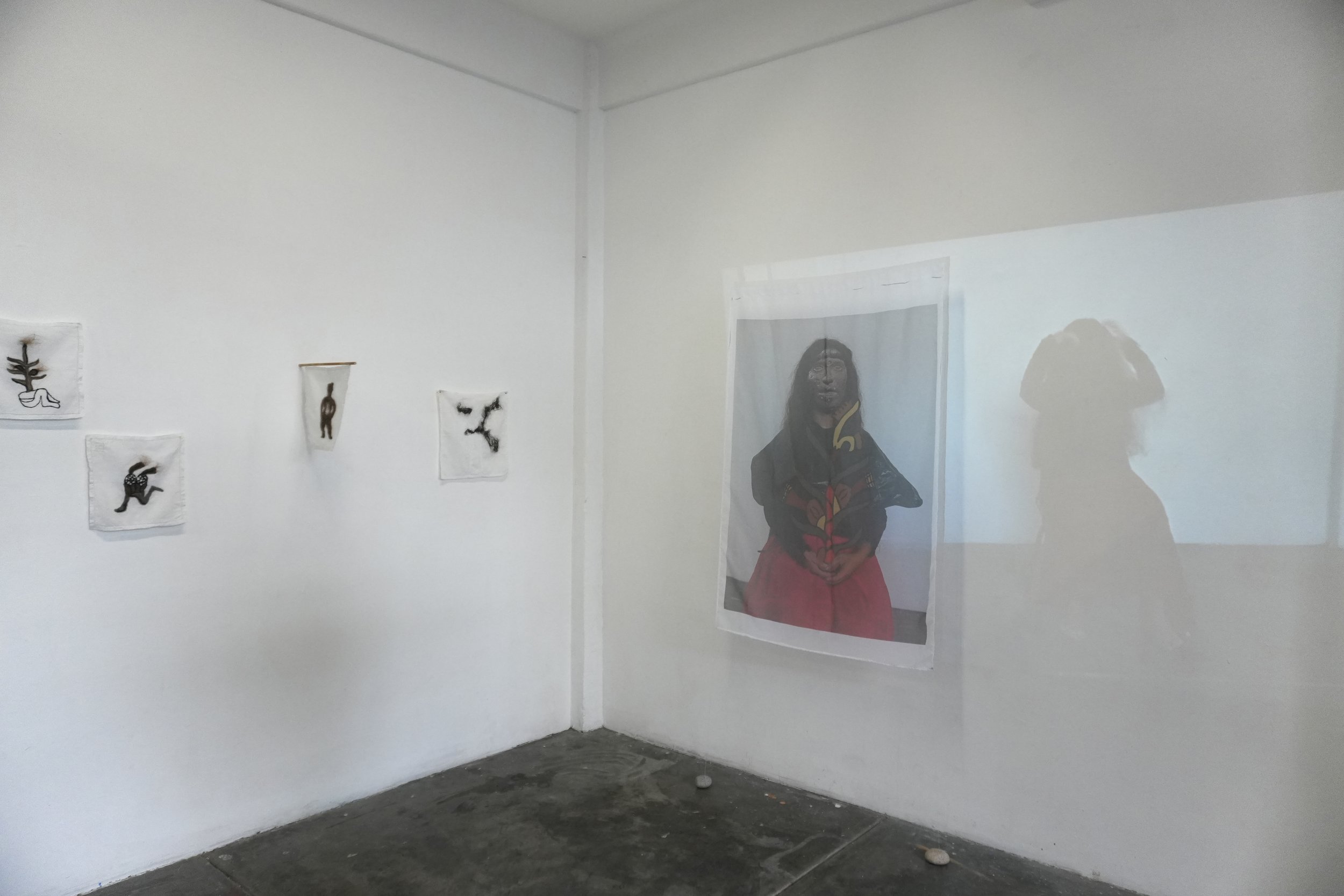
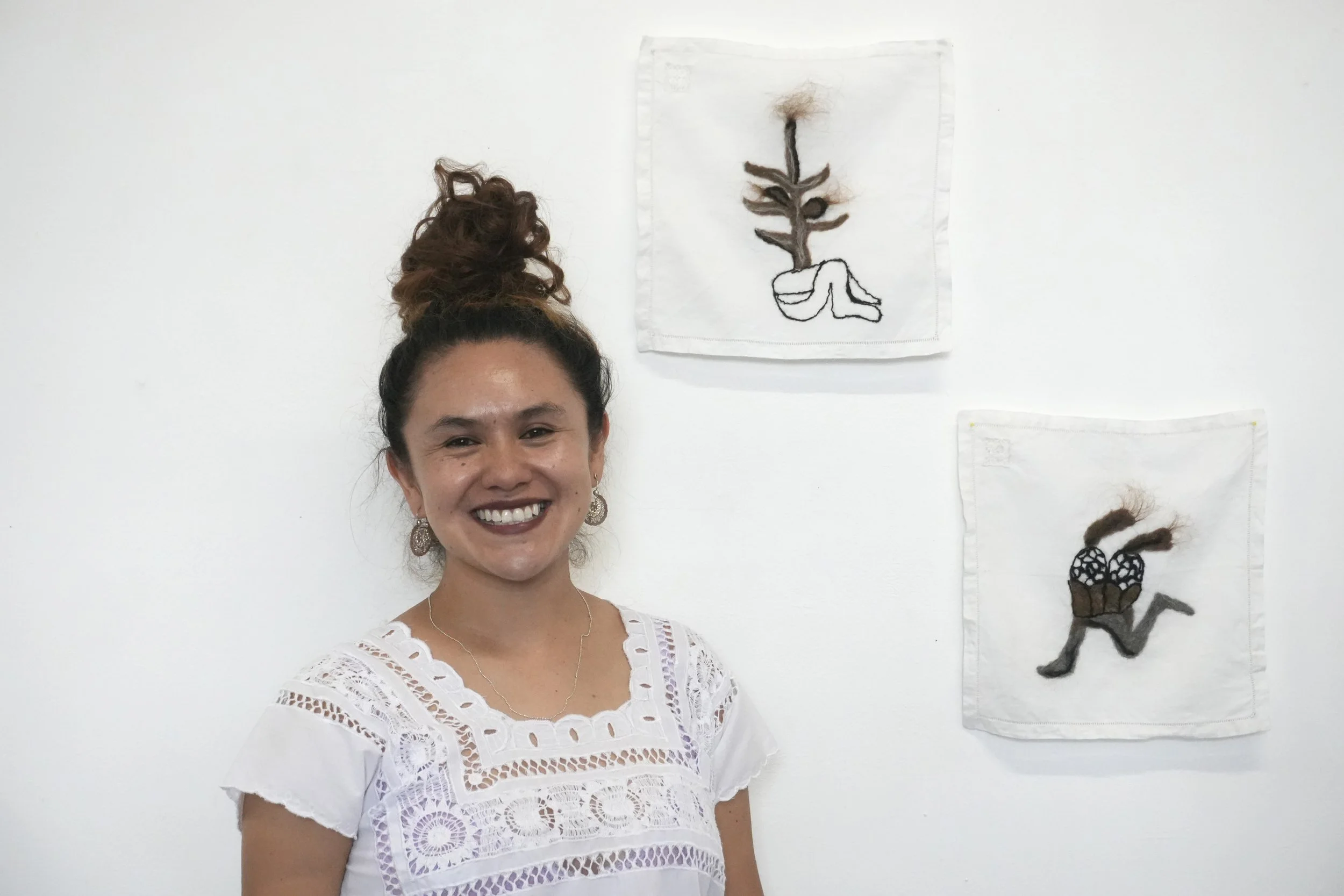
Within the framework of her residency at Lagos | estudios y residencias, the artist Gina Santos unfolds a visual and material investigation that is not merely observed, but embodied. Her work is an exercise in personal and political archaeology where identity is not a static destination, but a constant transit. Through a decolonial feminist lens, Gina explores the tension of inhabiting a liminal space: that threshold where the indigenous lineage of the Sierra de Puebla meets—and sometimes collides with—urban daily life in Nepantla*.
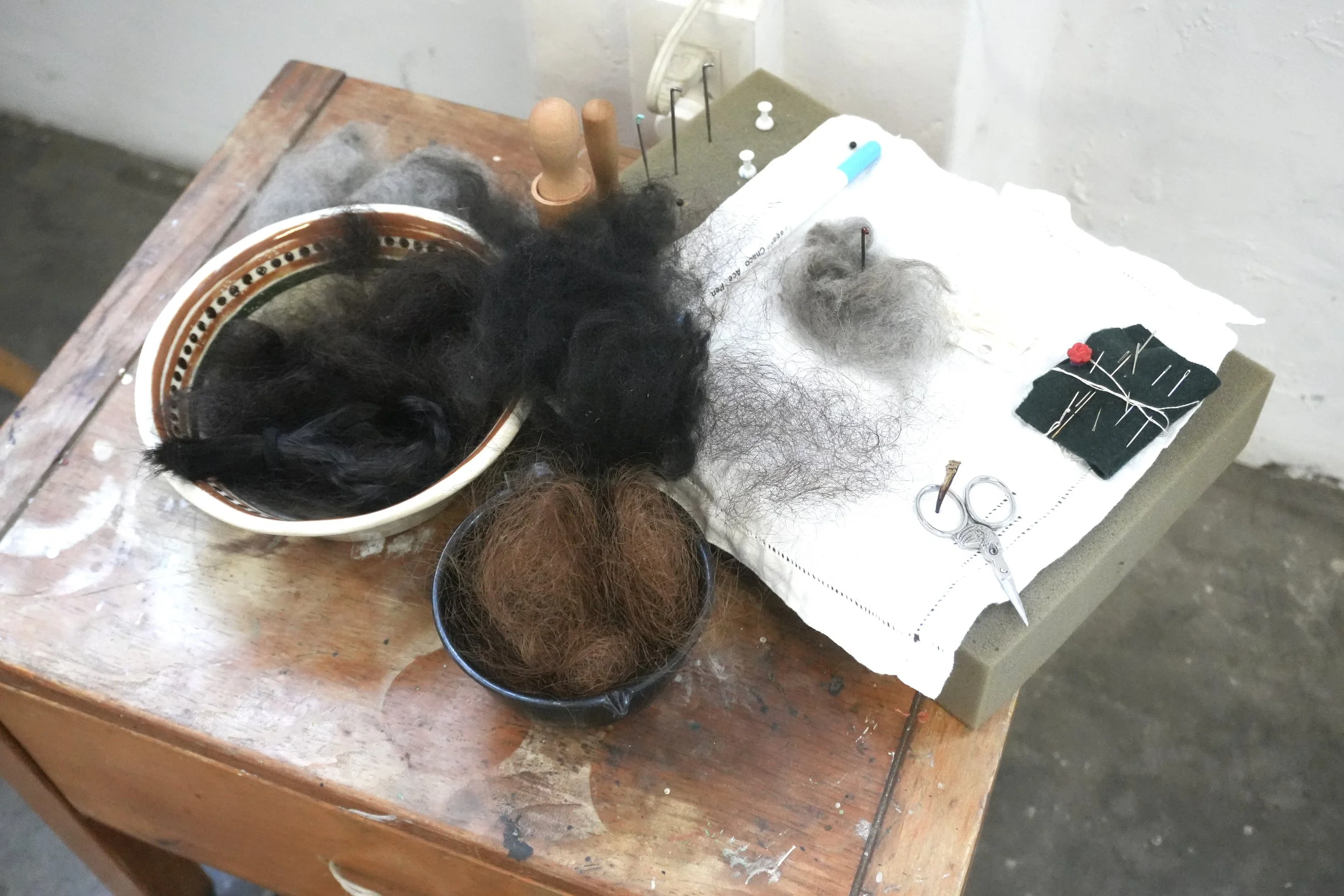
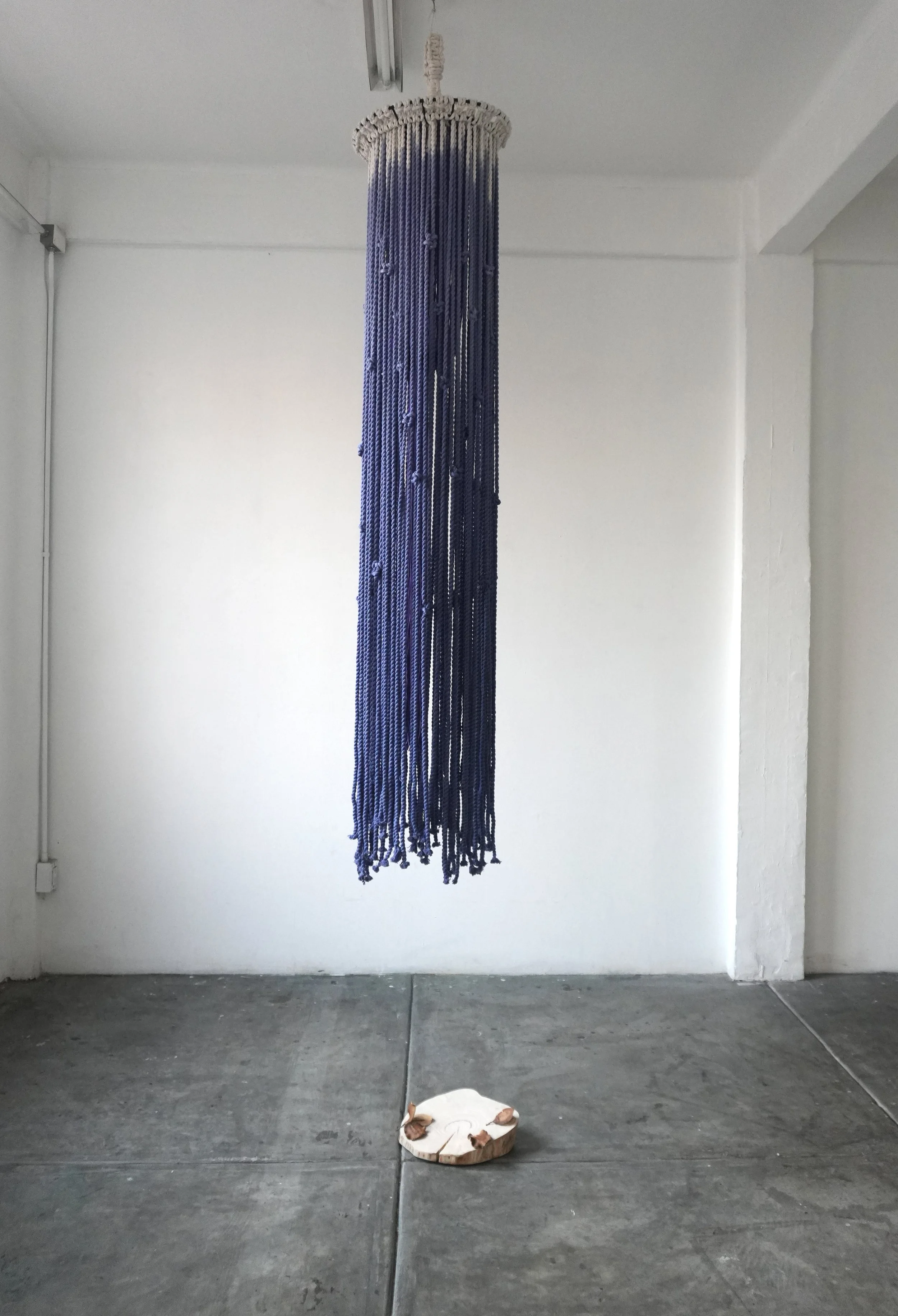
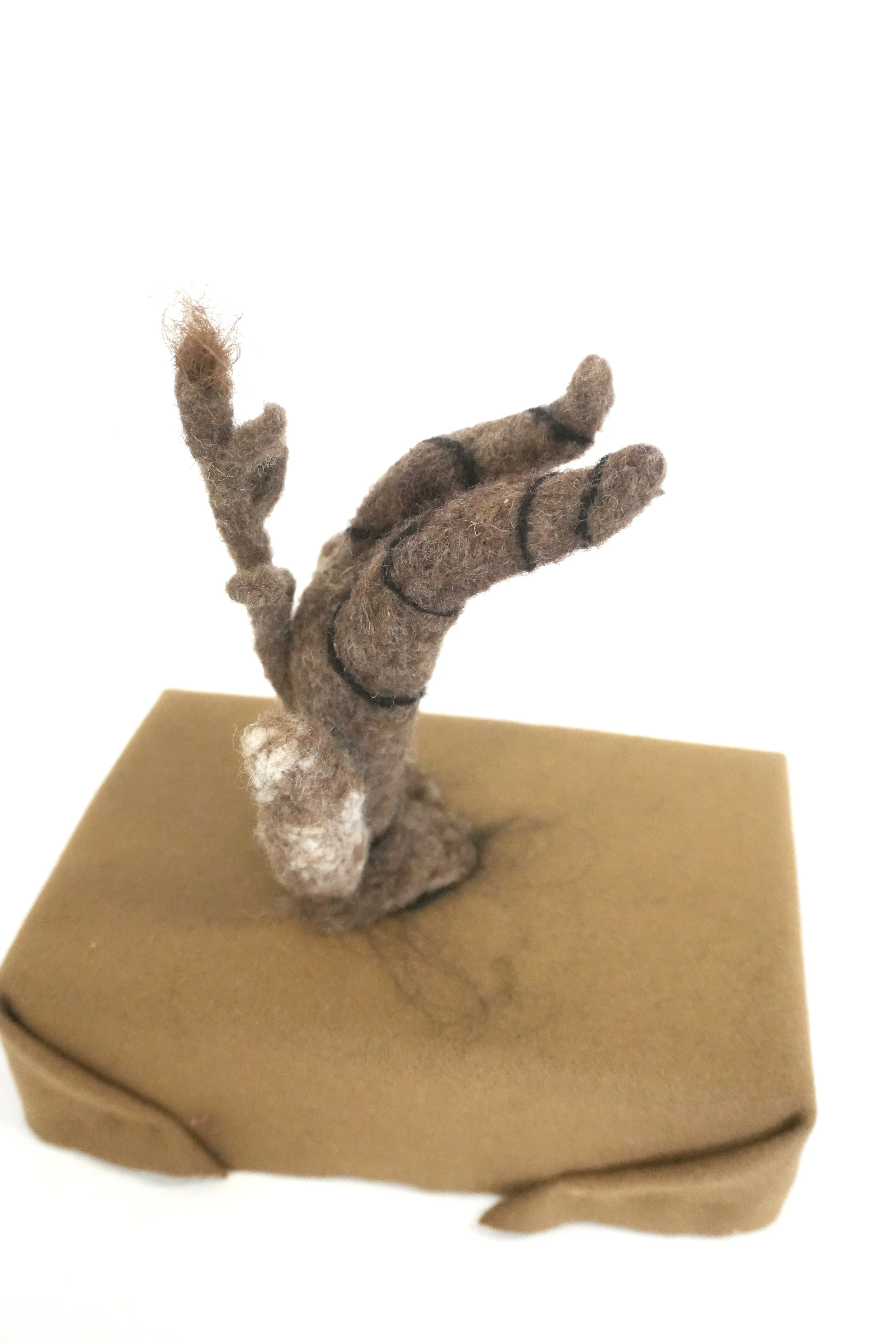
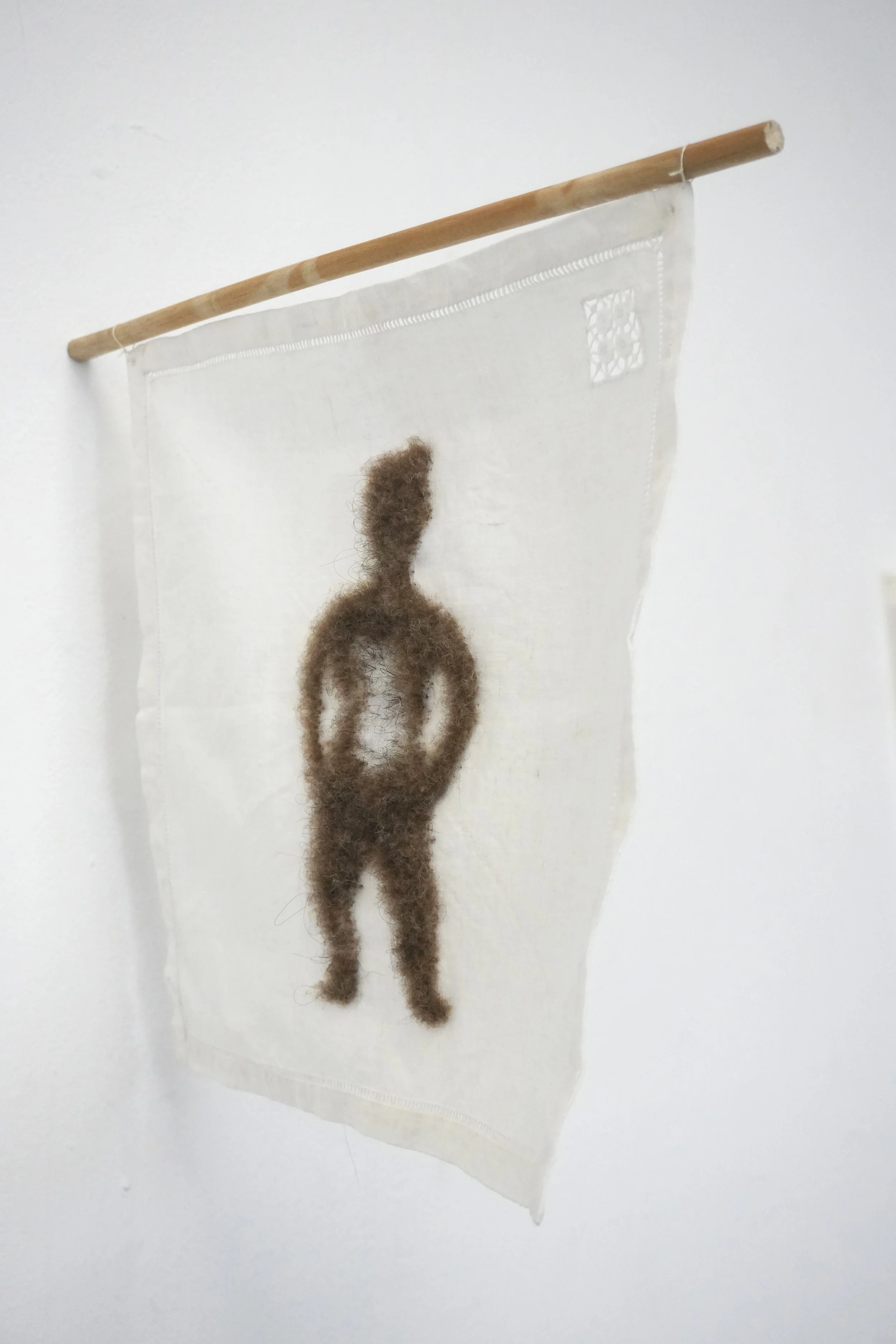
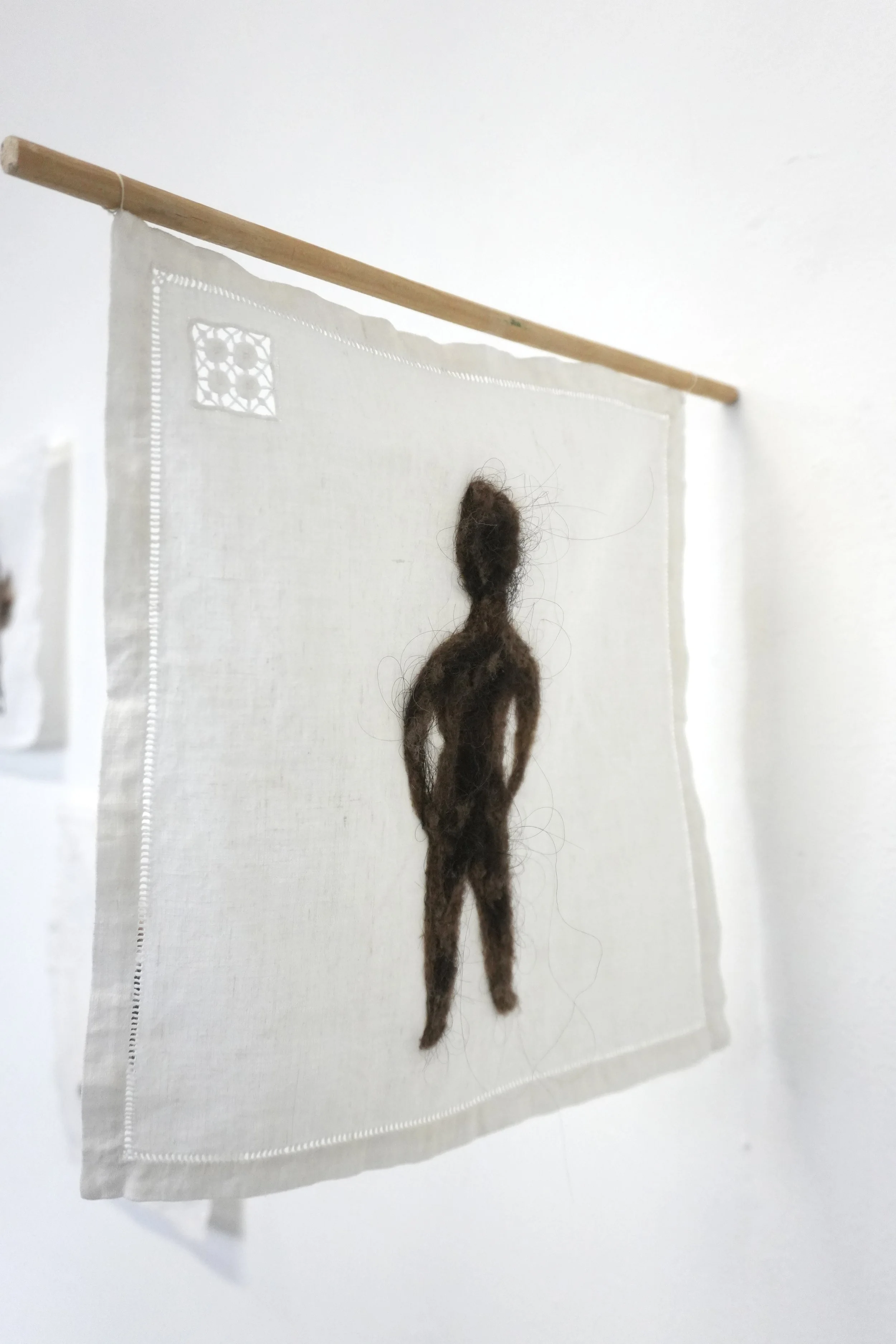
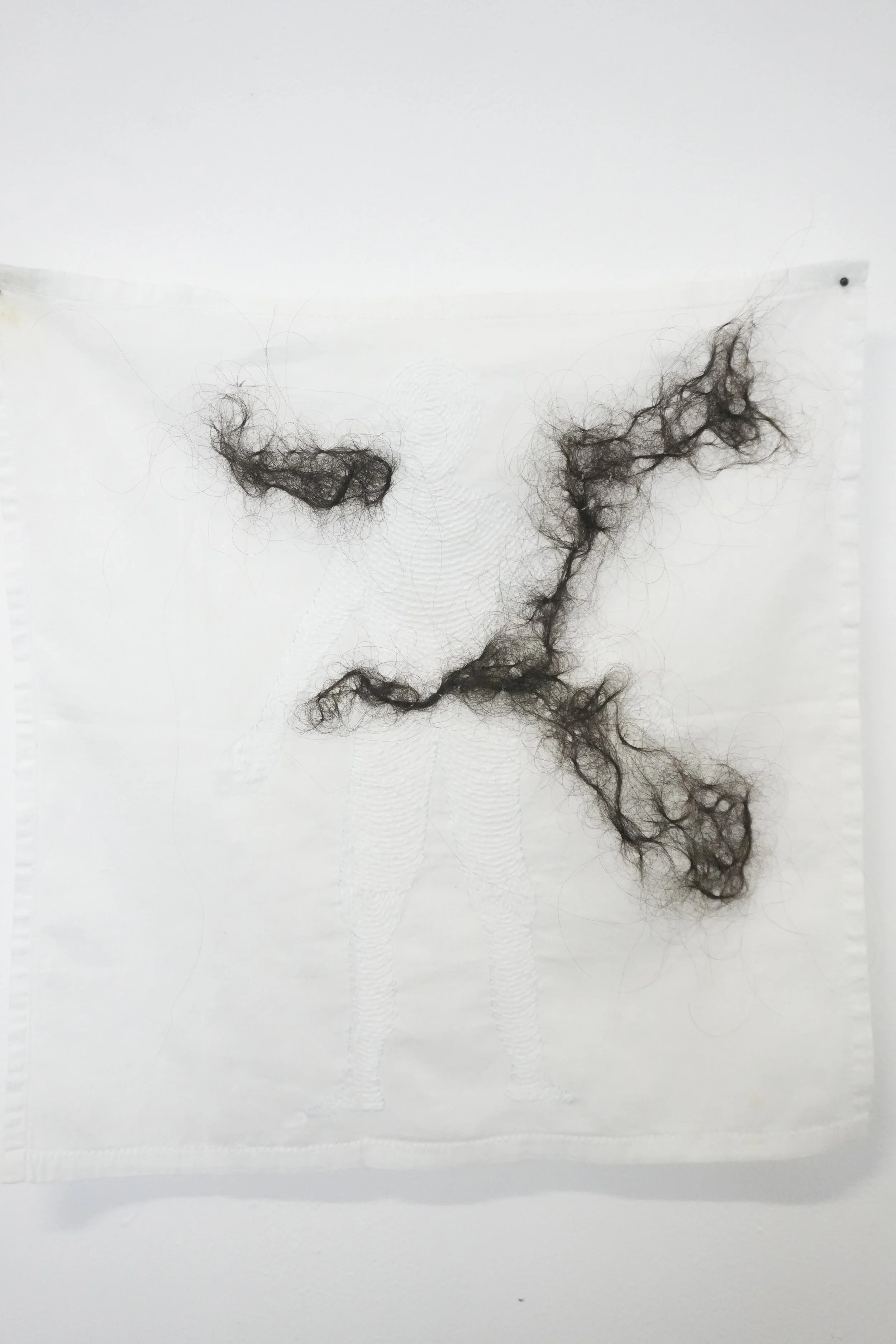
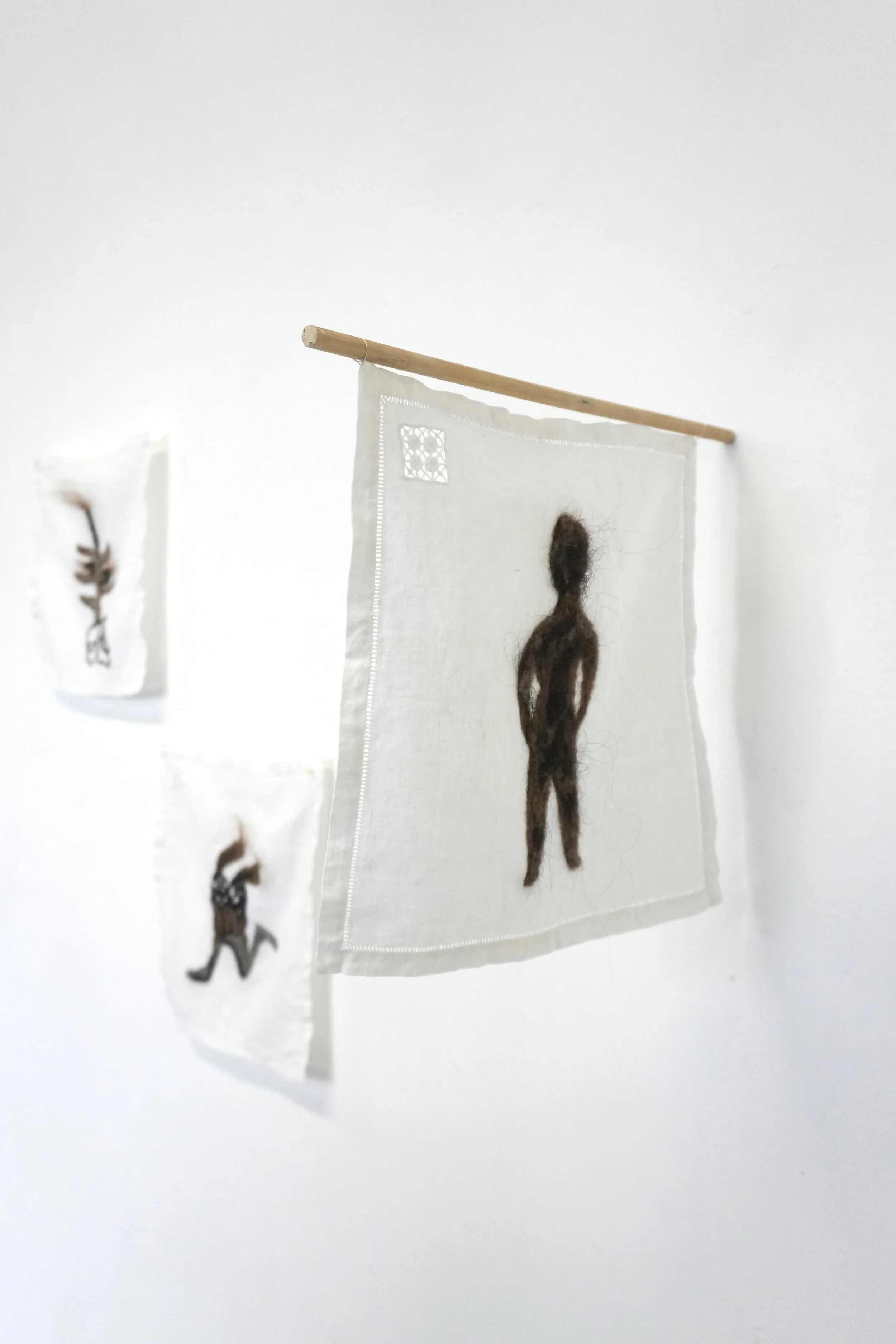
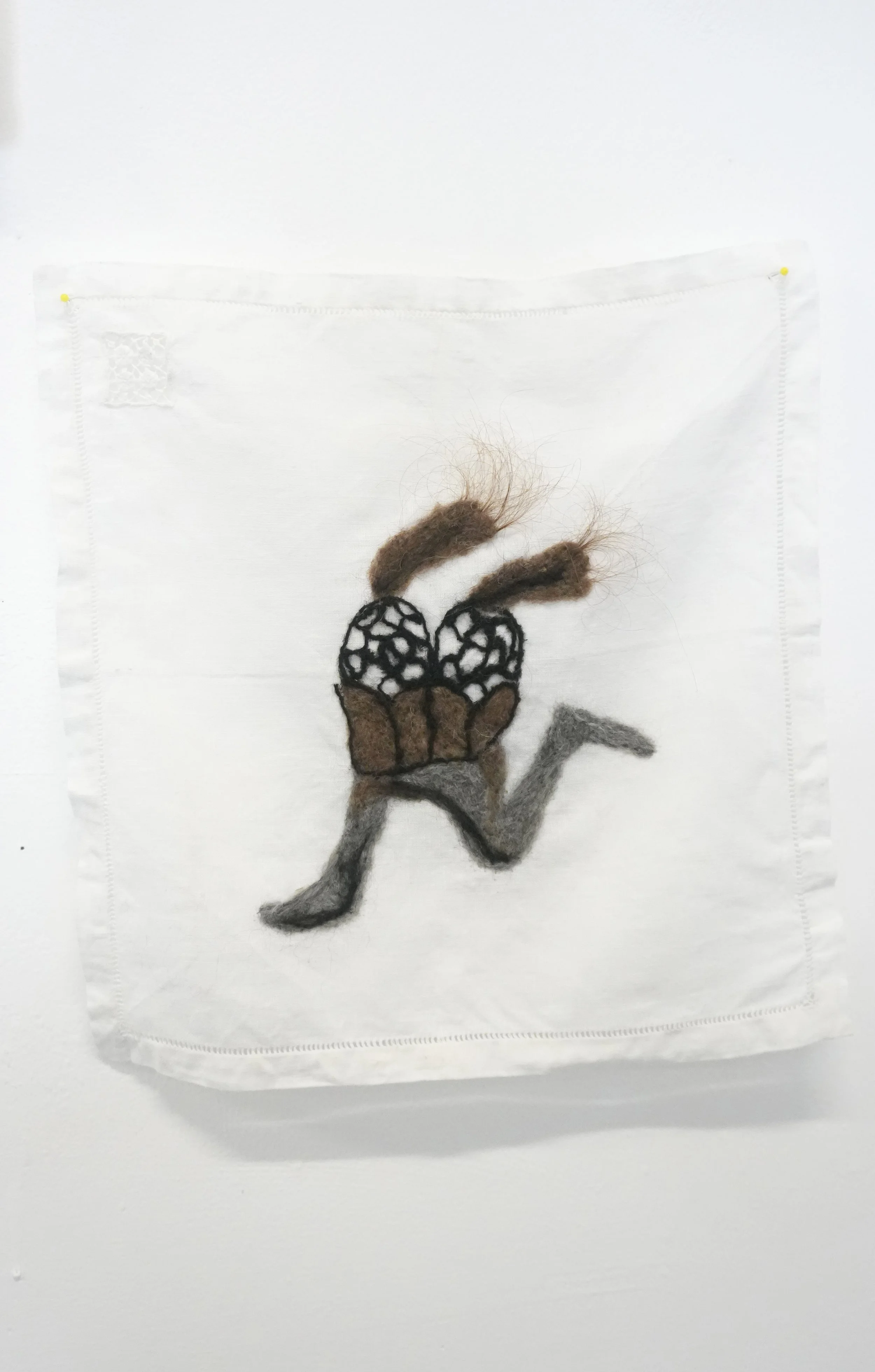
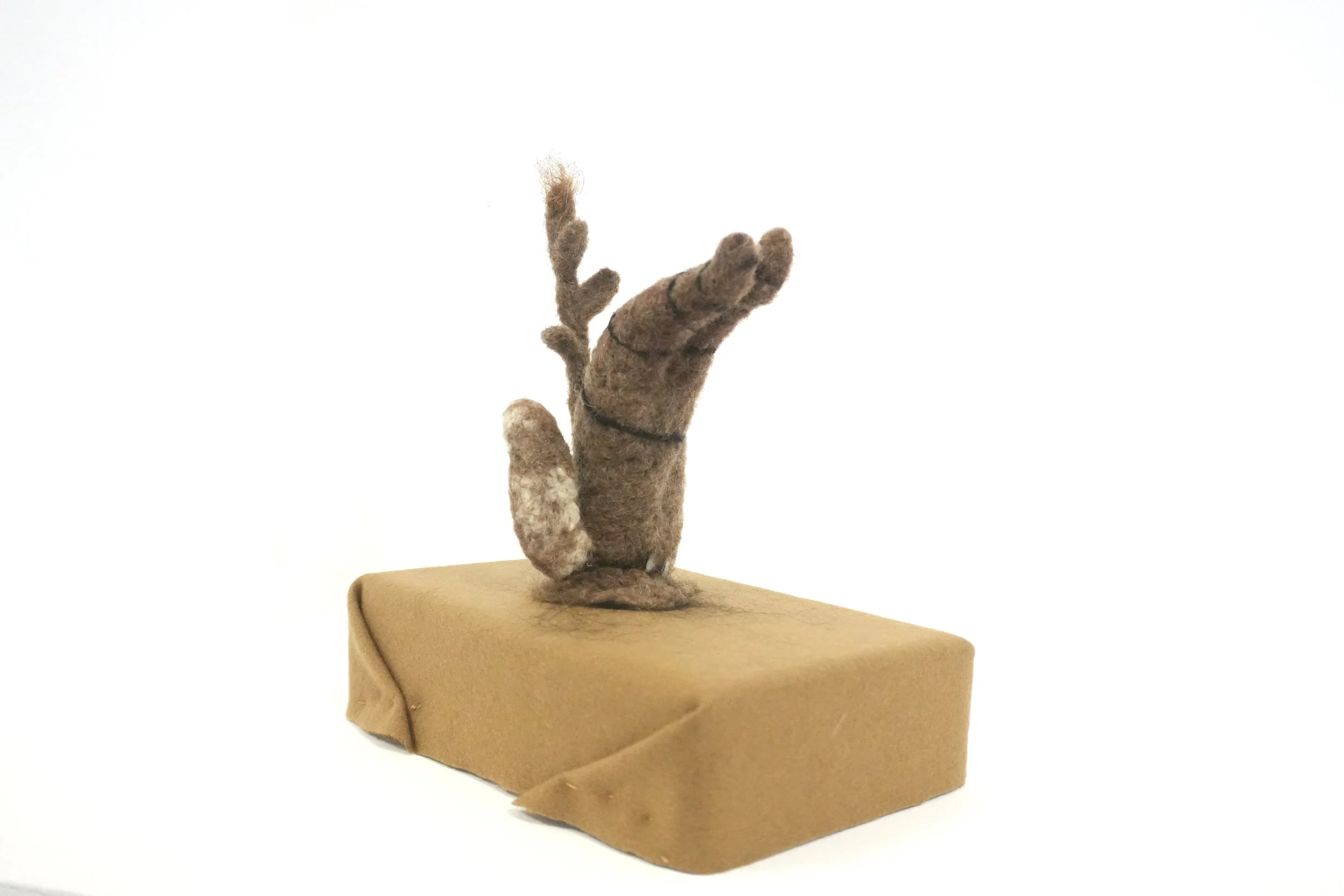
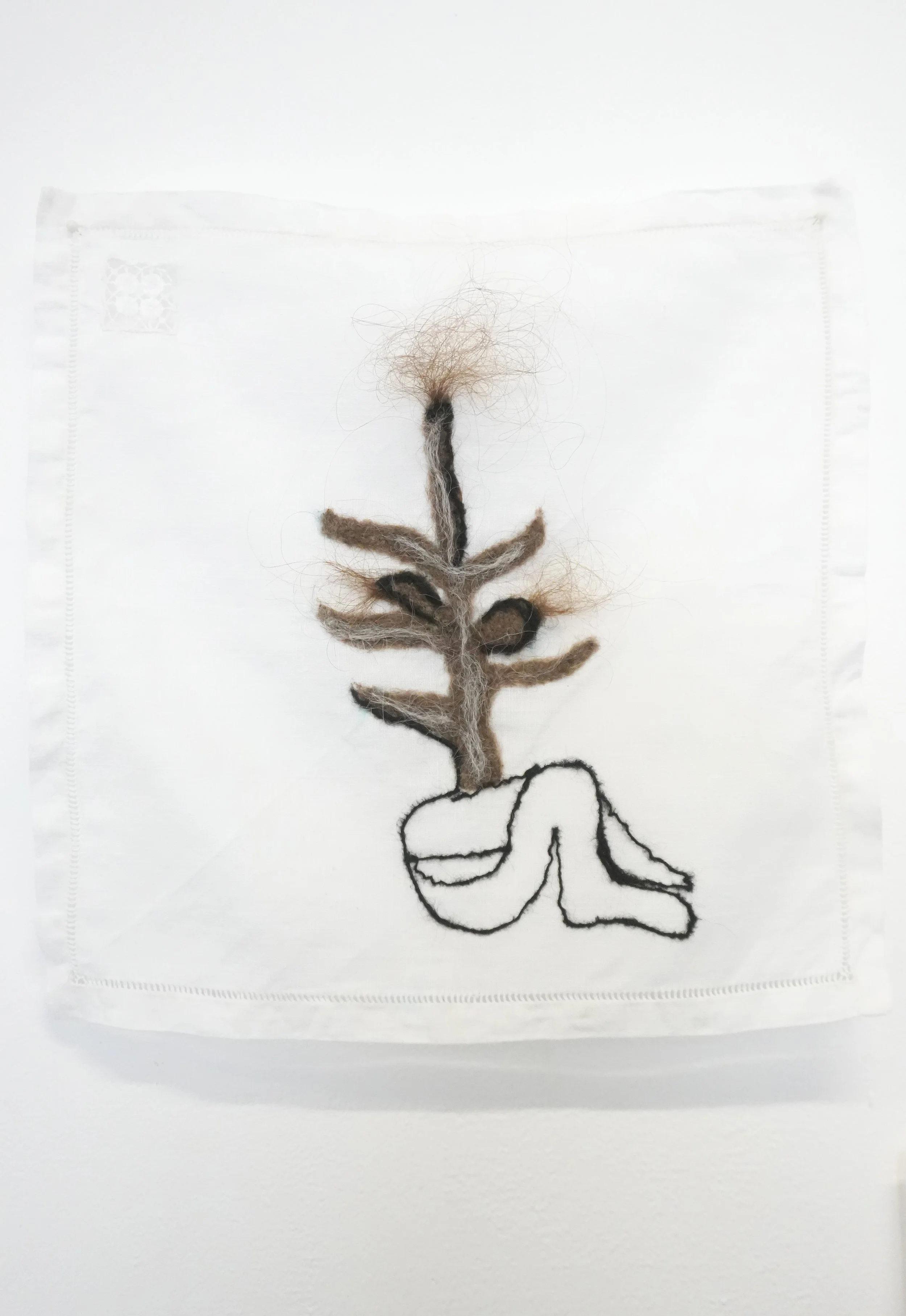
The driving axis of these pieces is, literally, an extension of the body: her hair. Santos transmutes it from biological waste into a sovereign fiber, utilizing it as raw material in two bodies of work that dialogue through contrast. In the first set, hair is transformed into felt upon handkerchiefs. Here, identity detaches itself from figurative detail to seek the power of the immaterial.
Through white and a dark brown tone, the pieces evoke energy waves and the terrestrial condition of our matter, respectively. We do not see a face, but rather the vibration of being; it is a representation of identity that is felt before it is understood—a cartography of what we are when we set aside the name and remain with the pulse.
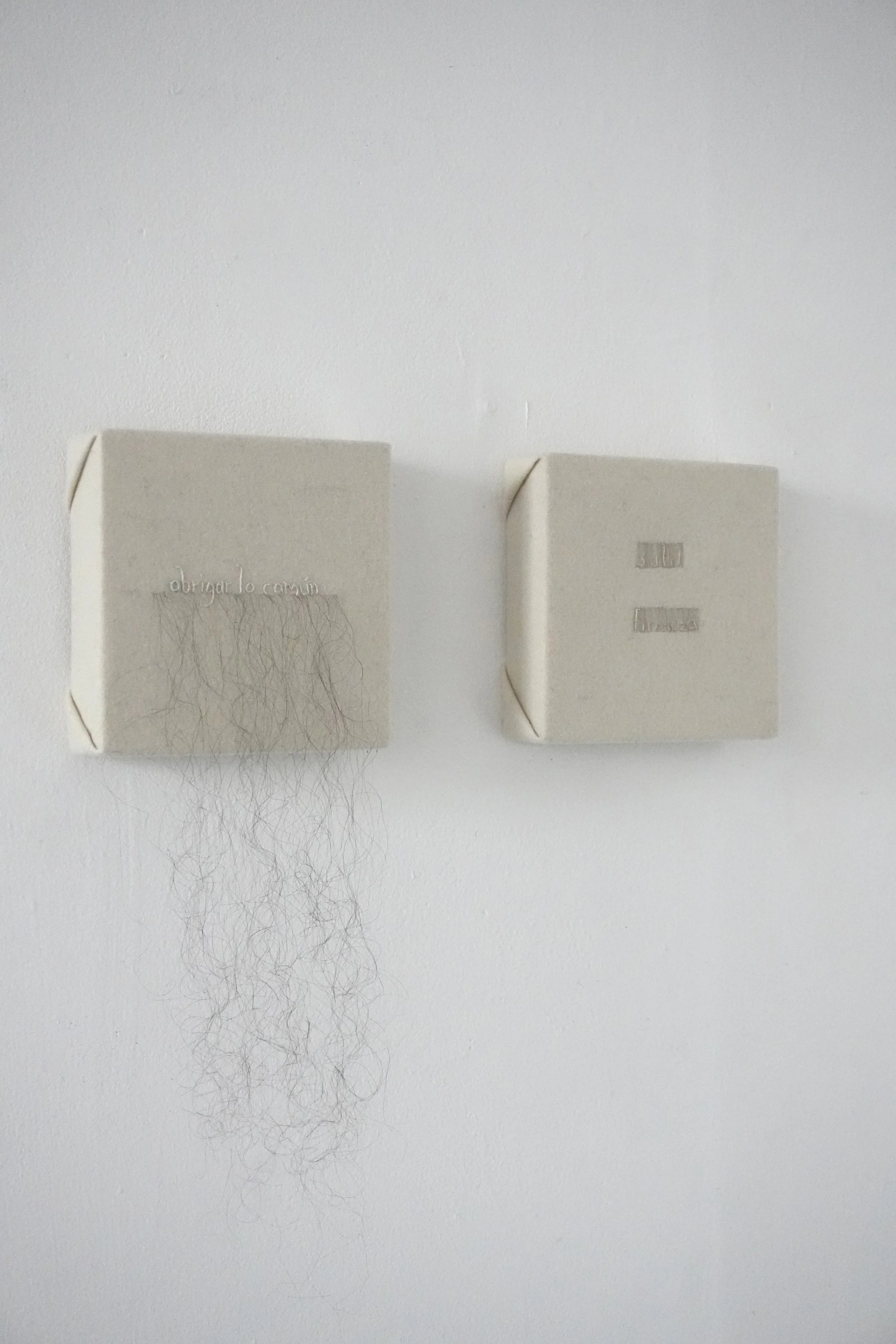
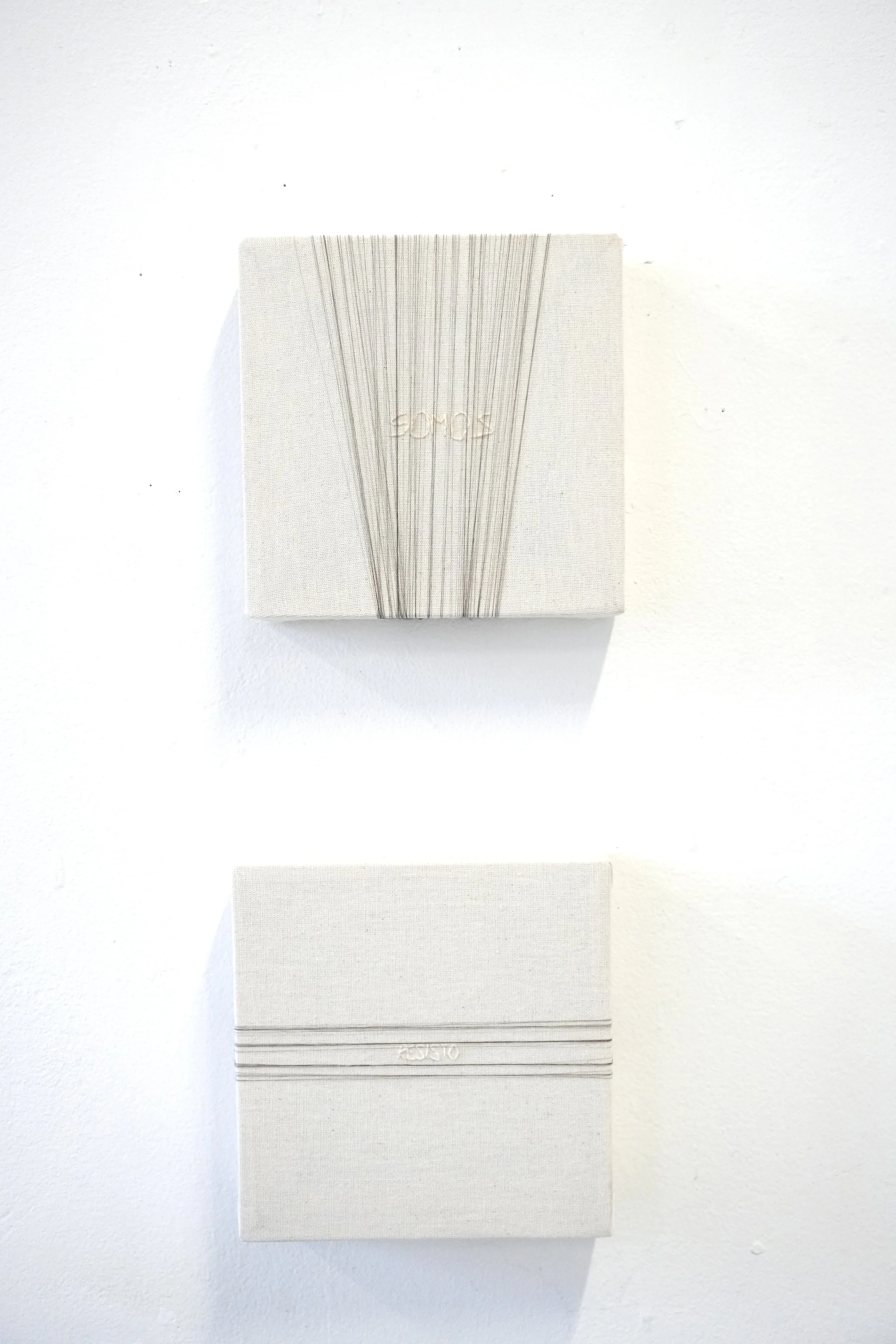
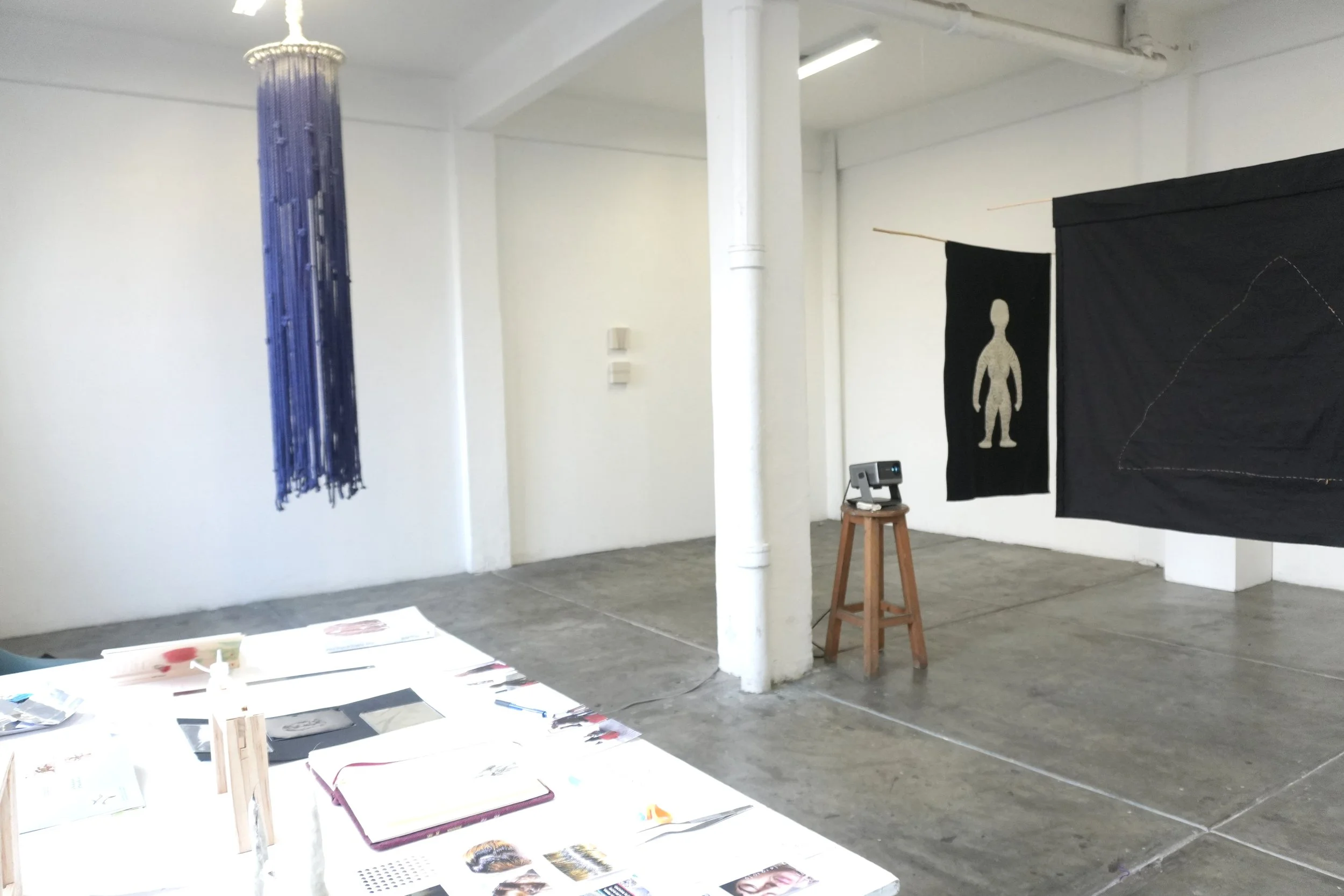
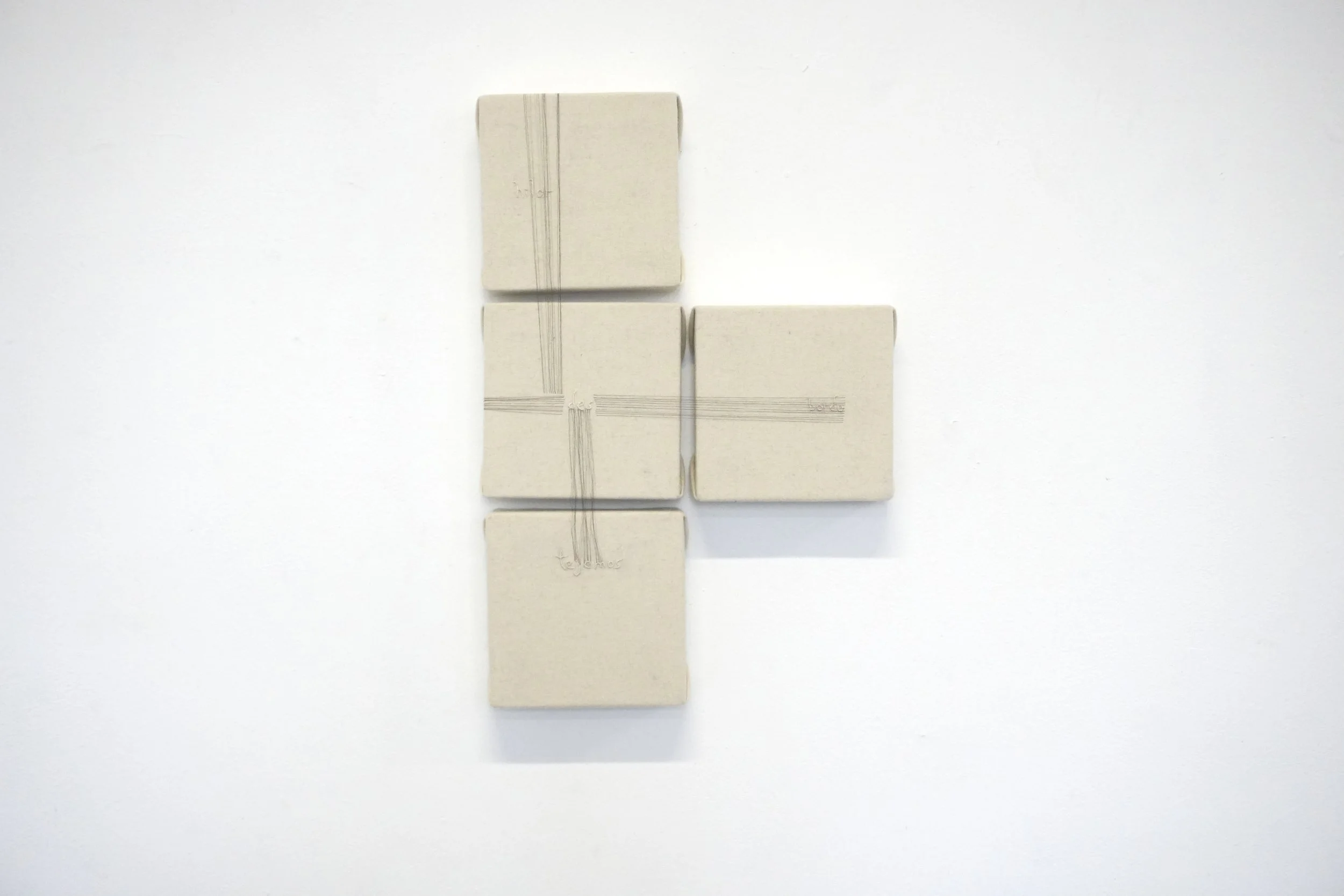
The second body of work consists of small-format white canvases and a central polyptych. In these pieces, the hair abandons its mass form to become thread and suture. In the individual pieces, we see two embroidery treatments: one above the fabric and one beneath. In the former, the phrase abrigar lo común (to shelter the common); in the latter, the words sutil (subtle) and firmeza (firmness). We clearly appreciate the connotations of world conceptions: the world above, of matter; and the world below, the light world. In the polyptych, each panel bears a word charged with connective intention: des (un-), hilar (spin), tejemos (we weave), and borda (embroiders). The conceptual brilliance lies in the formalization: the words are not simply embroidered; they are joined by hairs. This gesture materializes the complexity of the conscious, contemporary Mexican woman.
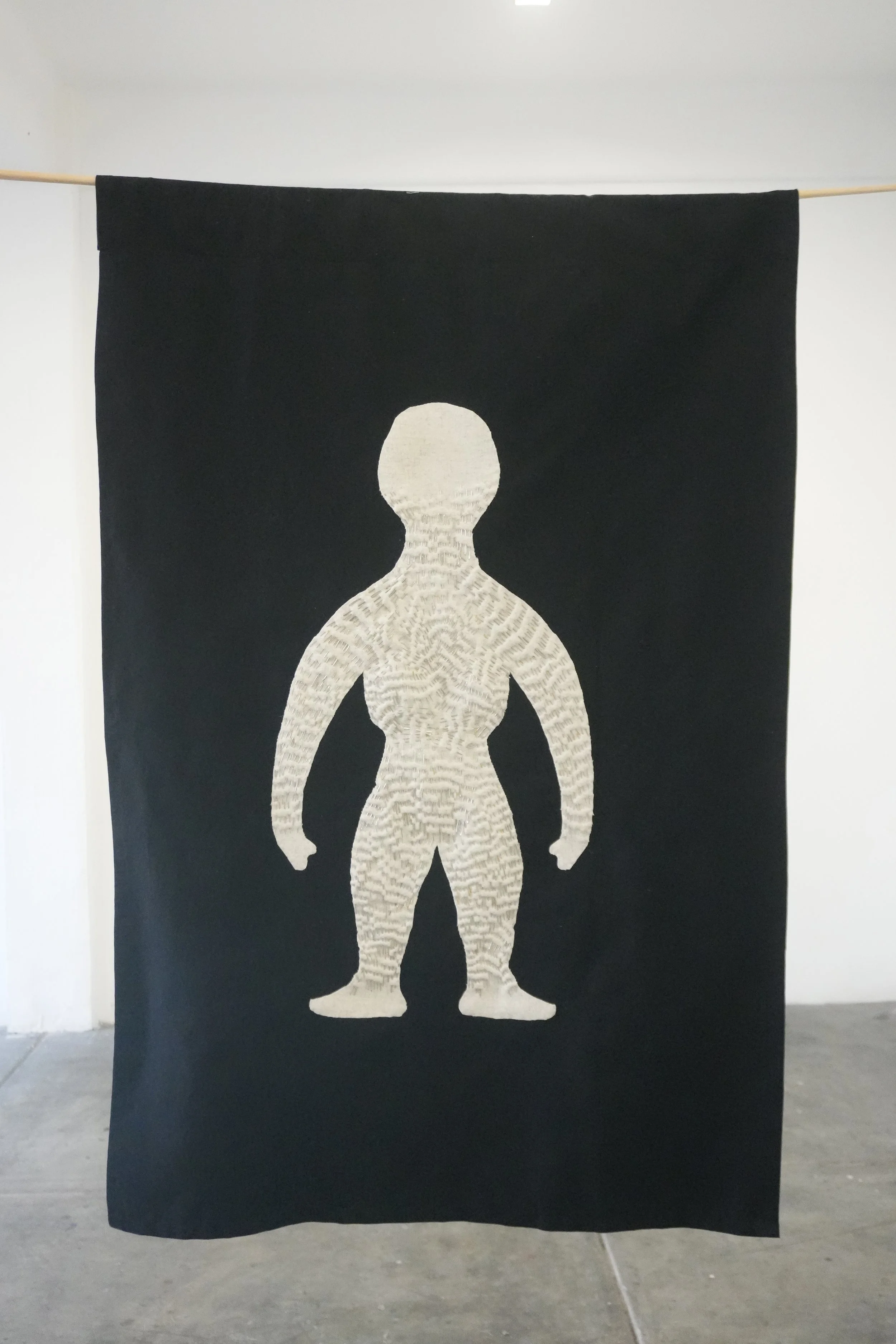
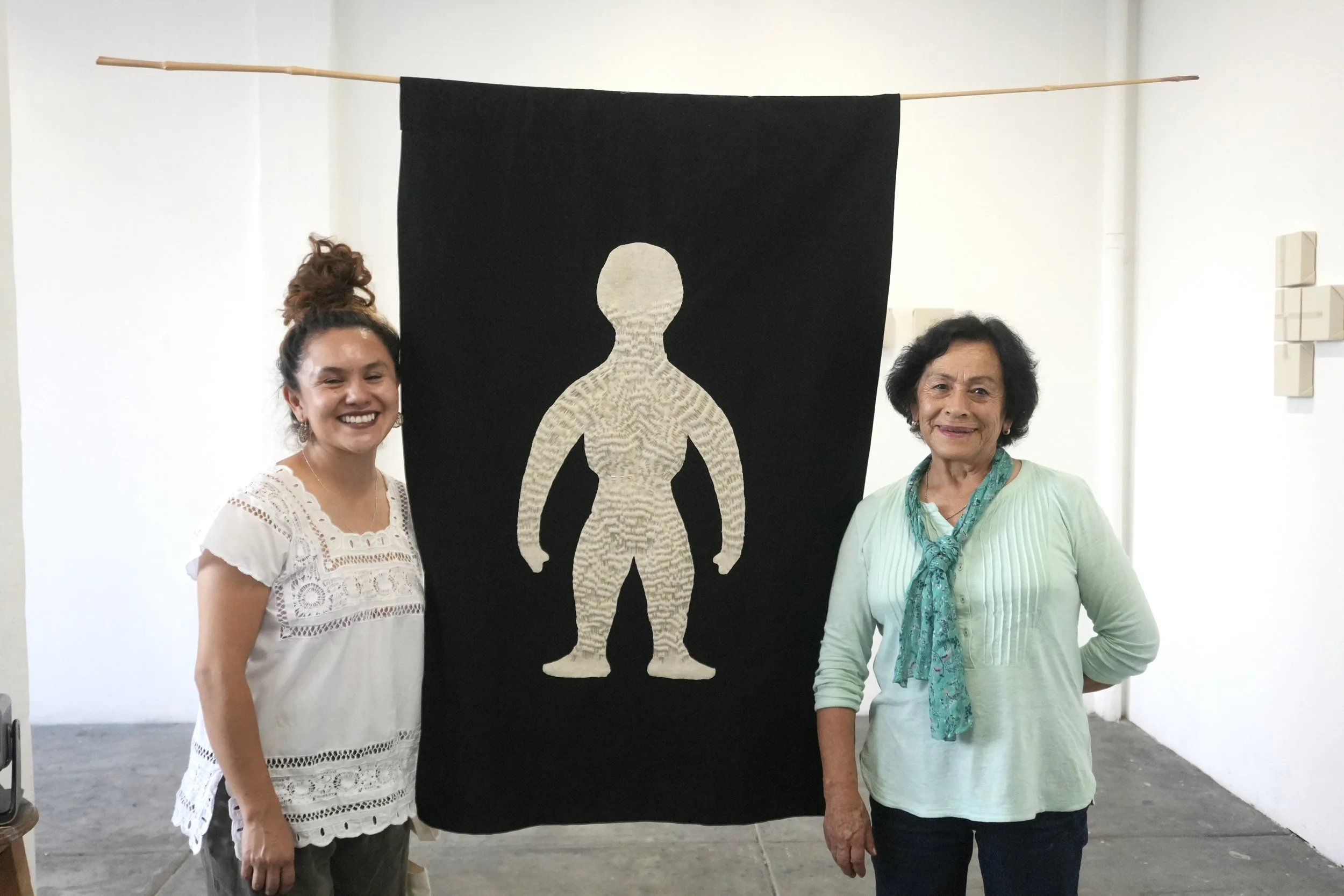
Gina reveals a livable contradiction: subtlety versus strength; fragility versus inseparable connection; and care as an act of resistance. These pieces serve as a reminder that our current identity is a textile that is constantly undone and re-spun to sustain us against the world. Closing these sets are two floating pieces—whose aesthetic recalls processional banners—made of black felt. In them, Gina synthesizes her two great preoccupations: the human body and the mountain (the territory). Most revealing in these pieces is the use of needles as a principle of line. The needle, which wounds but also binds, functions as a re-semantization of the fractures and pains of the latent cultural clash within kinship. By driving the needle in, Santos does not seek punishment, but creative articulation. It is a way of saying that although the origin may hurt or the transit may fracture, art possesses the capacity to darn the wound and convert it into a symbol.
Ultimately, Gina Santos' work at Lagos is a full expression of sensory-conceptual-spatial-manual skill. It is a work that does not only occupy textile matter, but reclaims the space necessary for a current identity—forged from gains in complexity and resilience—to stop being a shadow and become a radical presence.
olgaMargarita dávila
Chief curator
* Aymara word describing a gray color resulting from the juxtaposition of black and white dots, proposed by Silvia Rivera Cusicanqui.Term recovered from Nahuatl philosophy by Chicana thinker Gloria Anzaldúa, referring to inhabiting a bridge.