MEXICO CITY RESIDENT - 2026
Natalia García Clark
MÉXICO
El Retorno de la Caída,
Materialidad y Recursividad en la Obra de Natalia García Clark
La residencia de Natalia García Clark en lagos|estudios y residencias marca un punto de inflexión crítico en su investigación de largo aliento titulada Suspenso en loop. Lo que comenzó como un estudio sobre la repetición y el tropo cinematográfico de la mujer vulnerable, ha evolucionado en este espacio hacia una sofisticada objetualización de la imagen, donde la teoría cede paso a la materia y el soporte artístico se convierte en una herramienta de liberación política y estética.
La Mecánica de la Recursividad
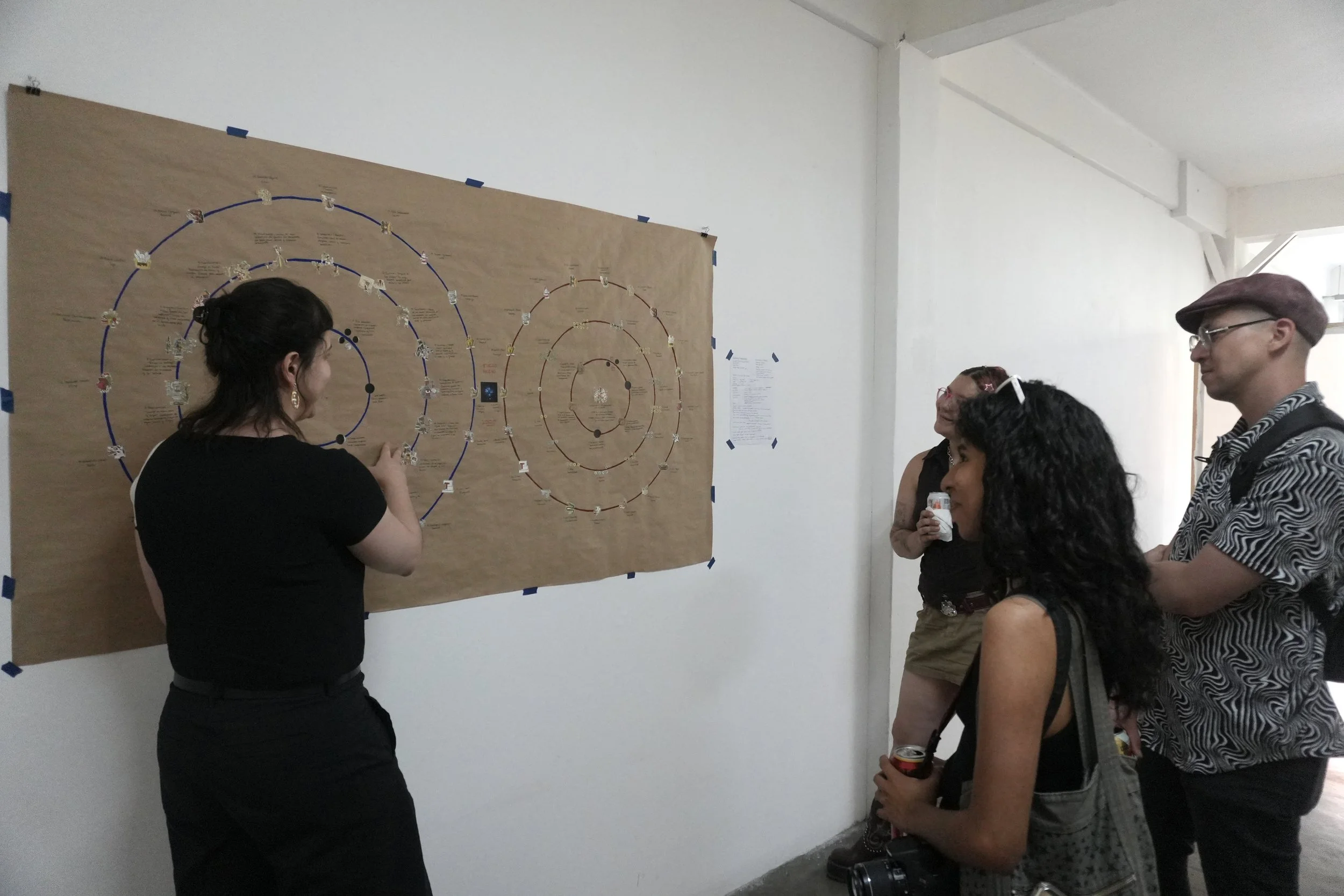
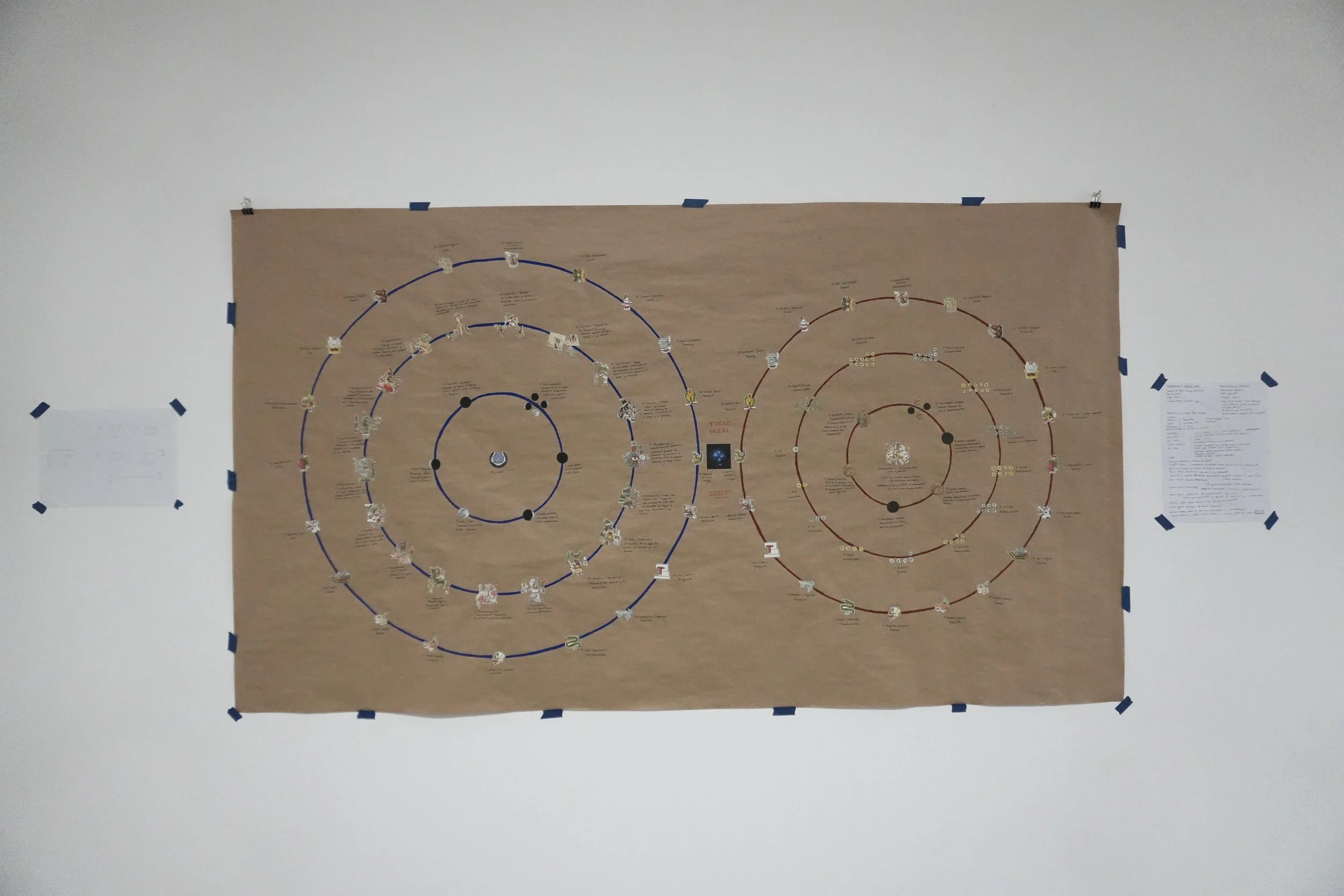
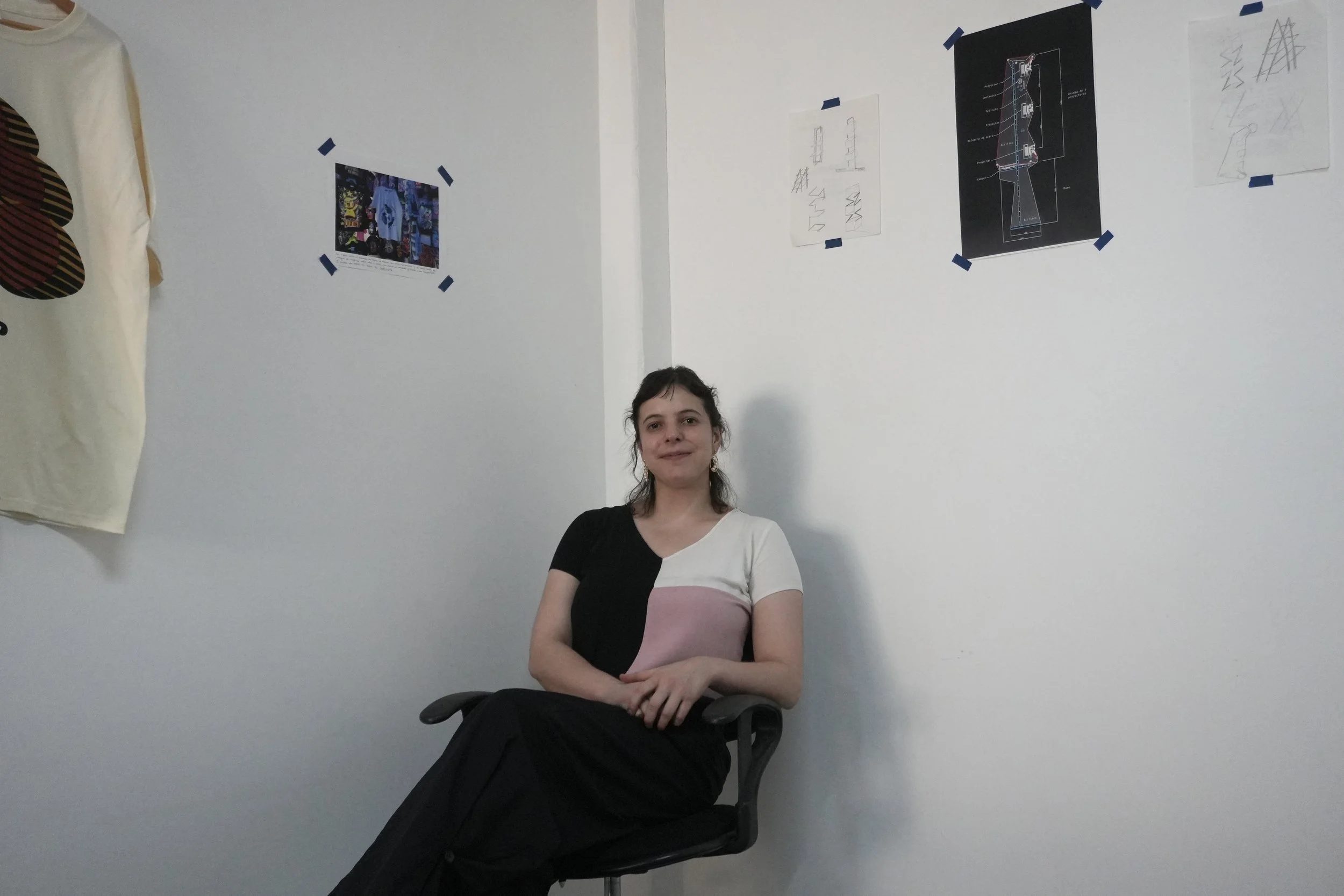
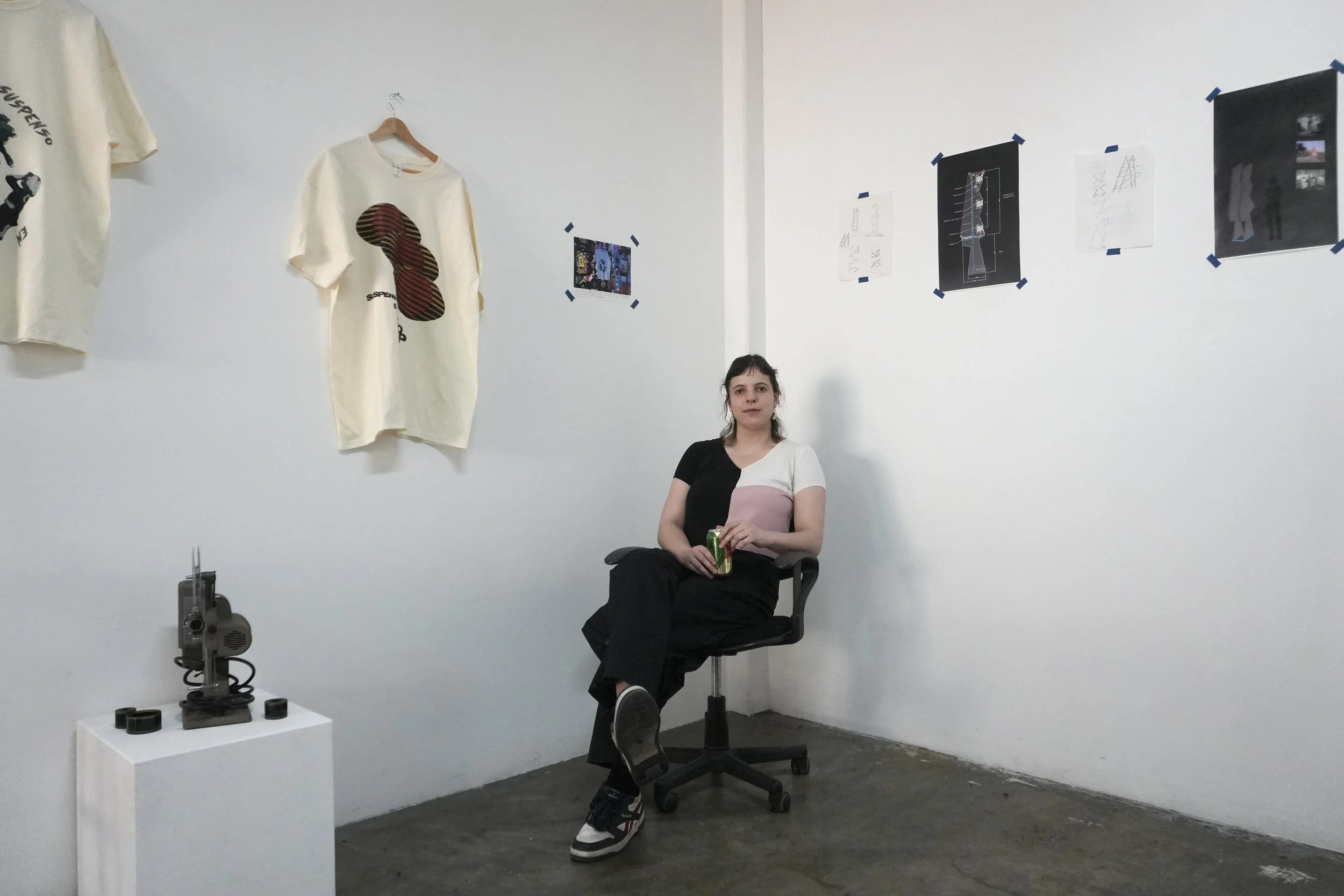
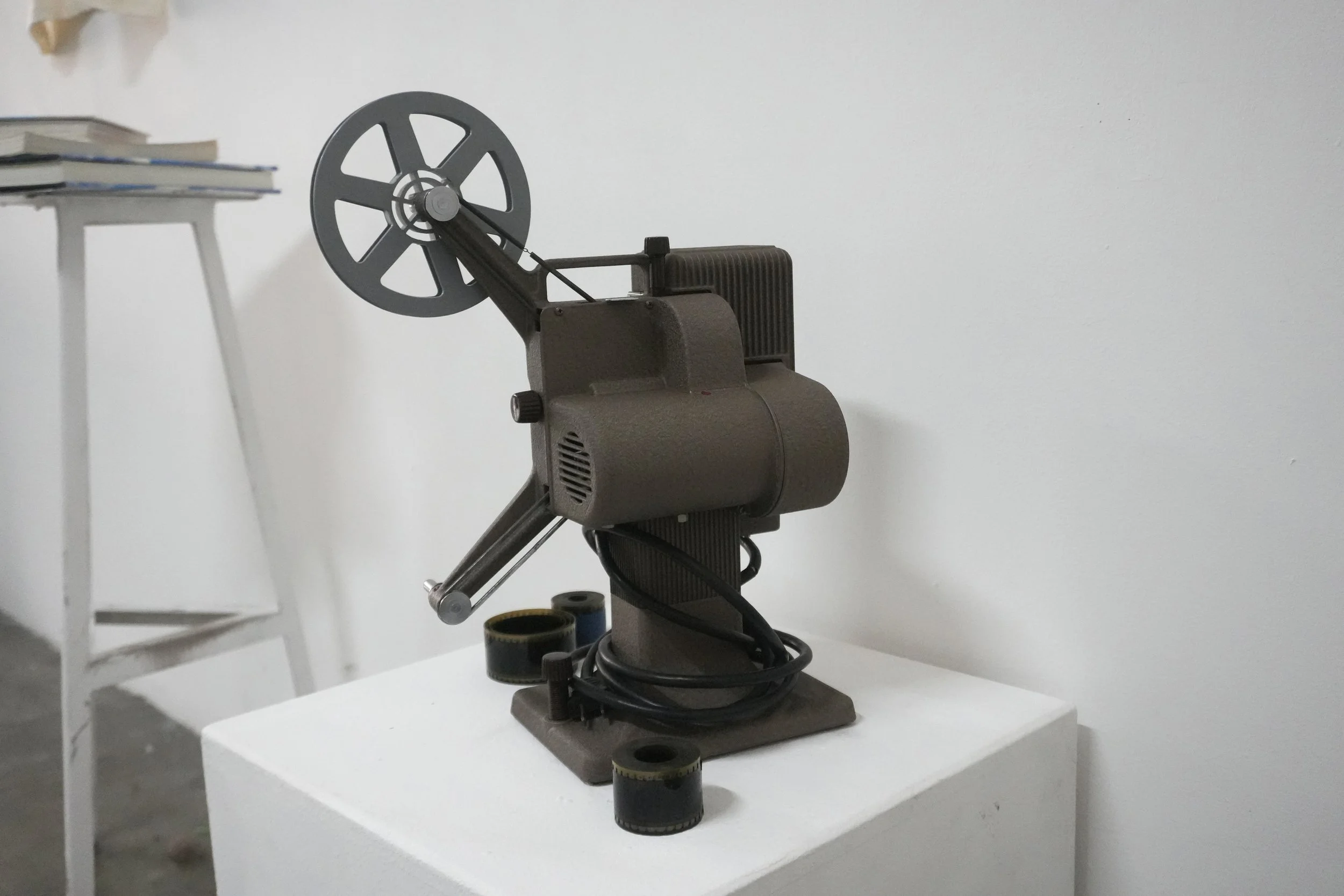
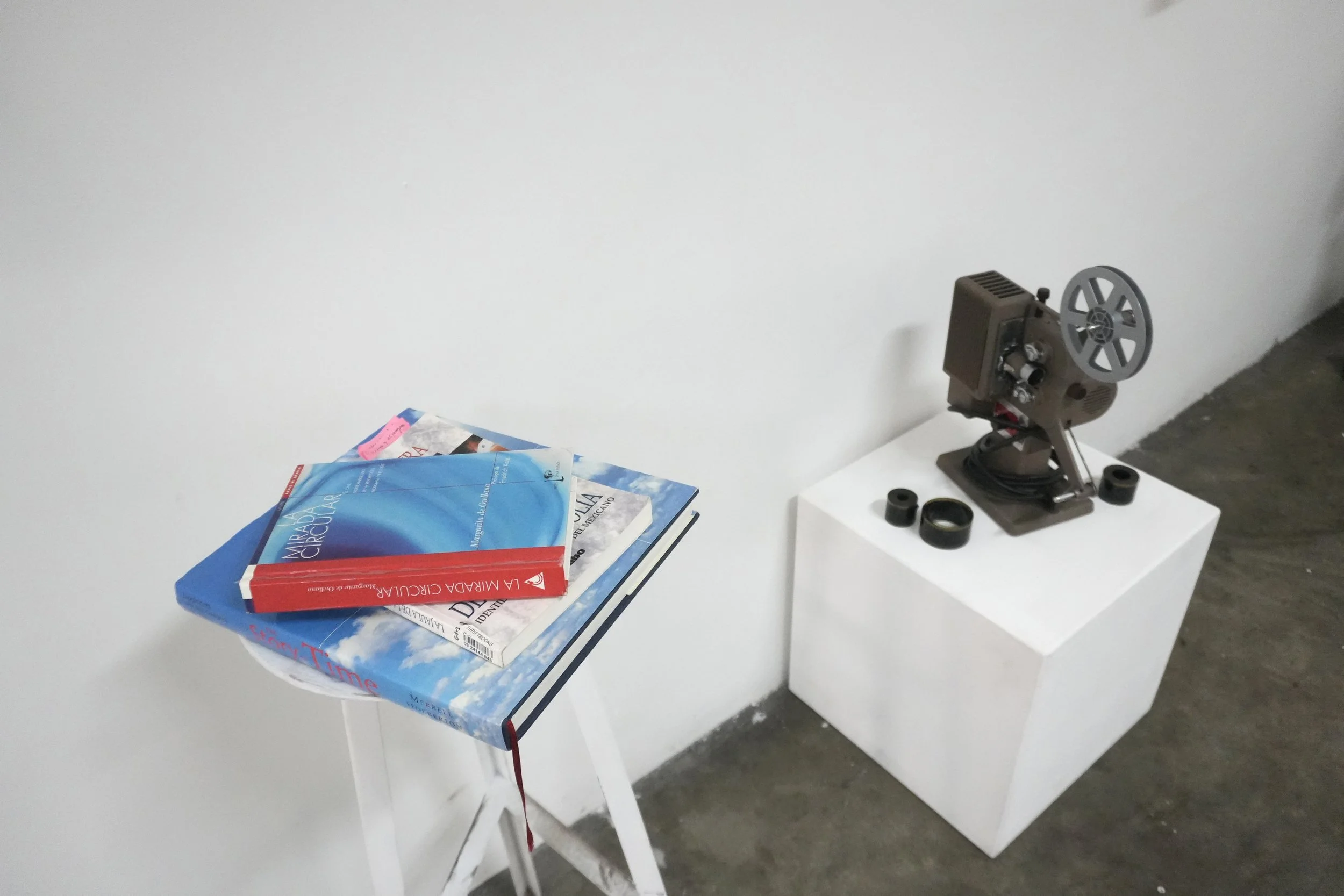
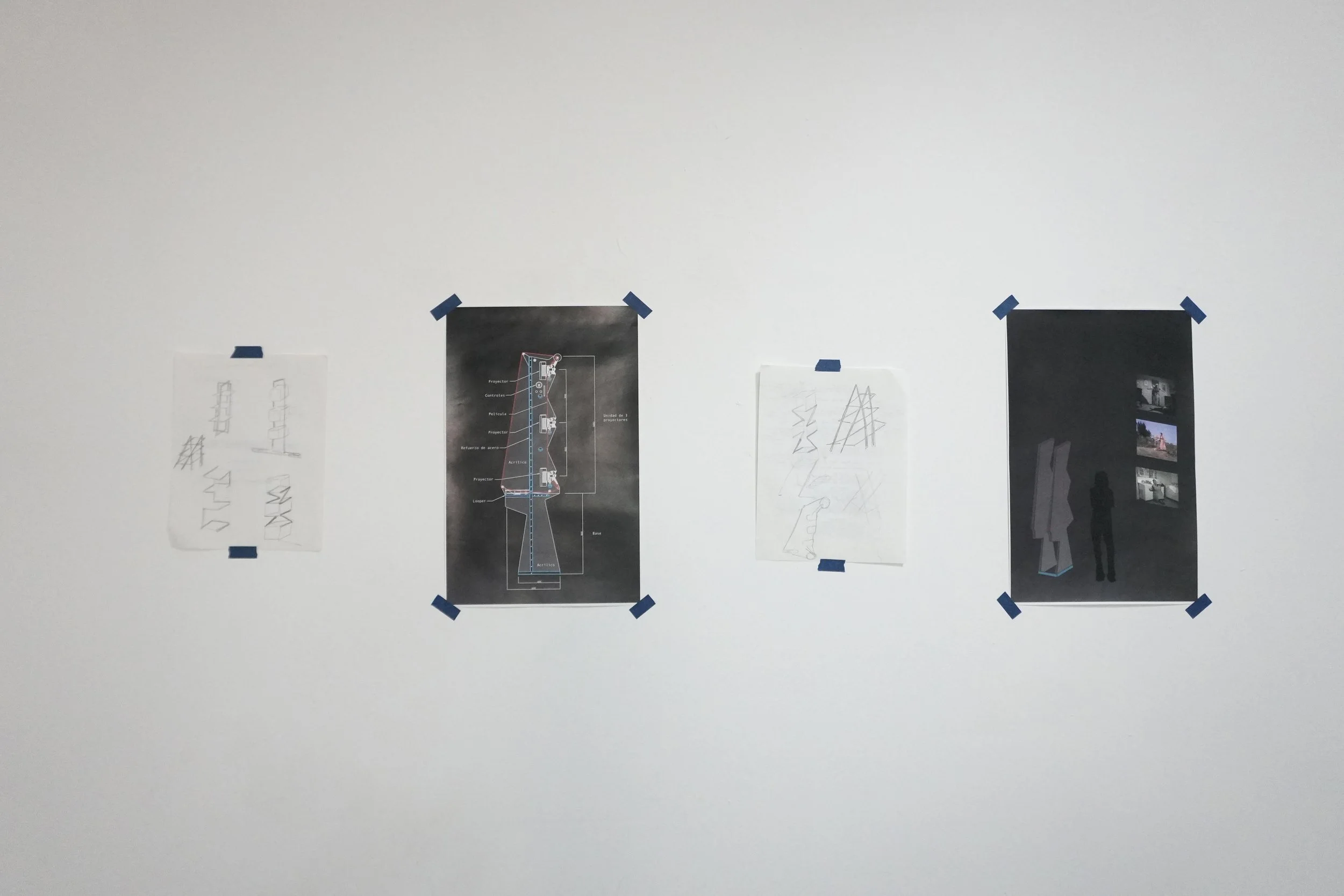
El núcleo de este proyecto reside en una instalación cinemática: una proyección ininterrumpida en película de 16 mm que recorre un artefacto diseñado por la propia artista (presente en el estudio a través de un plano constructivo, el aparato estará listo el mes próximo y se hará una proyección próximamente). En este sistema, la cinta transita por tres proyectores, creando un ciclo físico y visual de caídas. Las imágenes no son azarosas; son un montaje de recortes tomadas de “Clásicos del cine mexicano” donde la figura femenina es capturada en el instante preciso del desplome.
El origen de este material añade una capa de complejidad social: las imágenes provienen de copias pirata en CD adquiridas en el Mercado de Tepito. Aquí, la recursividad no es solo técnica, sino también económica y cultural; la imagen nace en la industria, muere en la piratería del mercado informal y renace en el proyecto artístico para cuestionar su propio significado.
Del Celuloide a la Piel: La Transformación del Soporte
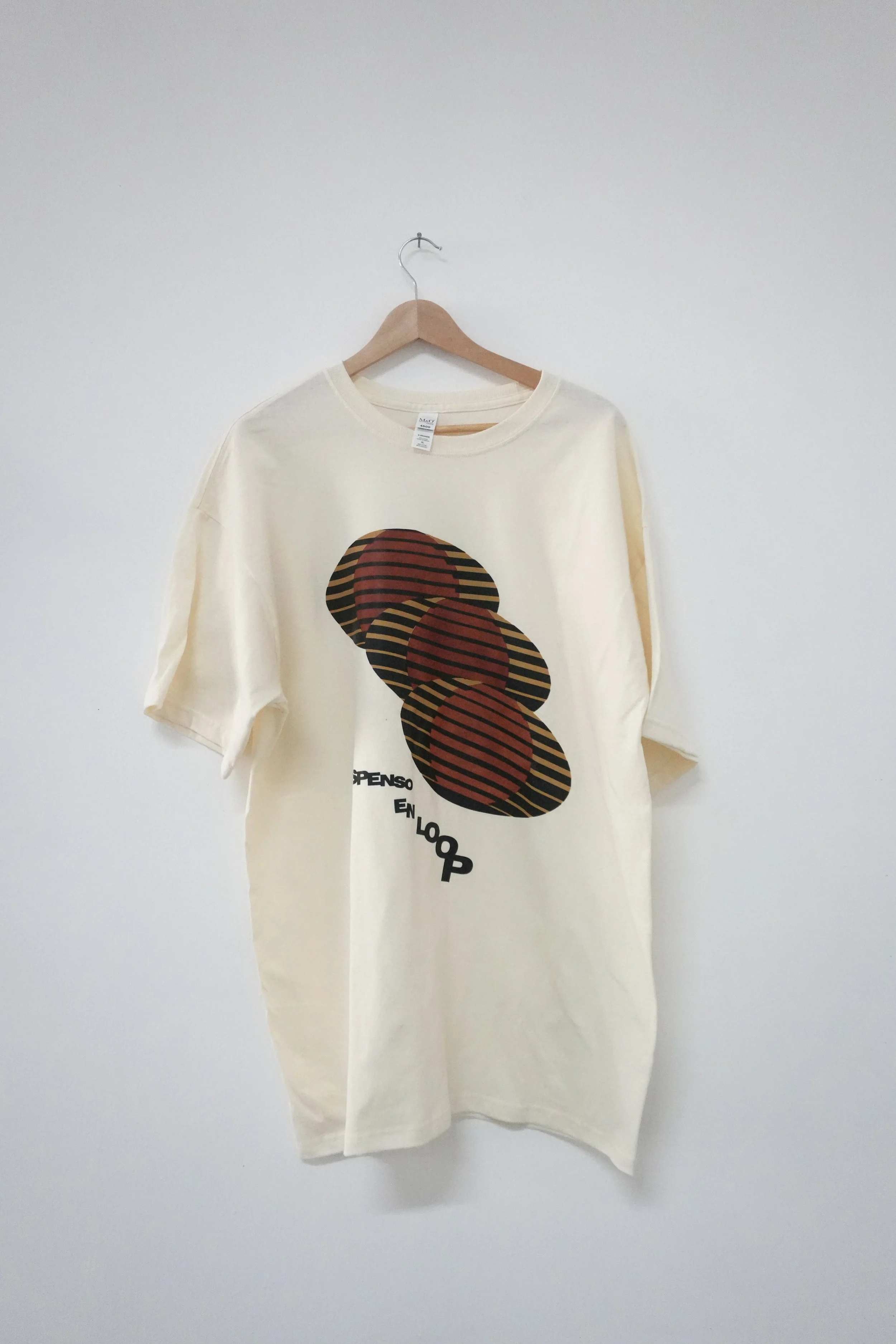
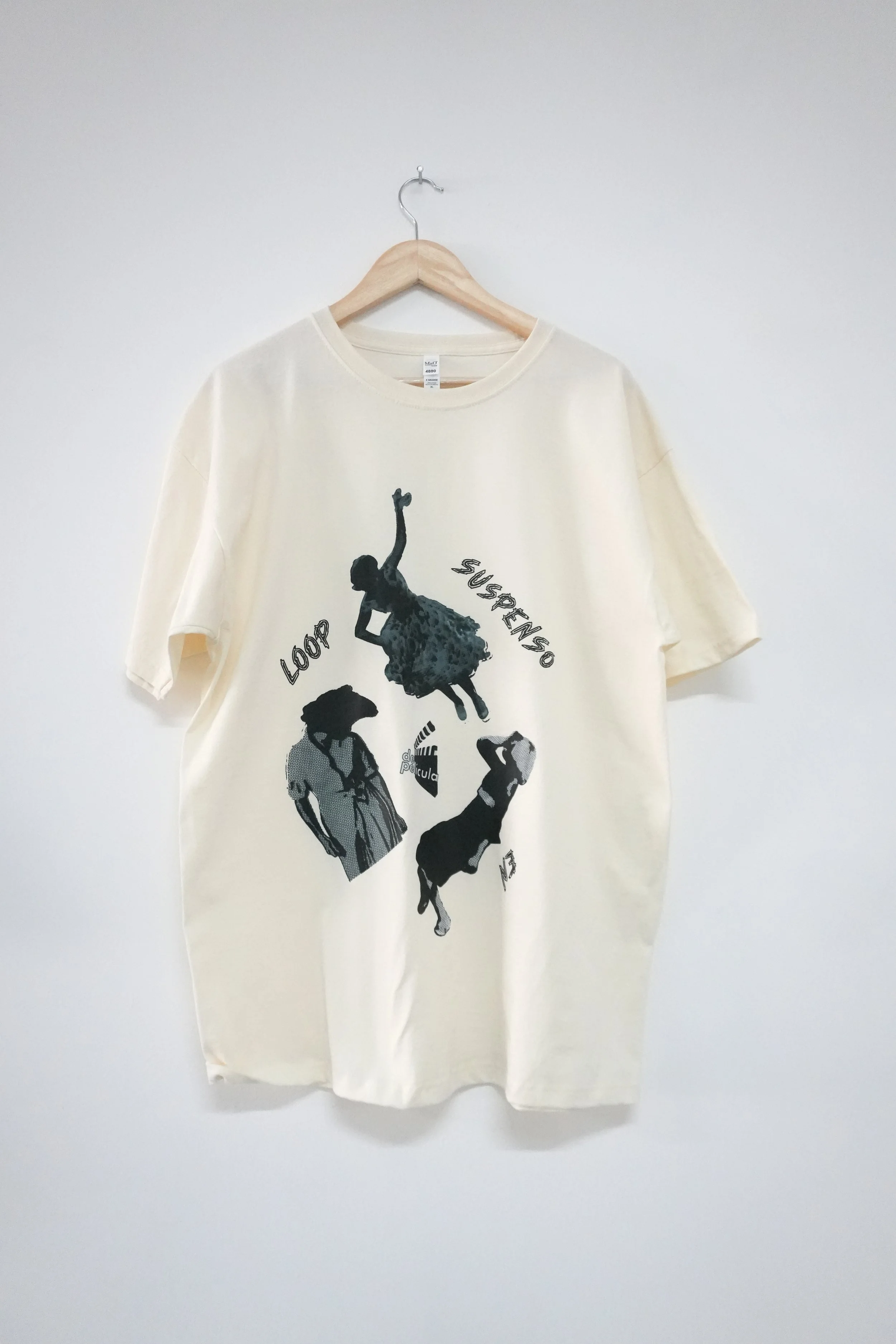
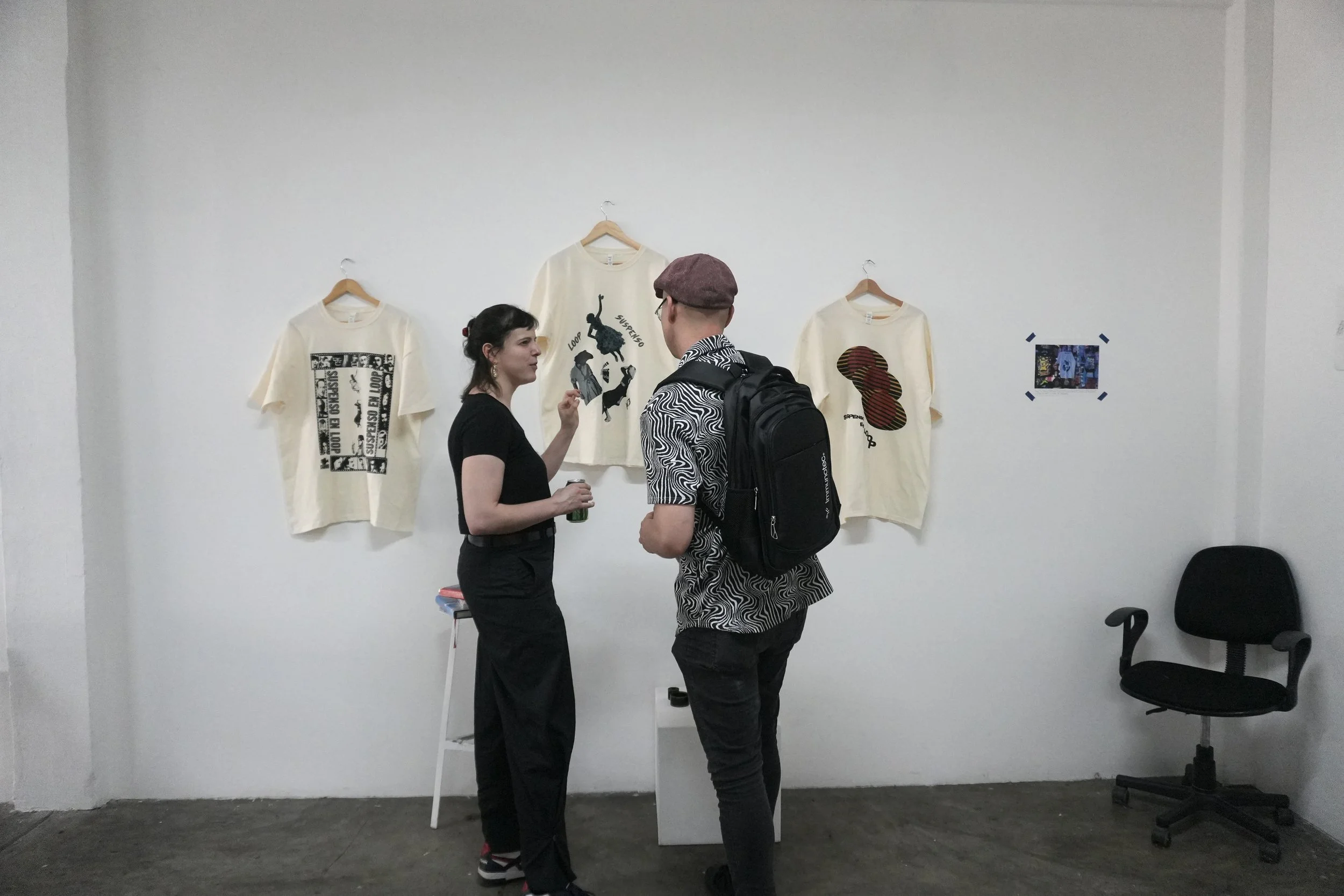
Durante su estancia en lagos, Natalia logró decantar esta investigación en una materialidad táctil. El paso de la luz proyectada al objeto tangible se concretó en la creación de tres camisetas. Al digitalizar las imágenes de las mujeres de los filmes pirata y trasladarlas al tejido, la artista opera un cambio de soporte que es, en esencia, un acto de dignificación feminista.
Al ser portadas por mujeres en el 2026, estas imágenes dejan de ser representaciones pasivas de una "caída" para convertirse en una armadura simbólica. La mujer contemporánea no solo viste la imagen; la acuerpa, sacándola del rol subordinado que el cine de oro o de género le impuso, y permitiéndole habitar el espacio público con una nueva agencia.
El Loop Simbólico: Tepito y el Mercado del Arte
La propuesta culmina en un gesto de deconstrucción de la circulación de la imagen. En un acto que cierra el círculo material, una de estas camisetas fue llevada de vuelta a un puesto del Mercado de Tepito, mimetizándose con el entorno de su origen. La fotografía de este montaje —el objeto artístico regresando a la informalidad— será impresa en una nueva serie de camisetas destinadas al Mercado del Arte. Este loop conceptual desarticula las jerarquías tradicionales entre lo "culto" y lo "popular", lo "original" y la "copia". Al final, la obra de Natalia García Clark no sólo resignifica la caída, sino que la detiene. A través de este tránsito entre soportes, la imagen de la mujer mexicana en el cine es liberada de su ciclo de repetición eterna, otorgándole una nueva vida donde el desplome ya no es un destino, sino un punto de partida para la resistencia.
olgaMargarita dávila, chief curator
Anáhuac, CDMX - abril 2026
___
EN
The Return of the Fall:
Materiality and Recursivity in the Work of Natalia García Clark
Natalia García Clark’s residency at Lagos | estudios y residencias marks a critical turning point in her long-term investigation titled Suspenso en loop (Suspense in a Loop). What began as a study on repetition and the cinematic trope of the vulnerable woman has evolved within this space toward a sophisticated objectification of the image, where theory gives way to matter and the artistic medium becomes a tool for political and aesthetic liberation.
The Mechanics of Recursivity
The core of this project lies in a cinematic installation: an uninterrupted projection on 16mm film that runs through an artifact designed by the artist herself (represented in the studio by a constructive blueprint; the apparatus will be ready next month with a screening to follow shortly). In this system, the film travels through three projectors, creating a physical and visual cycle of falls. These images are not random; they are a montage of clips taken from "Mexican Cinema Classics" where the female figure is captured at the precise moment of collapse.
The origin of this material adds a layer of social complexity: the images come from pirated CDs purchased at the Tepito Market. Here, recursivity is not only technical but also economic and cultural; the image is born in the industry, dies in the piracy of the informal market, and is reborn in the artistic project to question its own meaning.
From Celluloid to Skin: The Transformation of the Support
During her stay at Lagos, Natalia succeeded in distilling this research into tactile materiality. The transition from projected light to tangible object was realized in the creation of three t-shirts. By digitizing images of women from these pirated films and transferring them onto fabric, the artist effects a change of medium that is, in essence, an act of feminist dignification.
When worn by women in 2026, these images cease to be passive representations of a "fall" and become a symbolic armor. The contemporary woman does not just wear the image; she embodies it, removing it from the subordinate role imposed by the Golden Age or genre cinema, and allowing it to inhabit public space with a new agency.
The Symbolic Loop: Tepito and the Art Market
The proposal culminates in a gesture that deconstructs the circulation of the image. In an act that closes the material circle, one of these t-shirts was taken back to a stall in the Tepito Market, blending into the environment of its origin. The photograph of this setup—the artistic object returning to informality—will be printed on a new series of t-shirts destined for the Art Market.
This conceptual loop dismantles the traditional hierarchies between "high" and "popular" culture, "original" and "copy." In the end, Natalia García Clark’s work does not only resignify the fall; it halts it. Through this transit between supports, the image of the Mexican woman in cinema is liberated from its cycle of eternal repetition, granting it a new life where the collapse is no longer a destiny, but a starting point for resistance.
olgaMargarita dávila, chief curator
Anáhuac, CDMX - April 2026