MEXICO CITY RESIDENT 2026
Edgar Picazo
MEXICO
Common Sutures
Edgar Picazo is a maker of relational strategies who works across different practices — as a curator, as a director, as a writer — but above all as a generous host. That was my experience throughout 2025, when he welcomed me — after Daril Fortis introduced us — during the course of Labrar Saberes, the pedagogical program we implemented in Ciudad Juárez, Chihuahua, Mexico, one of the cities where Edgar lives. From there, we began weaving a relational complicity that has led to his first residency at lagos | CDMX.
For one month, Edgar set out to conceptually deepen his practice, with the aim of articulating a more complete formalization of the project he conceived: SUTURA, the First Binational Art Encounter between Ciudad Juárez and El Paso.
Within the complex affective geopolitical conjuncture Edgar inhabits — one that both unites and separates Ciudad Juárez and El Paso, Texas, USA — relational art becomes a vital strategy for transforming the border limit into an active social interstice. By shifting the focus from the material artwork toward the sphere of human interactions, artistic practice in this context seeks to reconfigure the narrative of the edge in its many connotations: wound, line, scar. The wall and the river cease to be mere containment barriers and instead become stages where ephemeral “micro-utopias” are constructed, and where encounters between transnational subjects become the true raw material of the artwork — a form of social sculpture.
Under the principles of the commons, these interventions operate horizontally, weaving shared affects and knowledge that challenge the logic of separation. In this dimension, Edgar acts as a mediator who activates border citizens, fostering collaborative spaces where communities on both sides of the Río Bravo co-design meanings. In this sense, “the common” functions as a tool of political and poetic resistance against violence and fragmentation, reclaiming the binational public sphere as a territory of mutual belonging and collective care that disregards administrative checkpoints.
Ultimately, this aesthetic of interaction temporarily dissolves the rigidity of the border, transforming it into a laboratory of coexistence. The artwork resides in the duration of the encounter and in the strength of restored bonds, demonstrating that beyond militarization, territorial control, and the oppressions and displacements of ICE, there exists a cultural continuity capable of subverting physical divisions.
Edgar’s artistic practice, situated between Juárez and El Paso, does not merely rearticulate reality; it rehearses new ways of inhabiting it beyond conflict, proposing radical empathy as the only indestructible bridge.
olgaMargarita dávila
Chief Curator
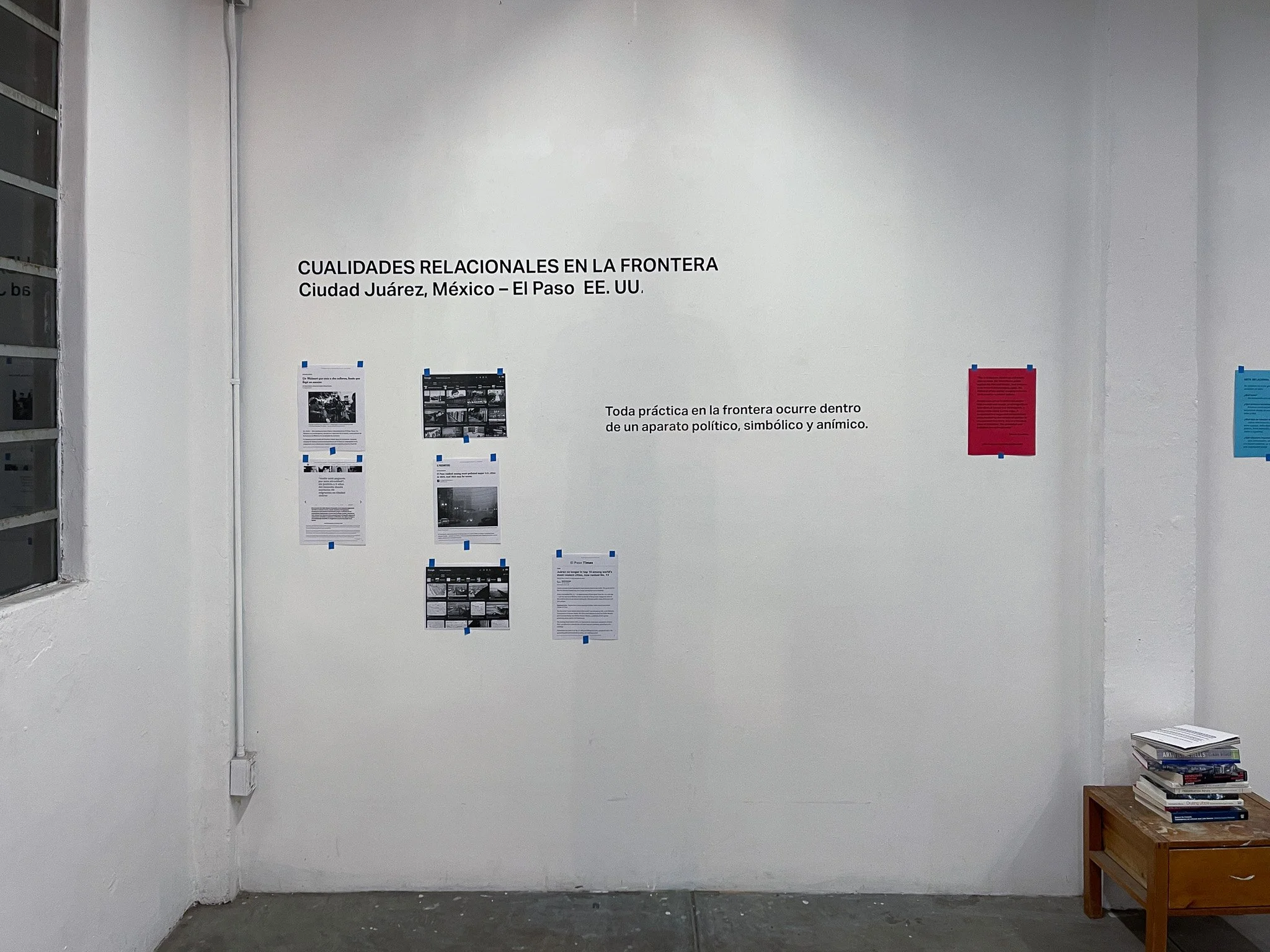
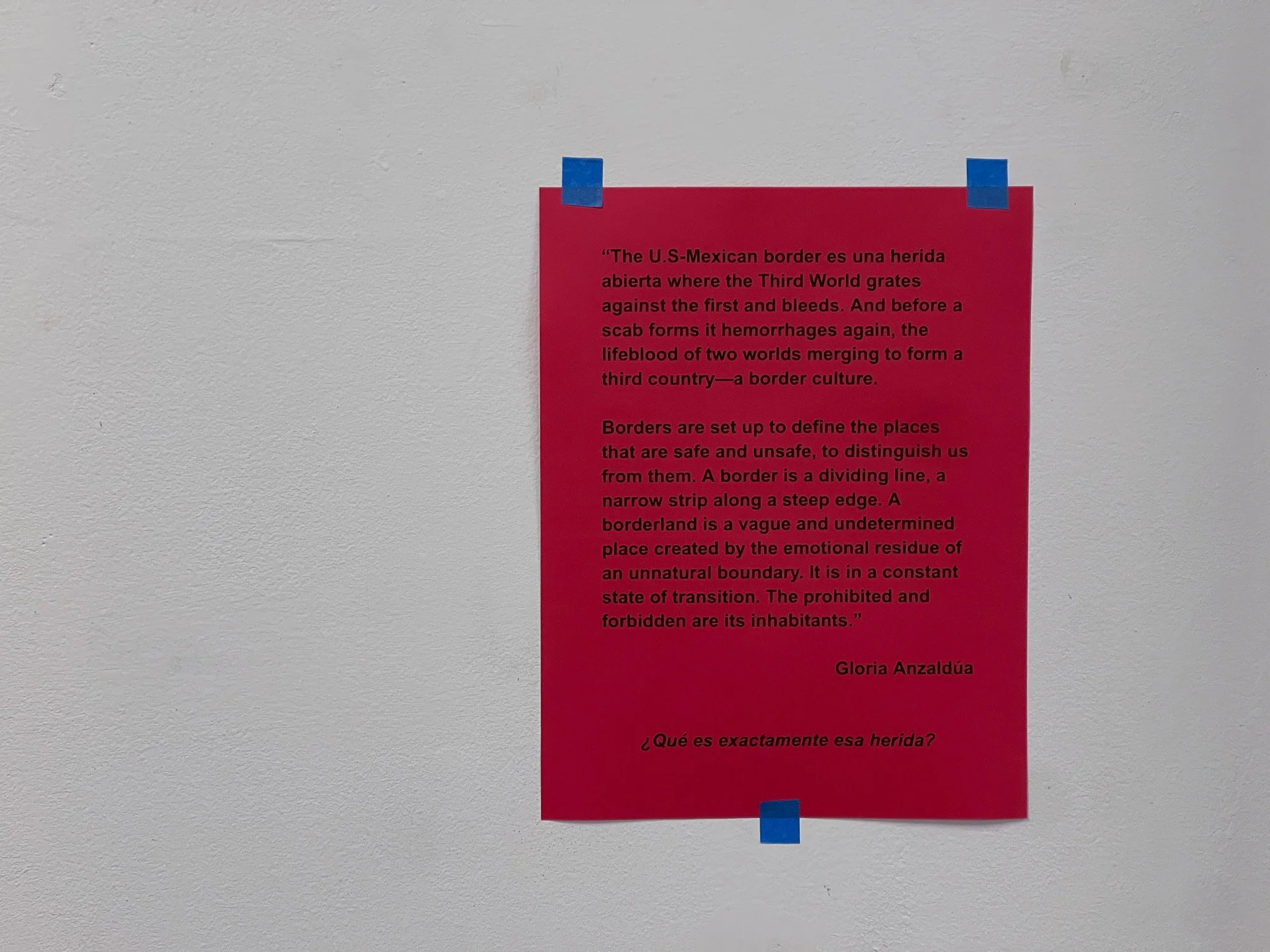
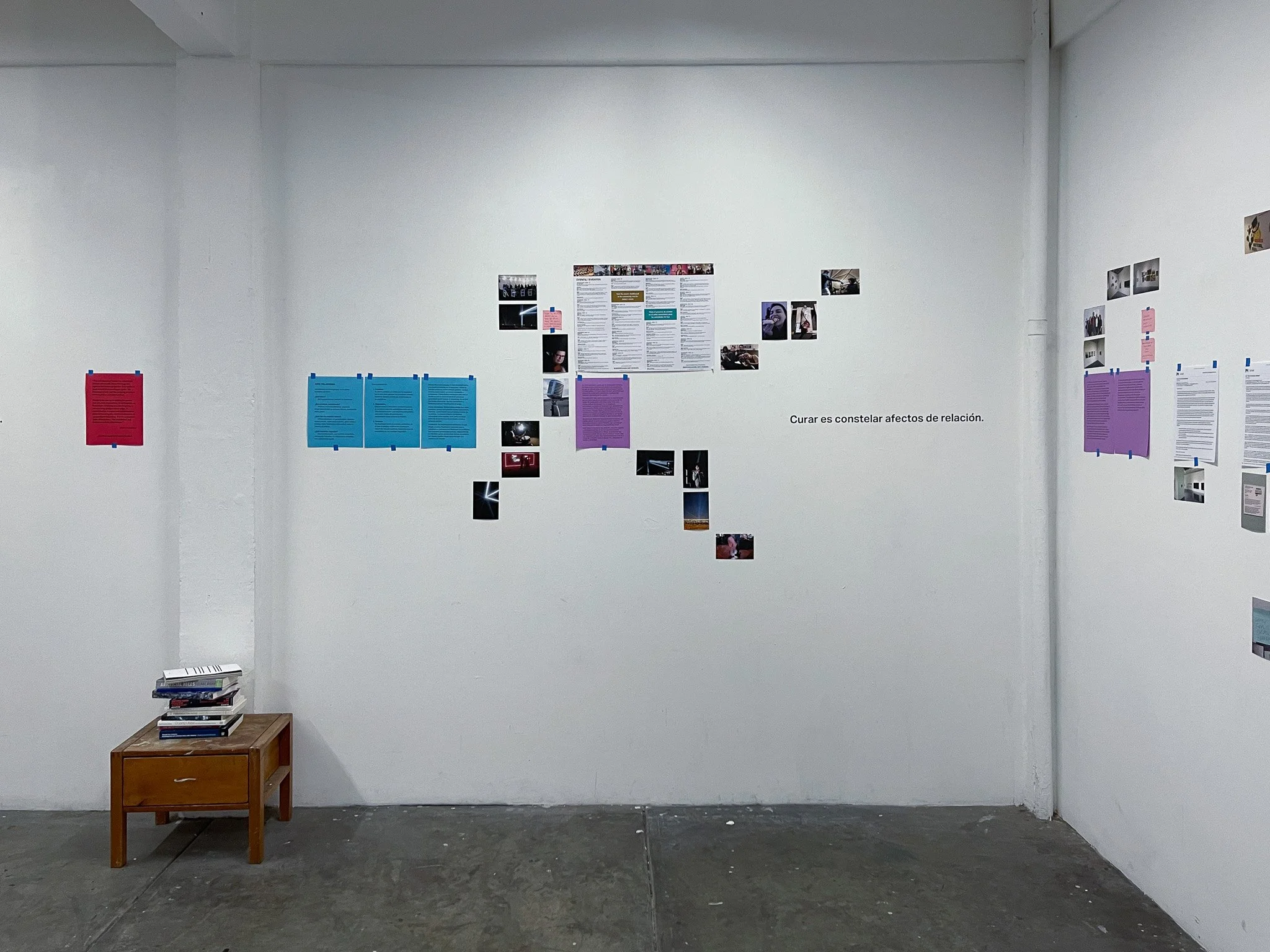
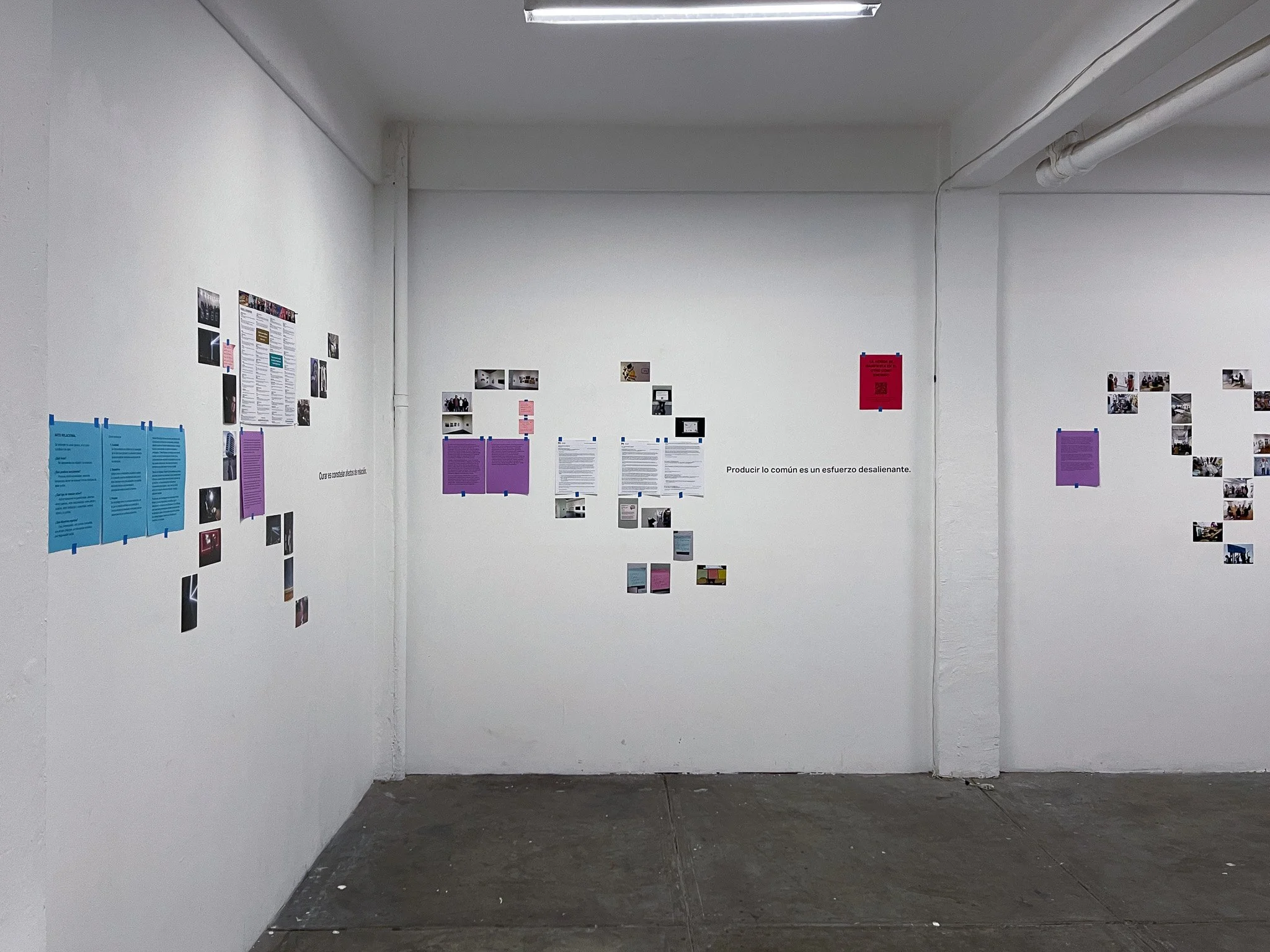
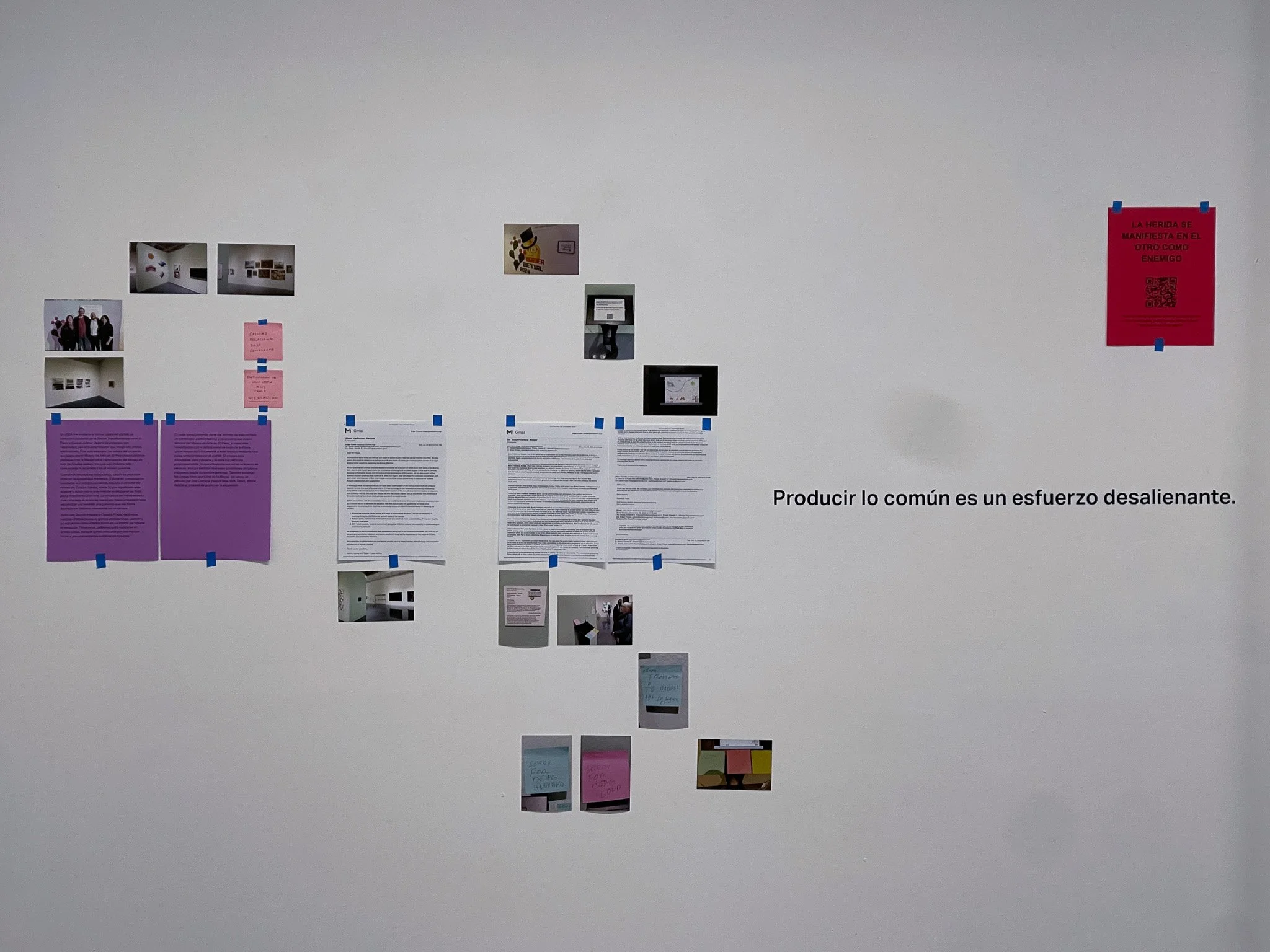
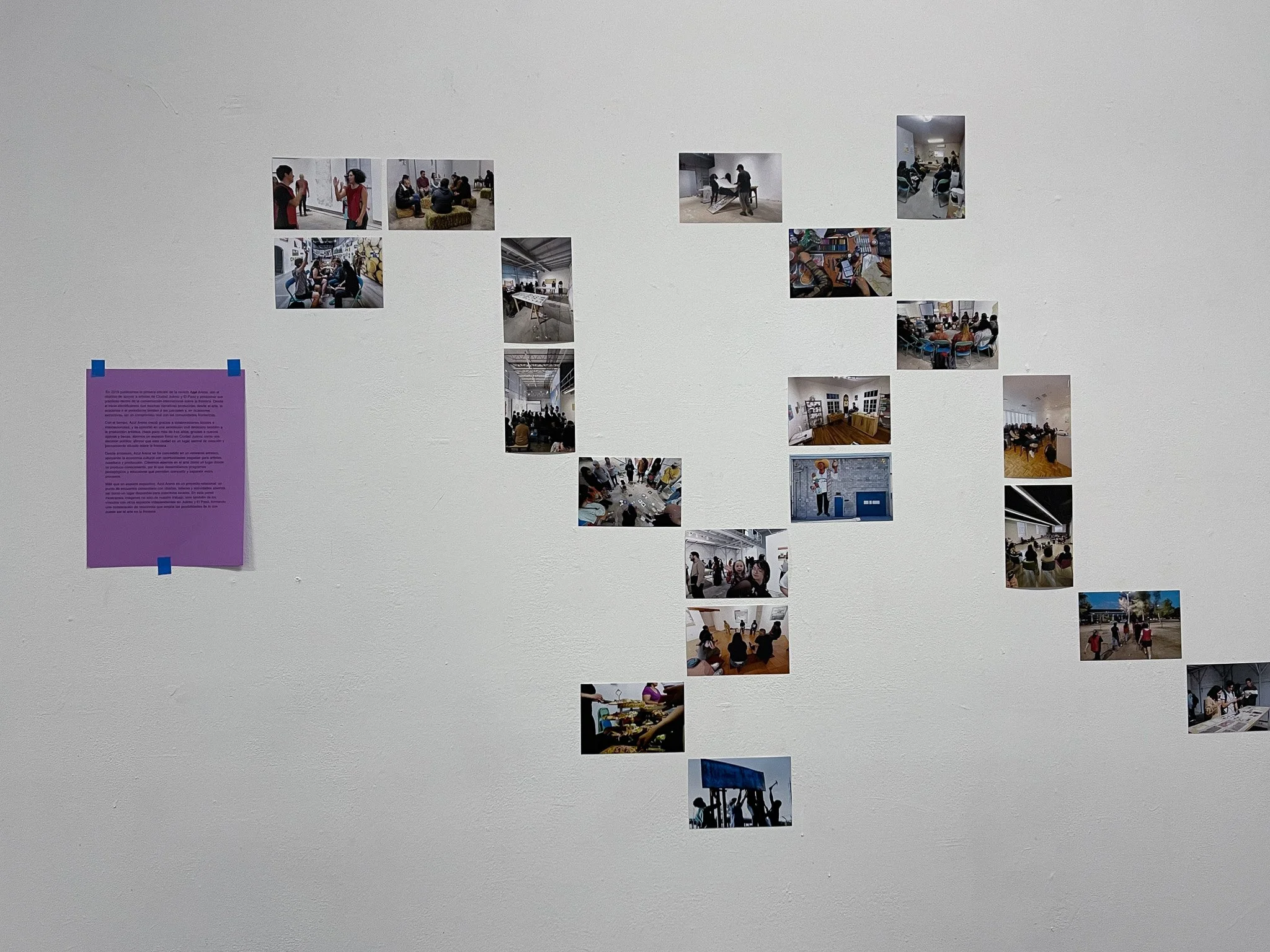
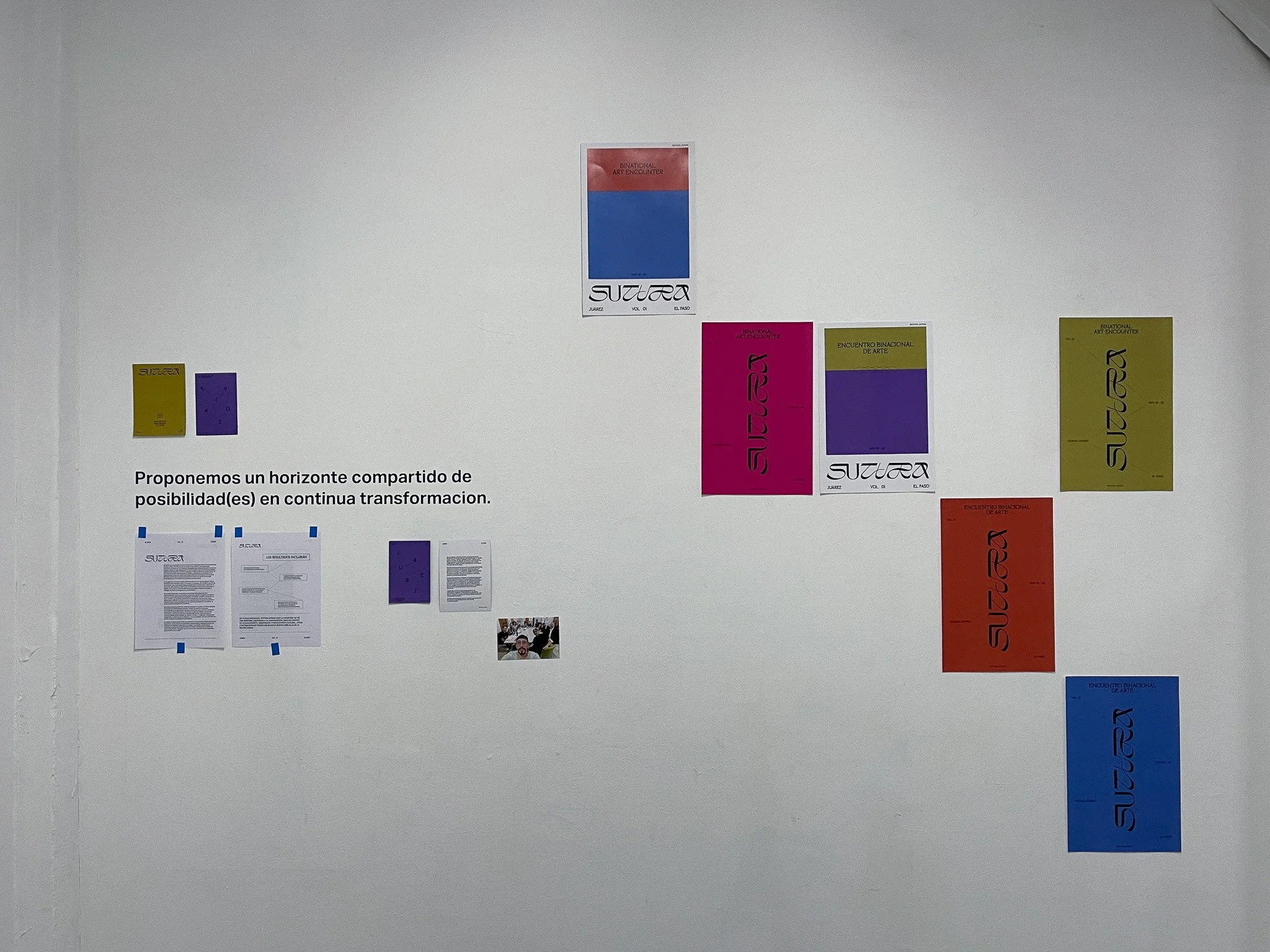
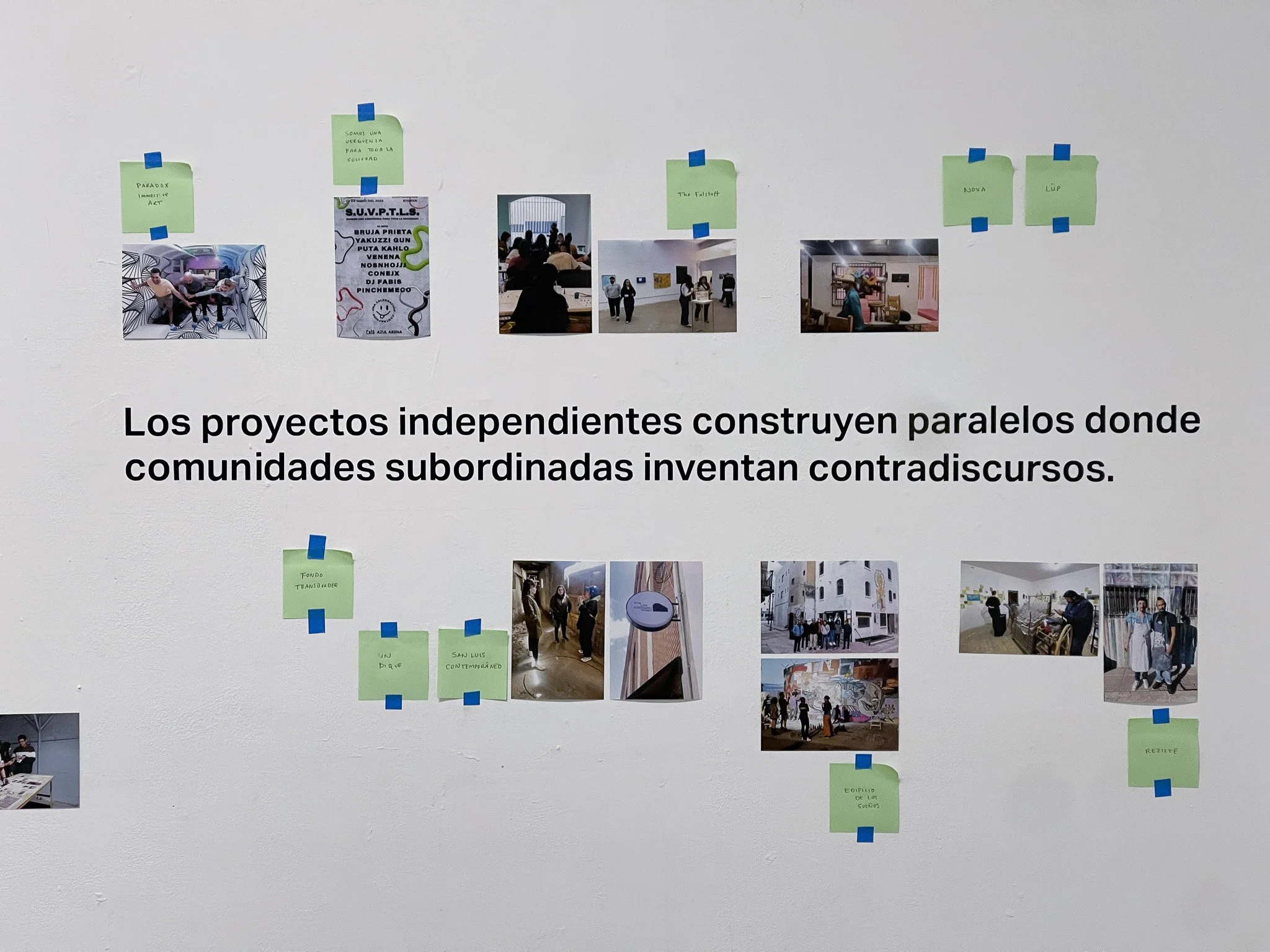
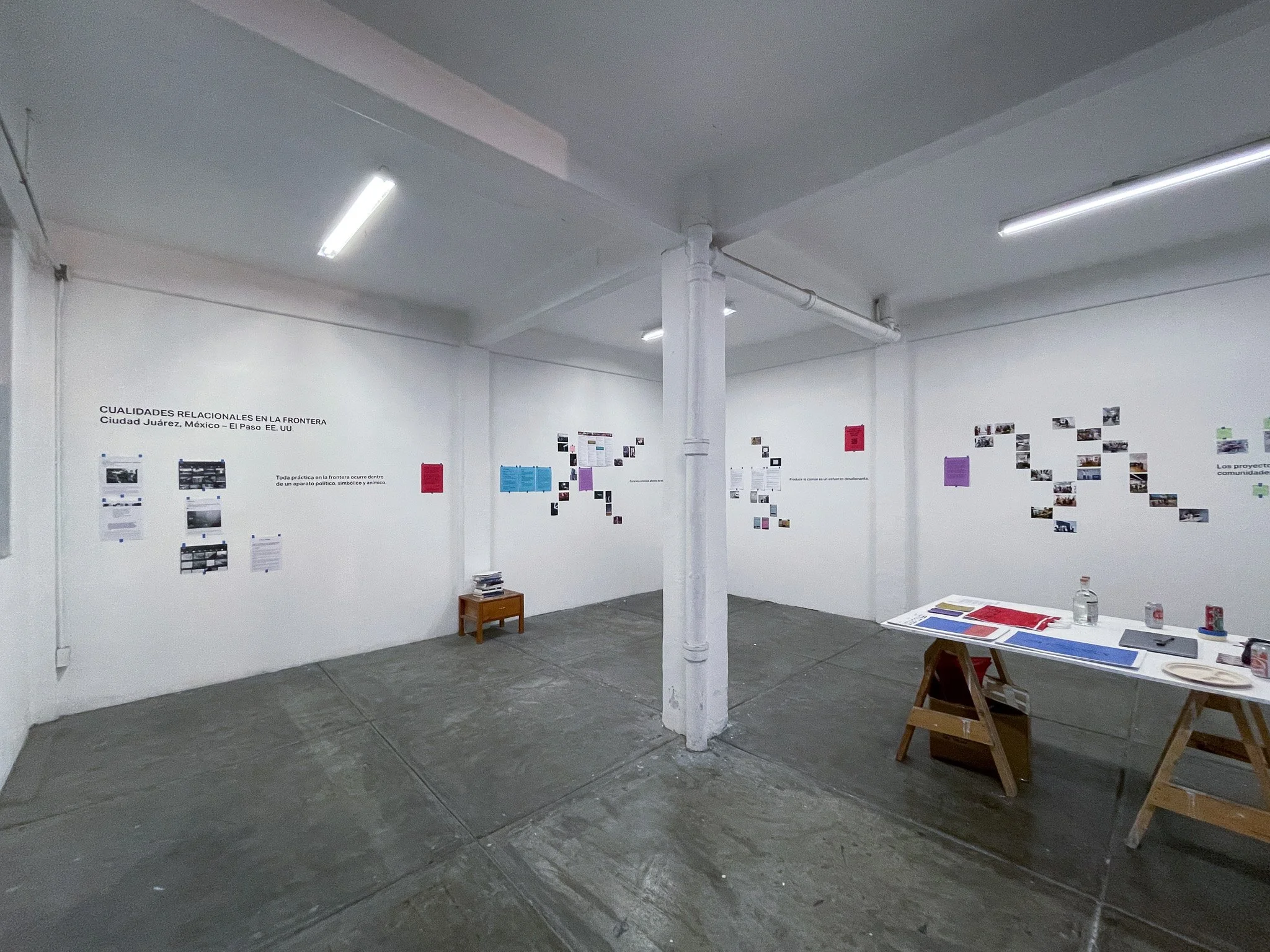
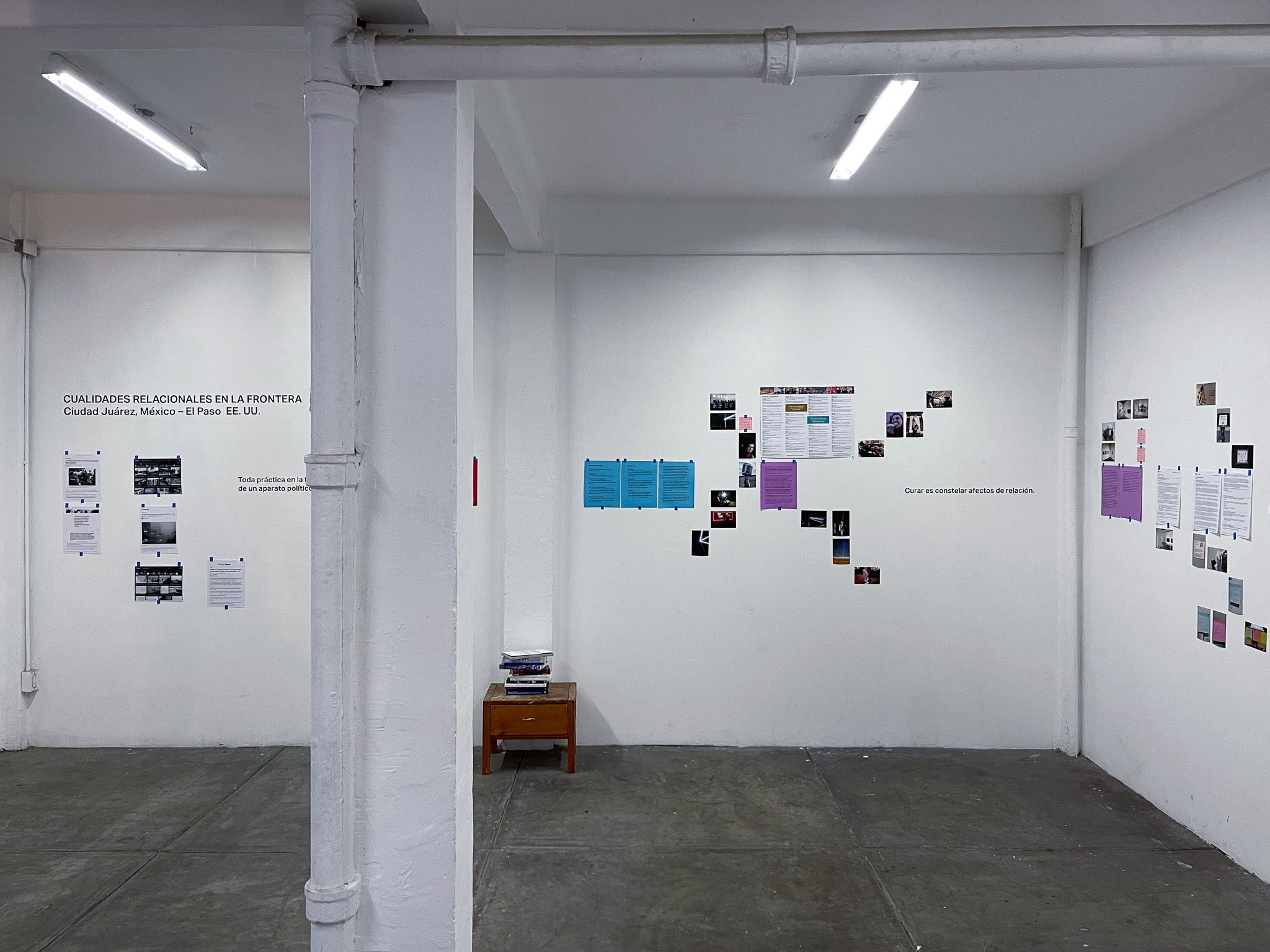
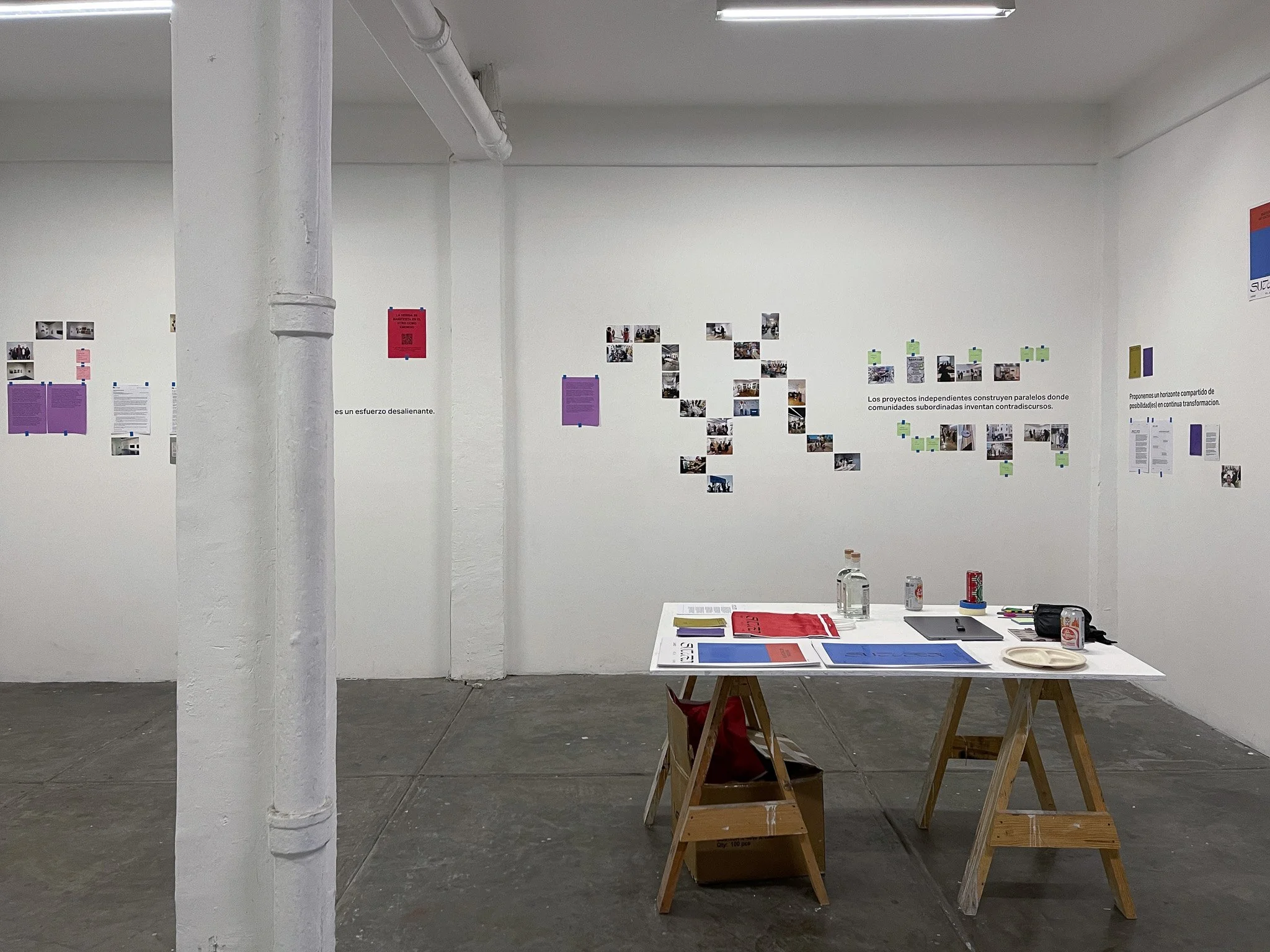
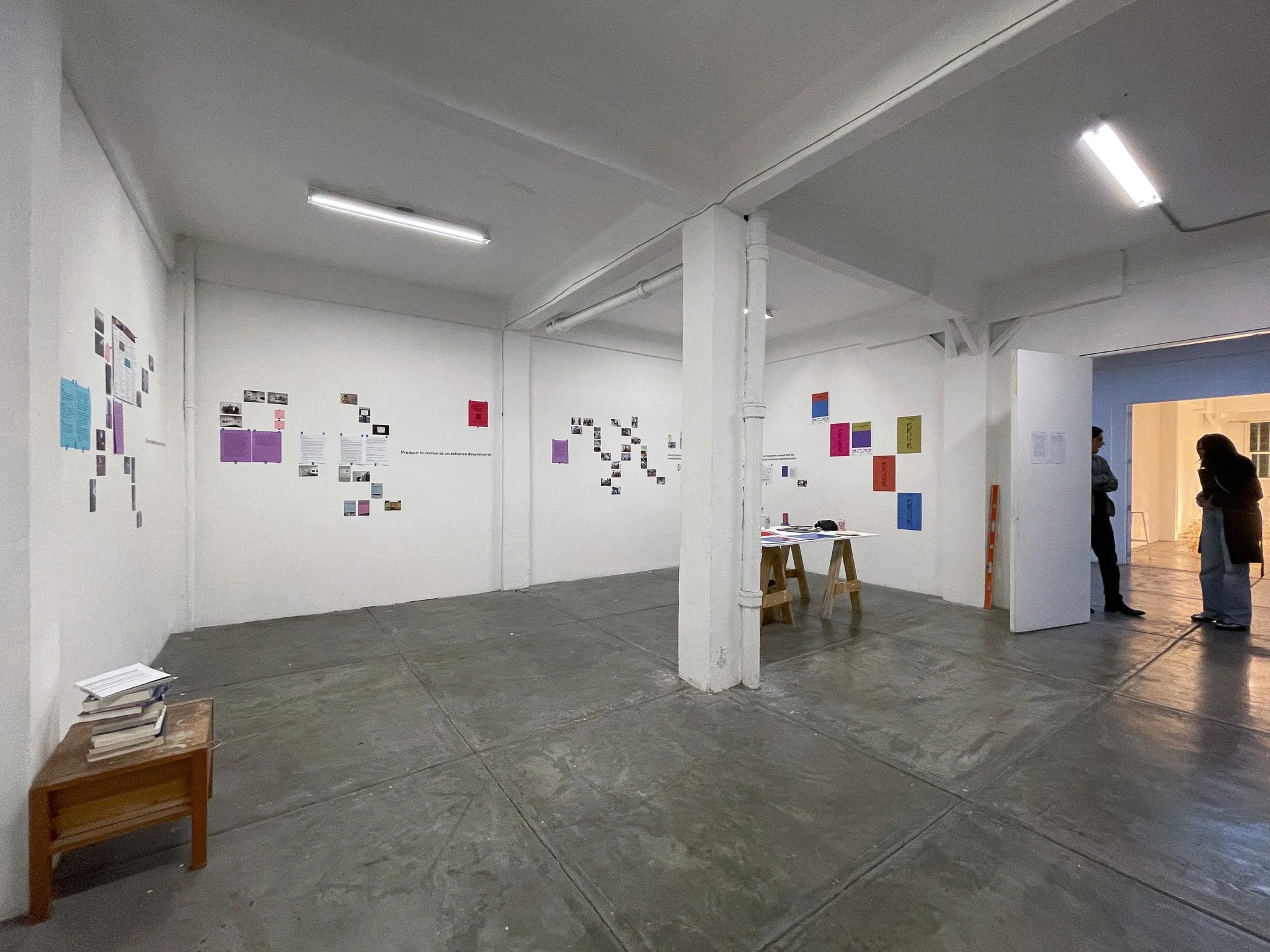
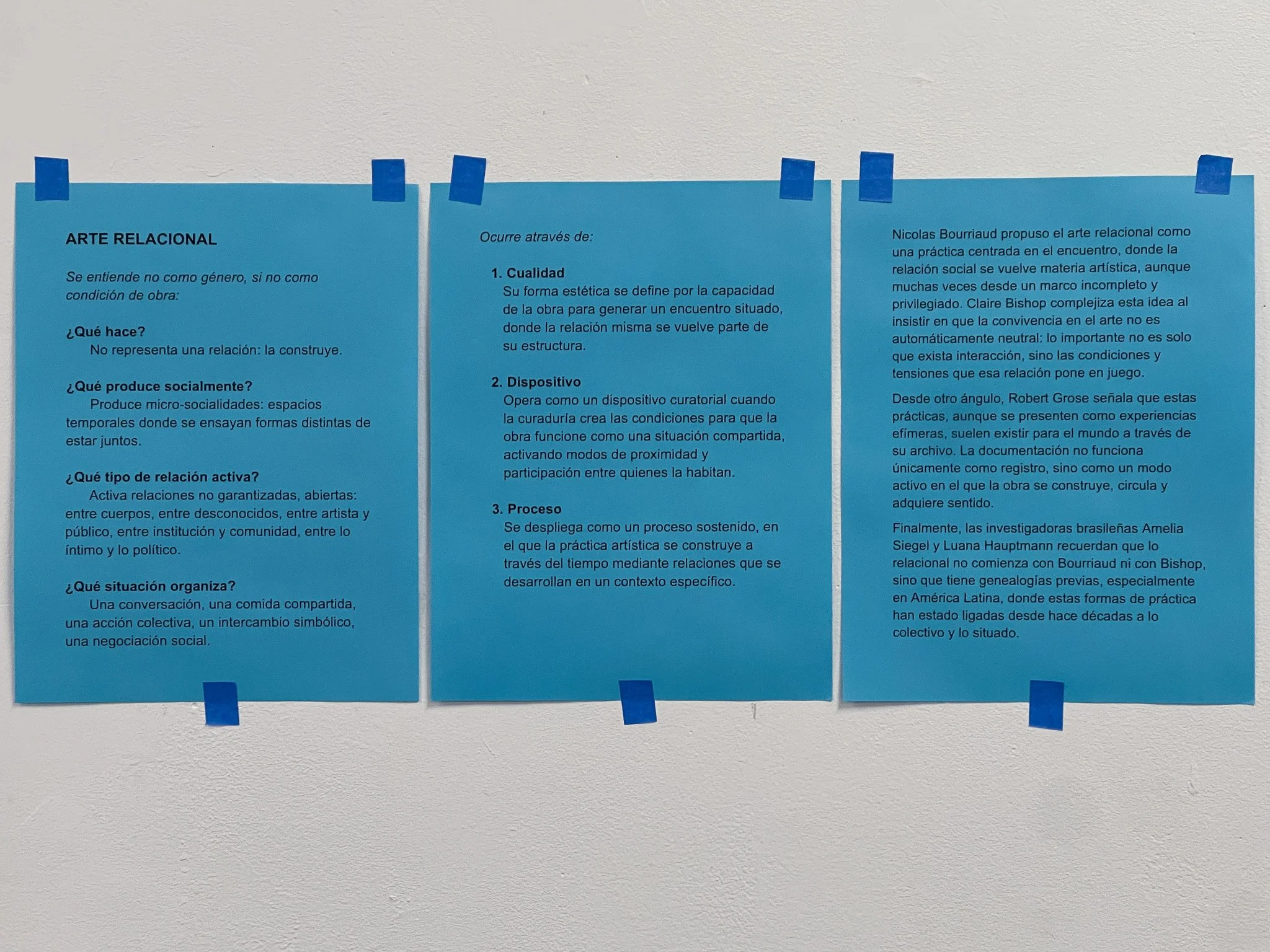
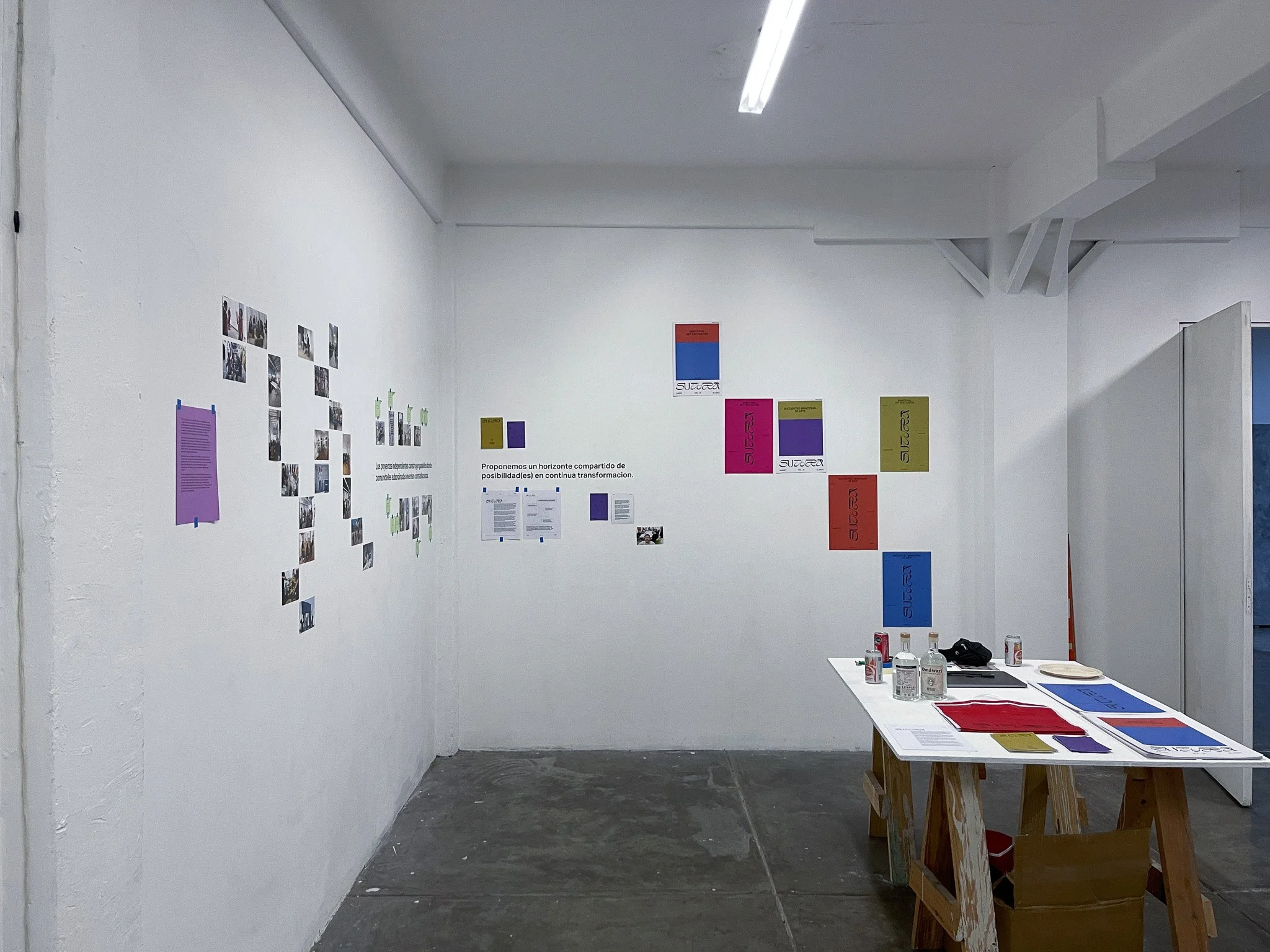
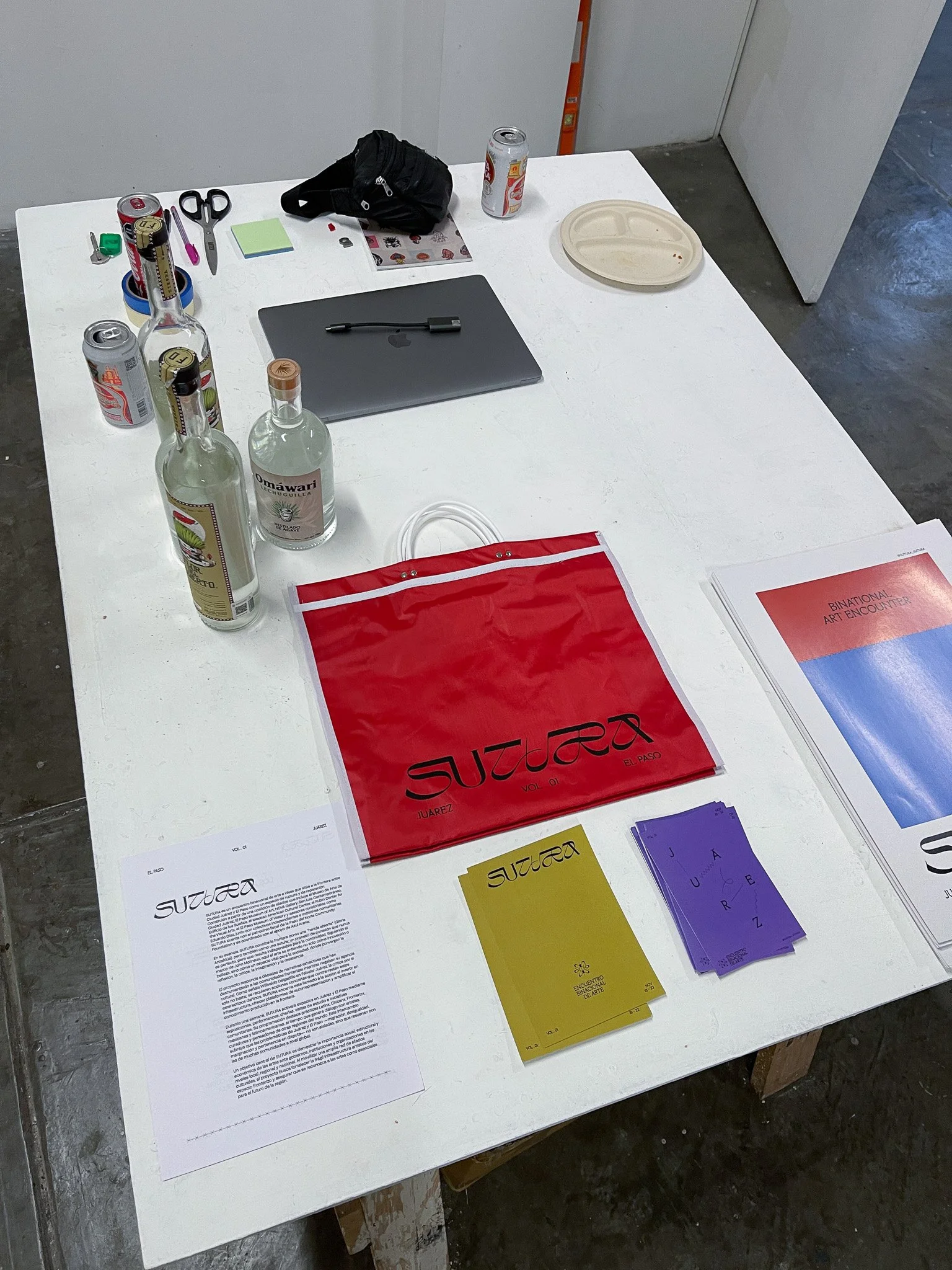
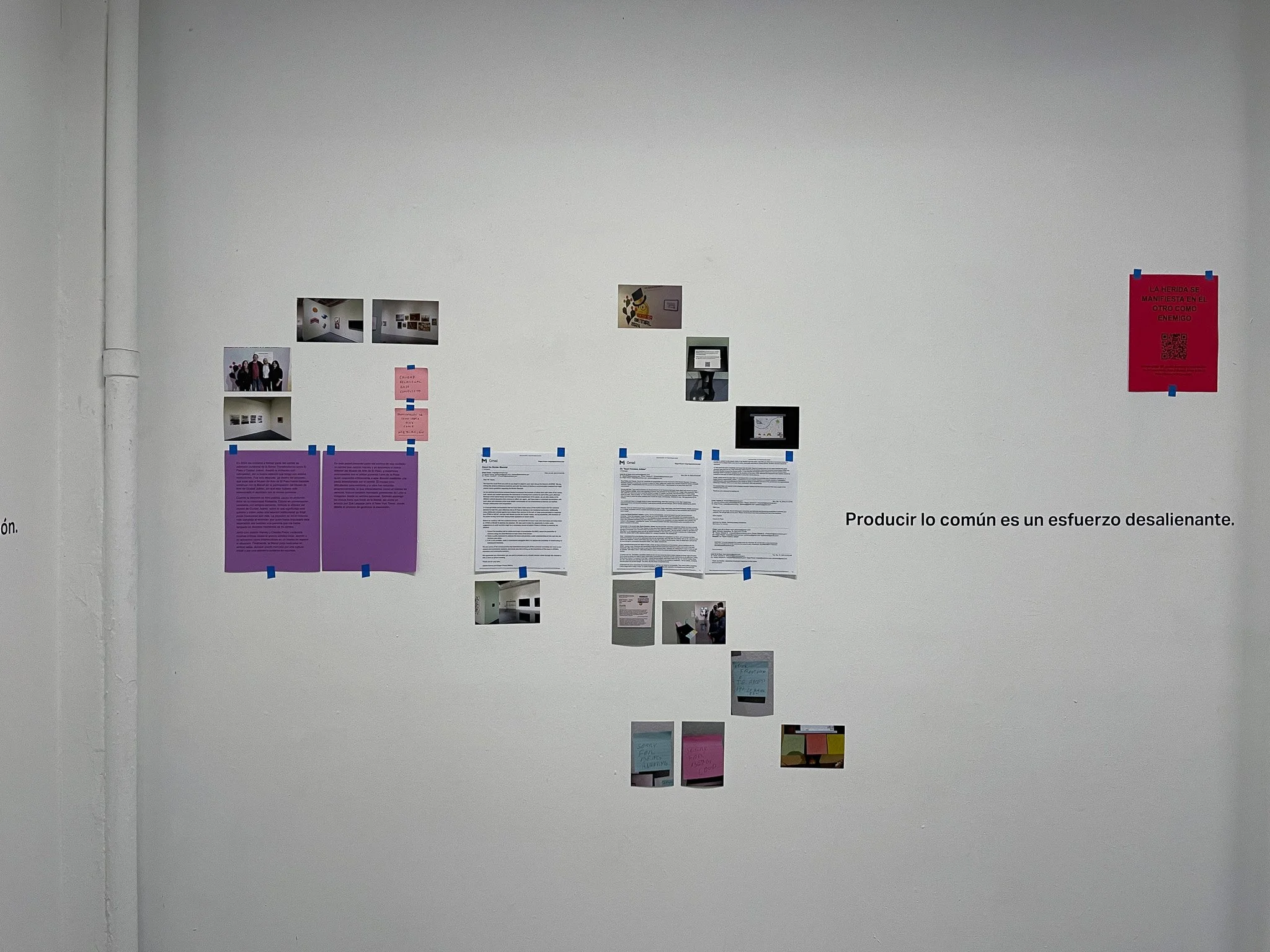
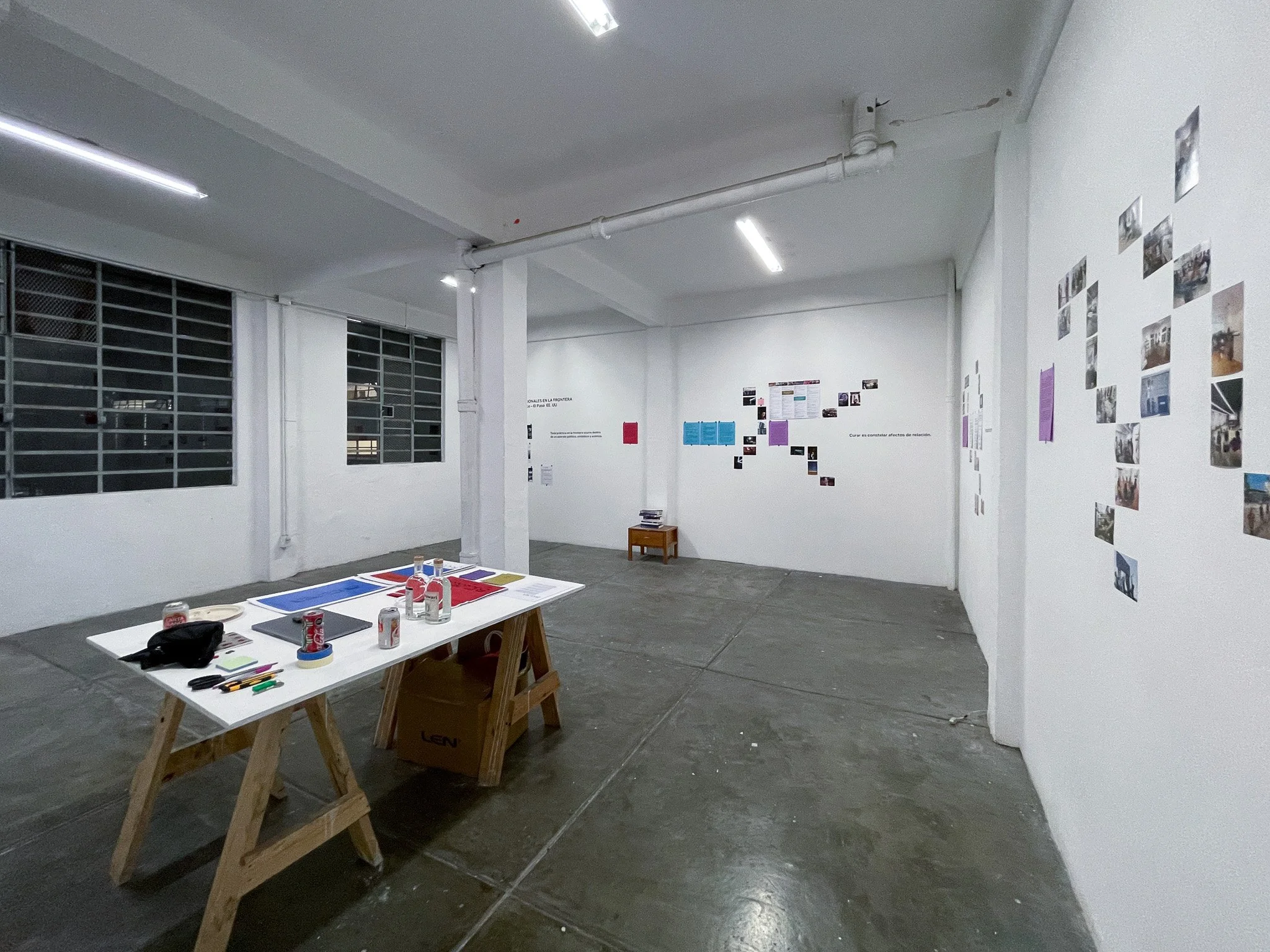
This assemblage is also an investigation: a way of thinking with materials, relationships, and references accumulated over time.
It emerges from an urgent need, in difficult times, to look more deeply into the importance of art and artistic processes as spaces of meaning, connection, and resistance. At the same time, this work arises as a way of understanding and accompanying the horizon of SUTURA, the binational art encounter that will take place in November, and the questions it opens about the border as a space of relation, creation, and knowledge.
This process developed, first and foremost, thanks to the profound and generous support of olgaMargarita dávila, who from the outset provided me with essential tools to understand myself as a relational artist. Many of the ideas that run through this work stem from her guidance, her listening, and her ability to open up thought from a place of proximity.
What is assembled here is a mixture of readings, encounters, conversations, and collaborations. I think of Gloria Anzaldúa and her image of the border as an open wound: although at times it weighs on me how frequently her figure is repeated in certain discourses, it remains necessary to return to her in order to name border experiences that still lack another language.
This investigation also carries the debates on relational aesthetics by Nicolas Bourriaud, the critiques by Claire Bishop, and the contributions of Robert Grose, Amelia Siegel, and Luana Hauptmann, which allow these practices and their genealogies to be further complicated. More specifically, certain theoretical propositions by Mitchel Harvey have also sharpened my frame of reference.
At the center of this process is also the work of Rafael Lozano-Hemmer, particularly through Border Tuner and the editing of the book alongside Michael Nardone. In that context, a specific text by Robin Greeley became a key piece in shaping my own thinking.
This assemblage is also made of close relationships: León de la Rosa, Kerry Doyle, Cristian Diego and Carolina Rosas Heimpel, Gabriel Solis, and Laura Turón have been friends and, at the same time, intimate collaborators—part of the affective and intellectual fabric from which this practice is constructed. Likewise, my daily work alongside my closest collaborators at Azul Arena—an independent project sustained from the border—Alonso Robles, Octavio Castrejón, and Anaid Fornelli, has been fundamental in accompanying this process as a shared space of thought, organization, and creation. Added to this is my close working relationship with Andres Payan Estrada, whose collaboration has been key in building this collective horizon.
Finally, several of the ideas that traverse this work stem from readings in Marxist philosophy and contemporary critical theory, especially around the concept of alienation, alongside authors such as Nancy Fraser and texts by John Molyneux, which insist on thinking about art within a social horizon.
Edgar Picazo