
MEXICO CITY RESIDENT 2026
Woody Roseland
USA
CROSSING THE CITY
For one month, Woody Roseland inhabited Mexico City from a dual position: that of an American artist arriving in a city shaped by processes of transformation and displacement, and that of a body that has had to learn new relationships with mobility after losing a leg.
Although the aim is not to equate the two experiences, Roseland starts from his own bodily experience to approach another form of displacement: the transformation of a city that is ceasing to belong to those who have long lived in it. The city thus becomes a space that must also be learned or relearned: its rhythms, its distances, its codes, and the inequalities that determine who can move through it and in what way.
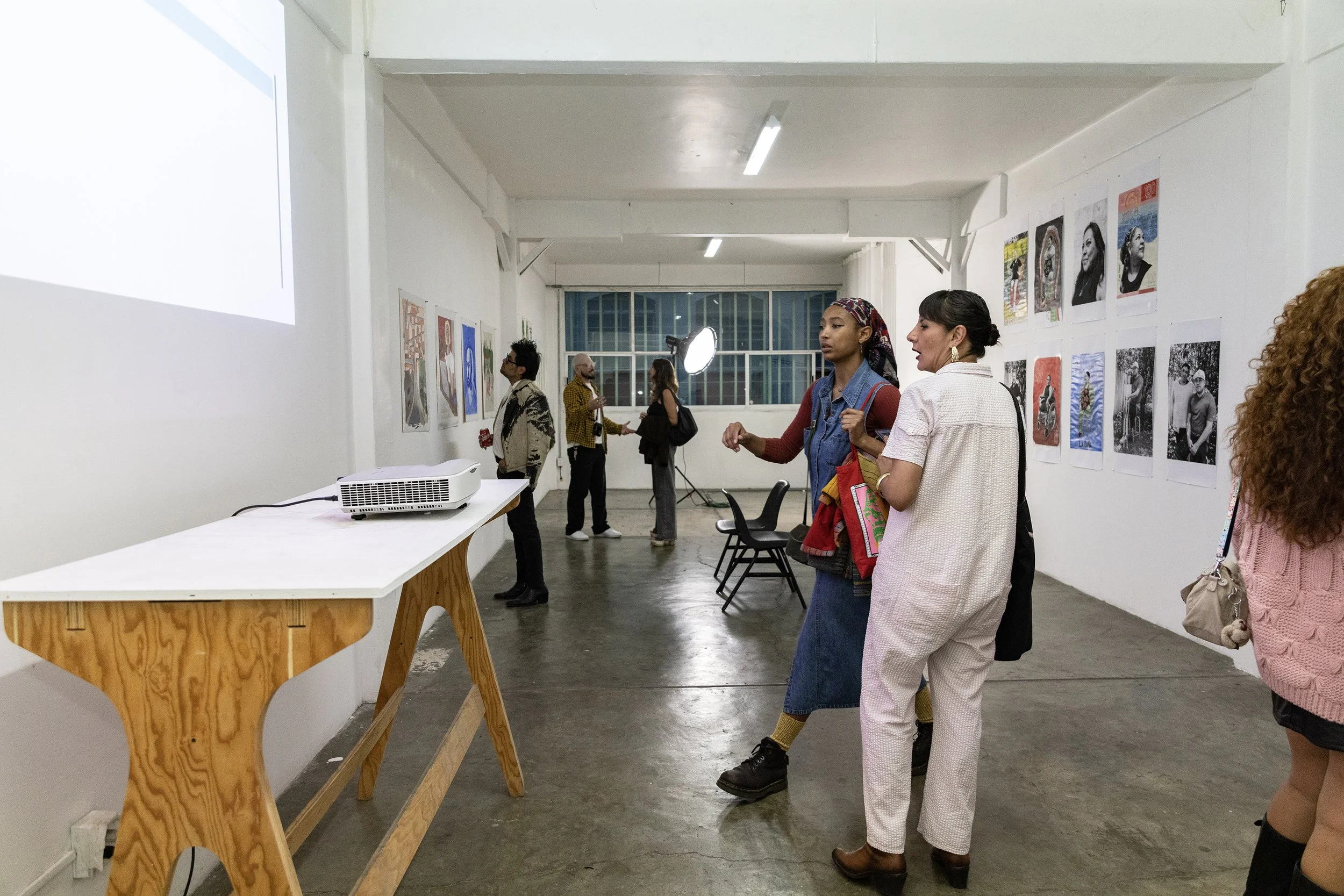
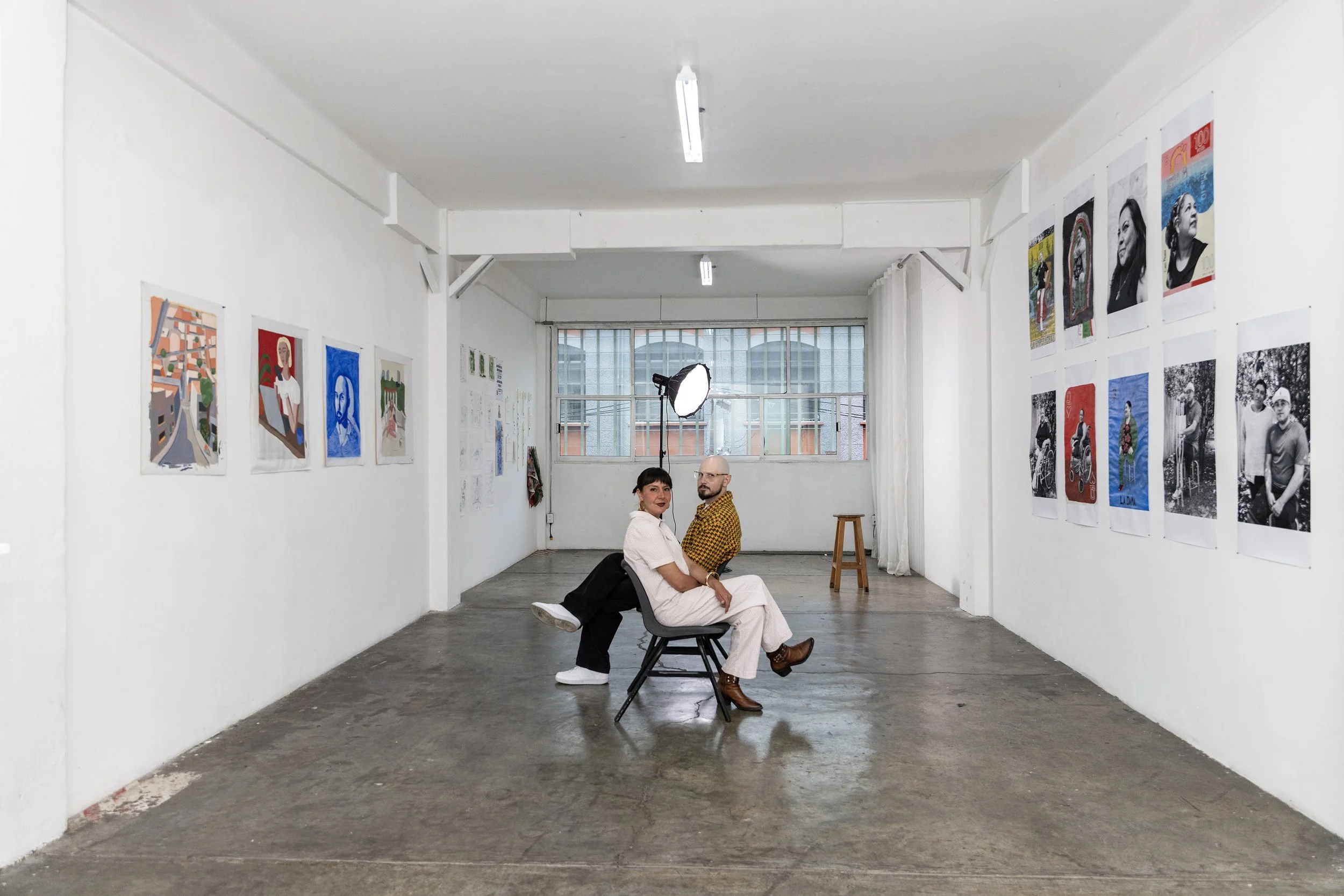
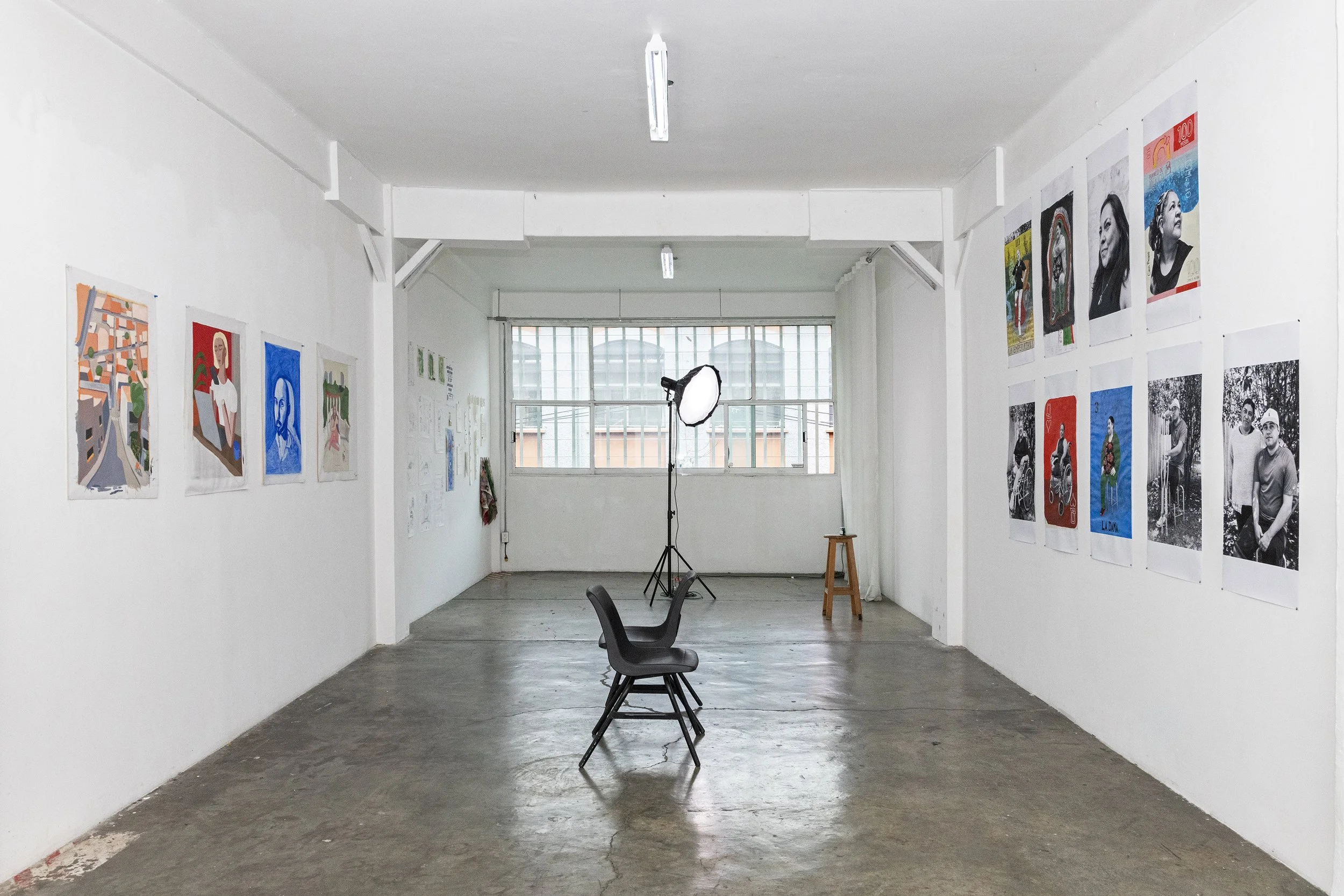
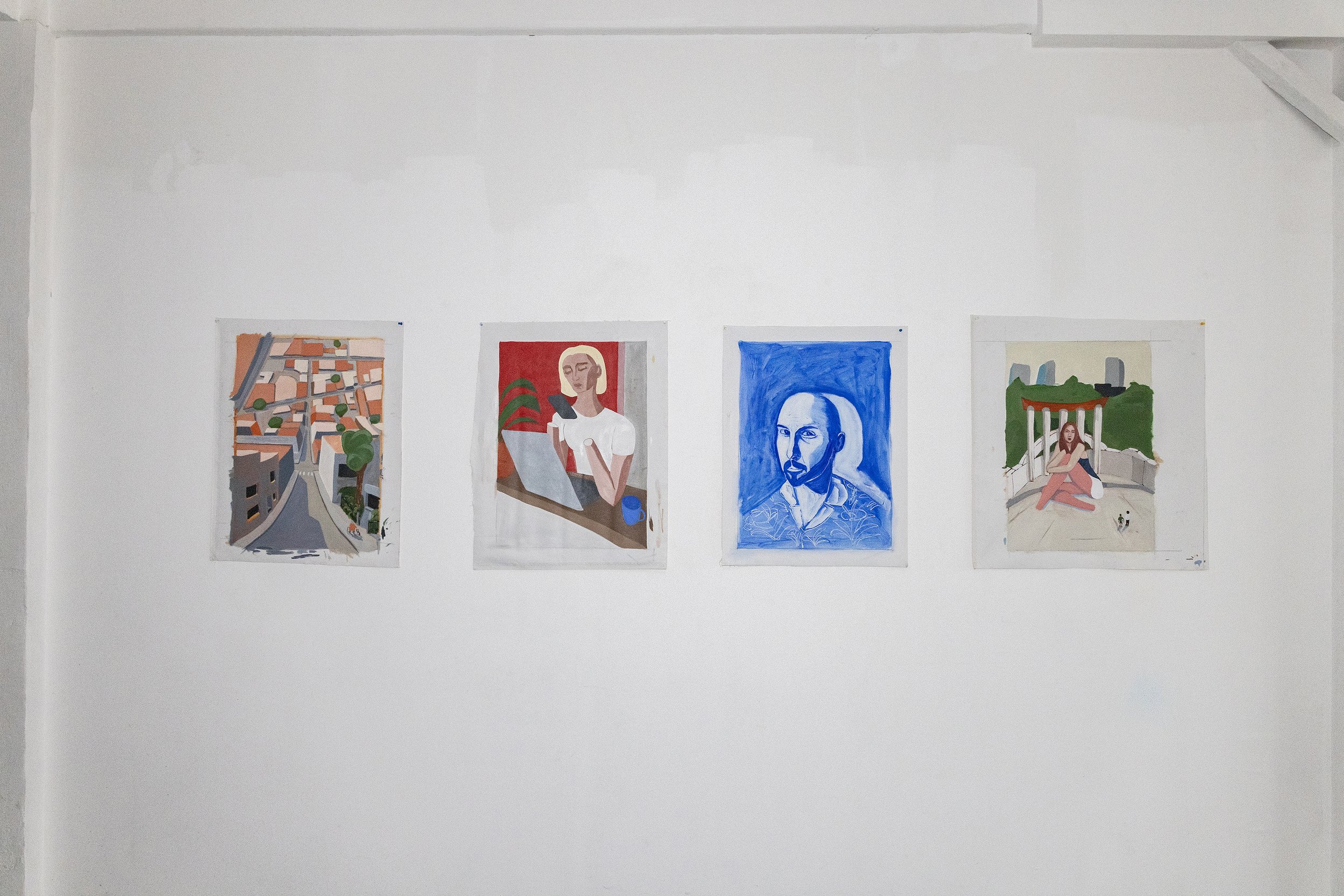
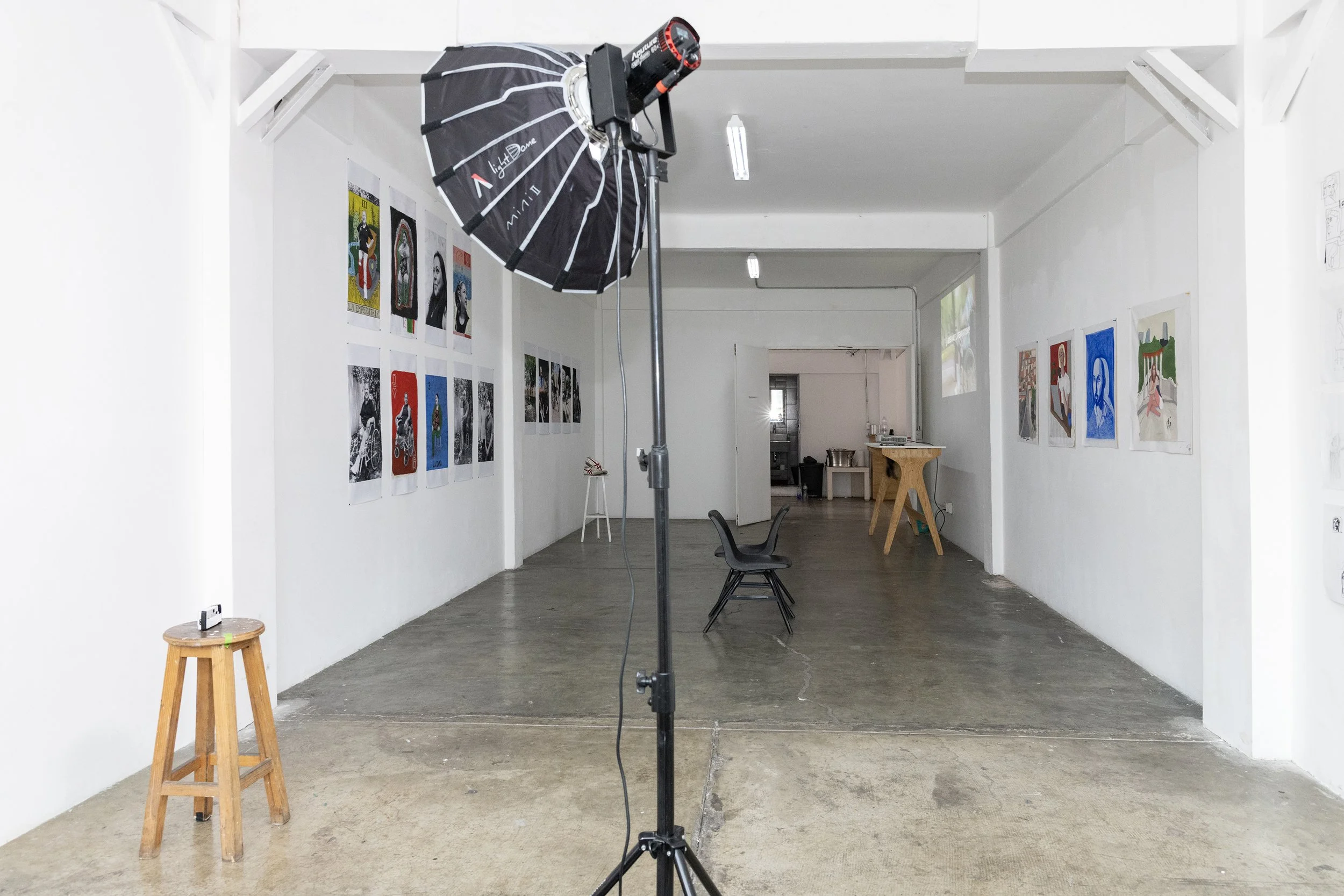
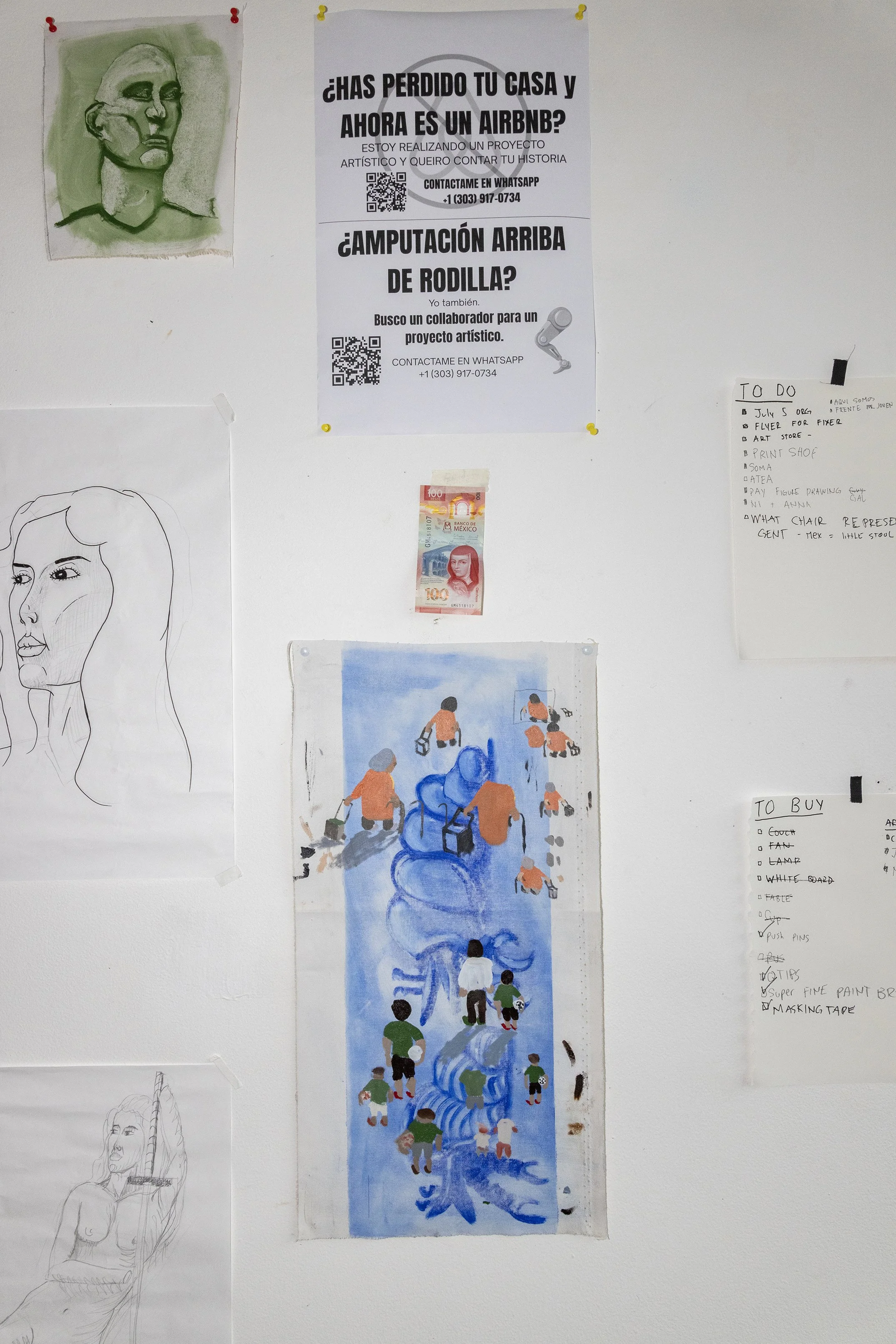
During his residency, Roseland made a series of paintings exploring different ways of looking at the city. A street in Tacubaya appears as a landscape that rises up and becomes a slope. In another, a park with heritage architecture coexists with modern buildings in the background, and a woman, like a statue, appears without limbs. In another scene, a blonde woman works at her computer in a café: an image increasingly common in cities inhabited by digital nomads.
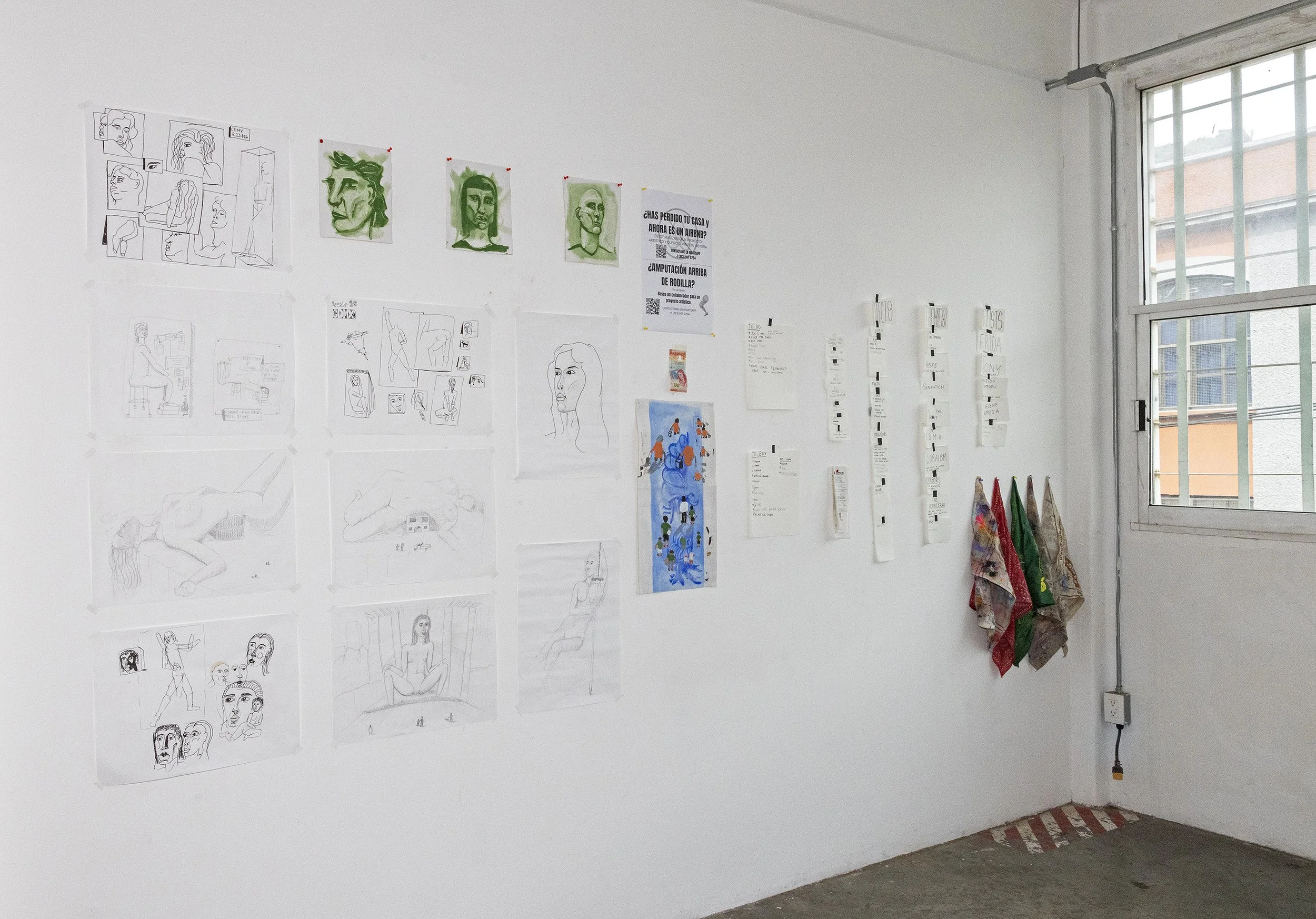
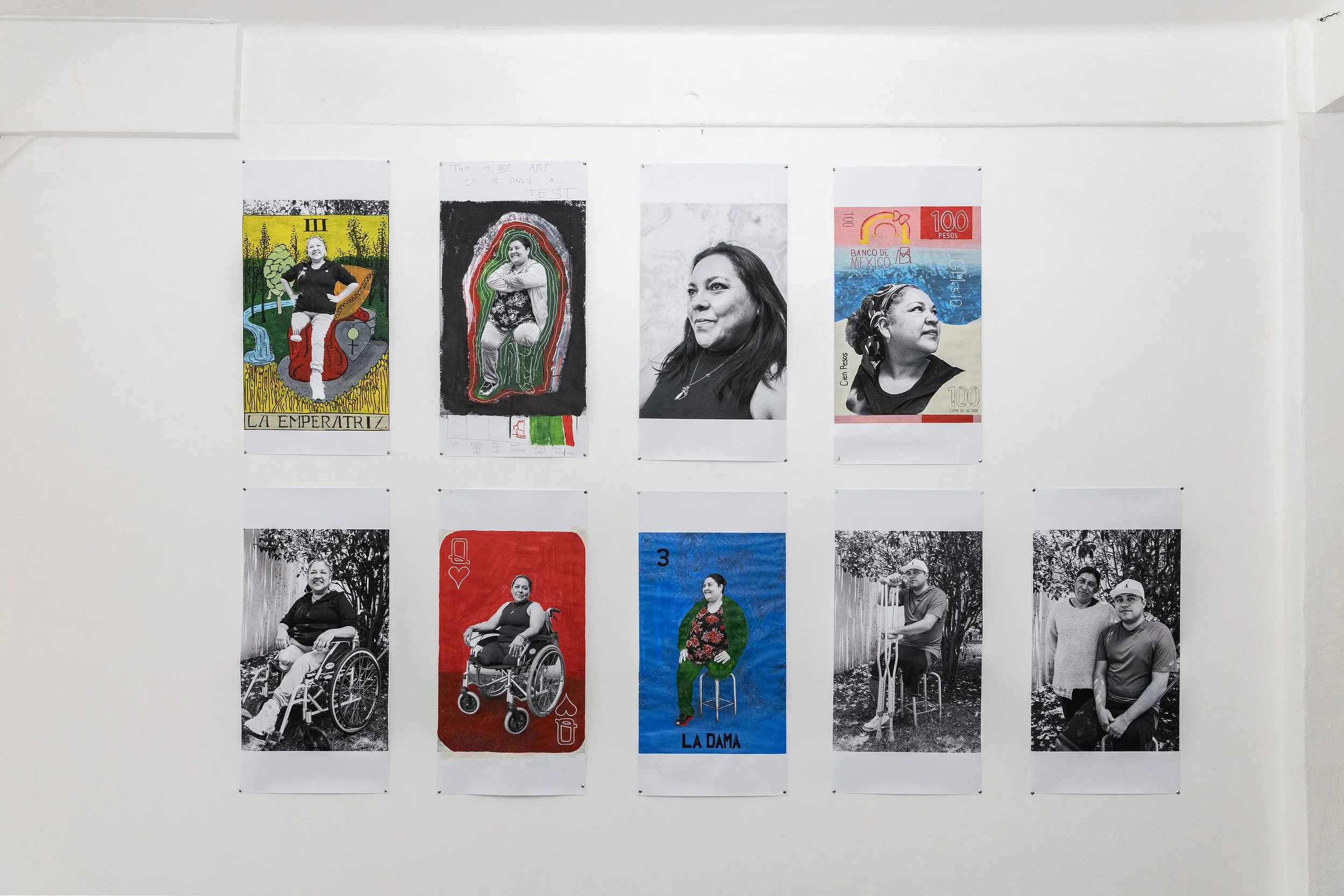
Roseland also found other bodies in the city with whom to share his experience. He visited an association of amputees in Mexico and made a series of portraits, a practice central to his work. He then intervened in some of the photographs with paint, turning some of the sitters into figures reminiscent of tarot or playing cards; in another image, he incorporated elements of the Mexican one-hundred-peso bill. The body thus becomes character, card, sign, value. The question shifts toward representation: what happens to a body when it also becomes a symbol?
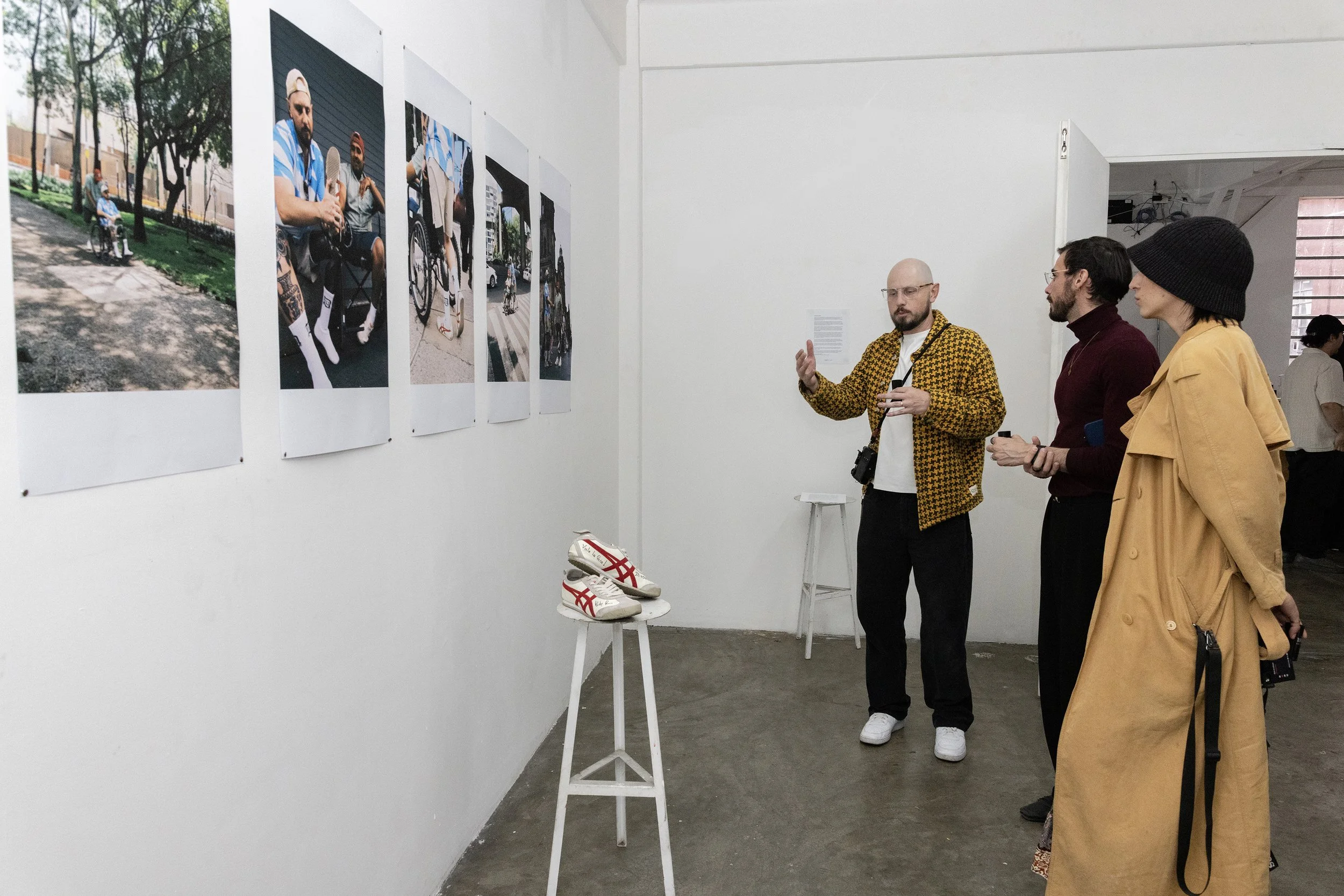
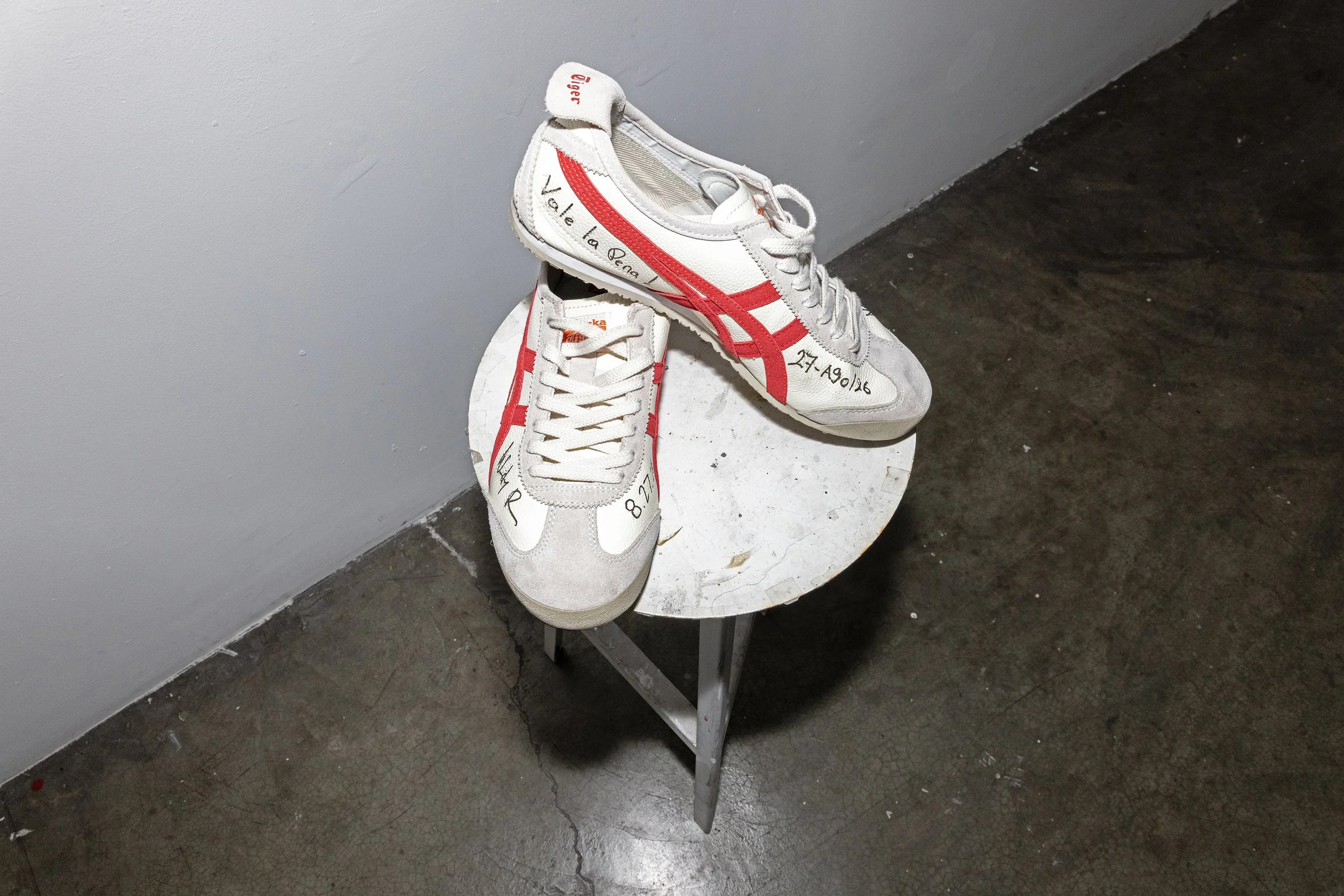
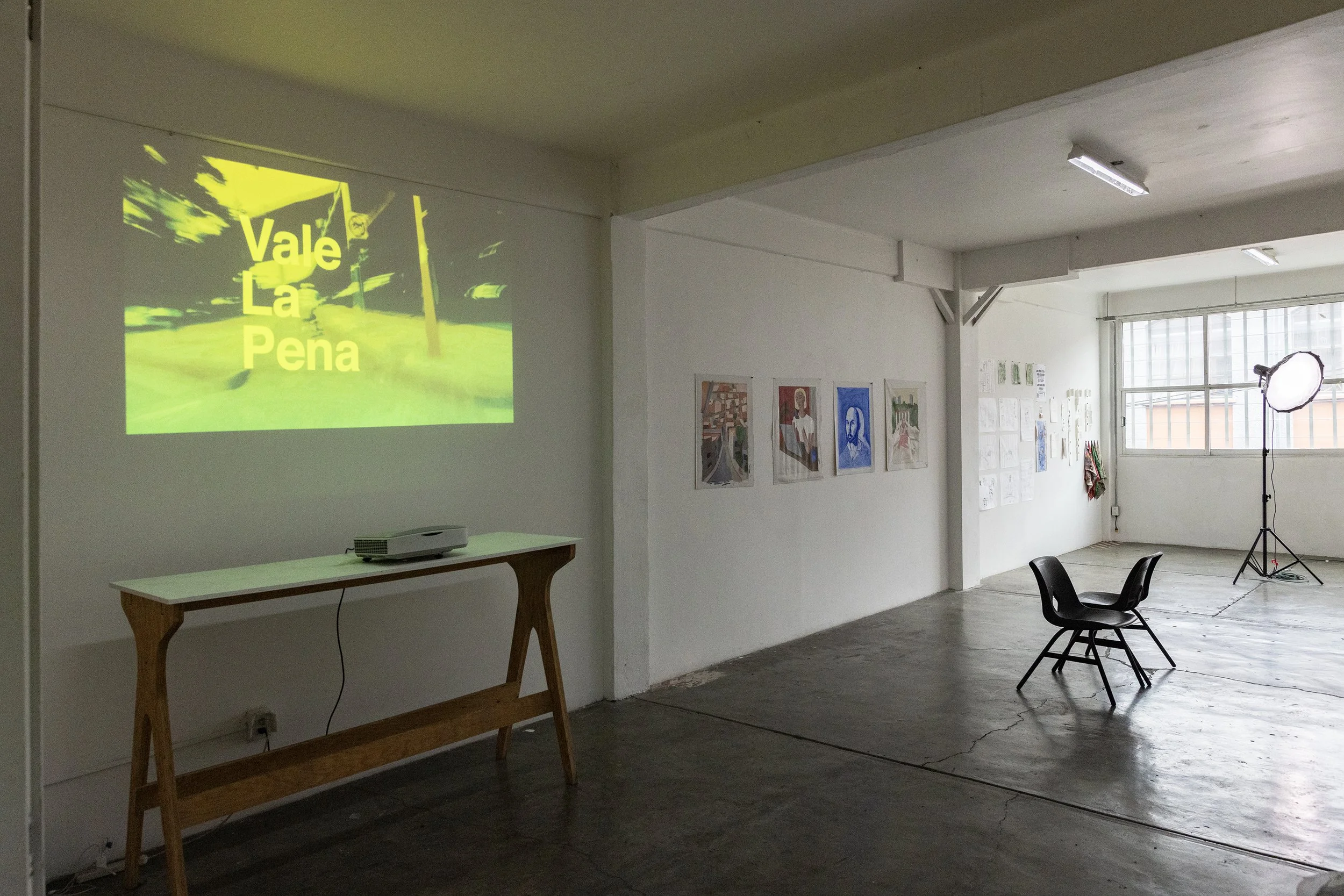
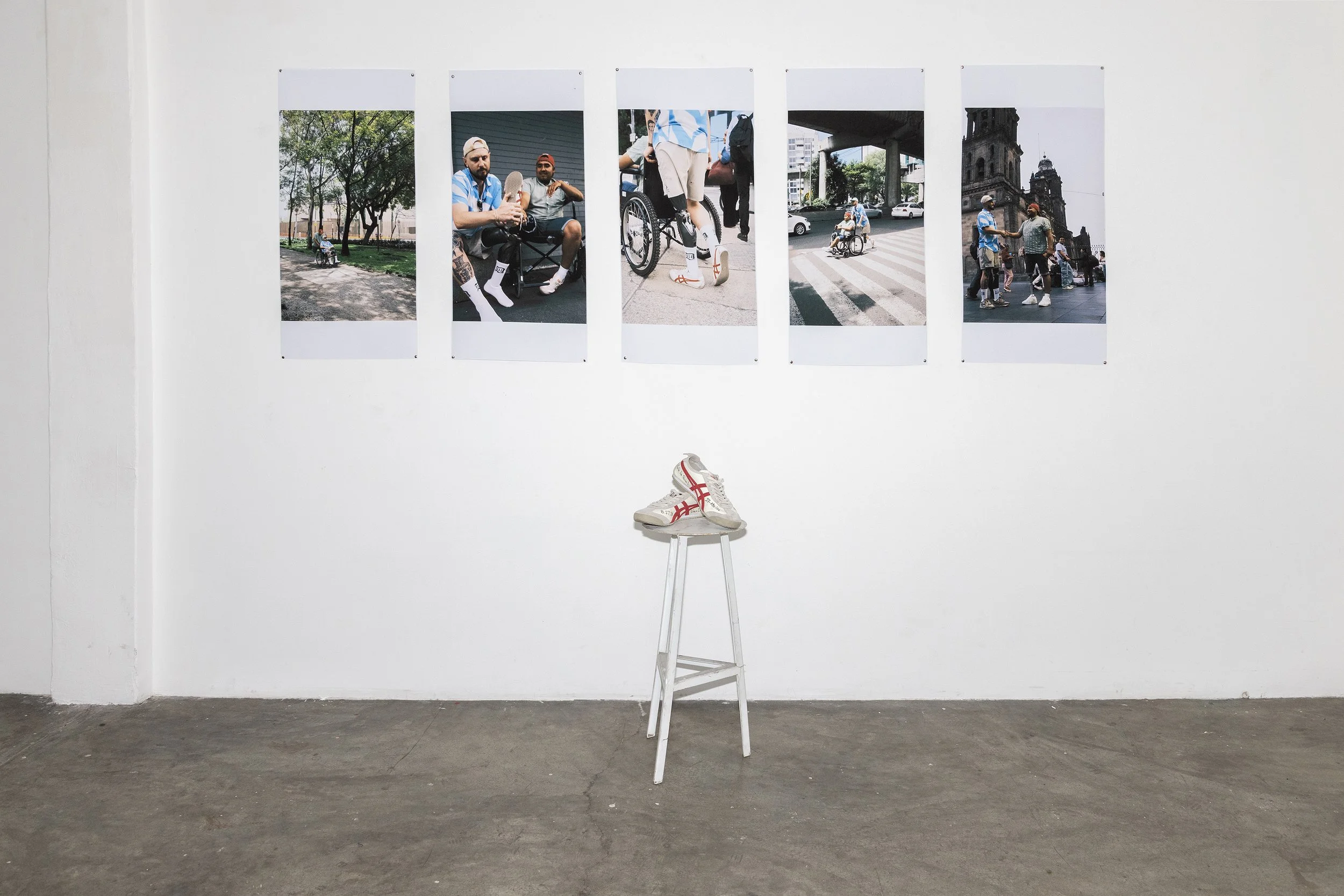
In another project carried out during the residency, Vale la pena, Roseland takes this research into public space. Together with Martín Sánchez, also an amputee, he traveled the distance between the U.S. Embassy and the Zócalo: two symbolic points that condense part of the tension between his place of origin and the city he inhabited during his residency.
The journey was made in a wheelchair that the two used in turns. One pushed the other, and then they switched places. A seemingly simple gesture, but one that questions the relationship between who helps and who receives help. In the action, roles are exchanged and moving forward depends on the other.
During this action, both wore Onitsuka Tiger Mexico 66 sneakers, which introduce a small nod to the global circulation of objects and images that refer to a place.
Following the path of a constantly changing territory also means learning to inhabit it anew. A city can contain different cities depending on who lives in it, and it can also be traversed in different ways according to the conditions and bodies that move through it.
Production: Akaisha Randle
Curatorial support and text: Violeta Horcasitas
.