The Geology of the Image
Over four weeks we visited nine exhibition spaces, talked with seven artists, whose practices are pictorial or close to painting, and spoke with five agents, mainly curators and gallerists, whose perspectives broadened our perception of painting. Three of us, as interlocutors or mentors, gave close support to groups of four or five artists, and in this way each group found different anchors and developments. In my case, accompanying five artists whose personal and professional timelines (or life moments, so to speak) were very different allowed all of us to weave together a network not only of support, but of complicity.
Together we asked ourselves why we do what we do; what kind of knowledge art, and specifically painting, gives us that we cannot find elsewhere; what it means to know and apprehend the world through the sensible; the need to know the historical references, but also to unlearn them and empty ourselves of certain prejudices; honesty toward one's own work; the struggle of the blank canvas, the constant making of decisions, and the problem of knowing when to stop; the pursuit of the unattainable; how to recognize what is inherent to a work and what can easily become artifice; the exercise of looking back when a career has been long, recognizing what has persisted in the work and also seeking what was left behind along the way; painting as a construction of reality; painting as a way of representing sensations.
With a career of more than 25 years, Fernanda Brunet has developed a very personal pictorial language, in which scale and color produce a visual impact that disrupts everyday perception and the apparent simplicity of the images circulating around us. Influenced by comics and nature, her painting seeks to produce a transcendent, forceful, and ephemeral moment, shot through with sexuality and desire. During the residency, it was significant for her to return to her earlier production; the works resulting from this exercise recover watery and viscous elements that reappear in her painting and give these new pieces a different character.
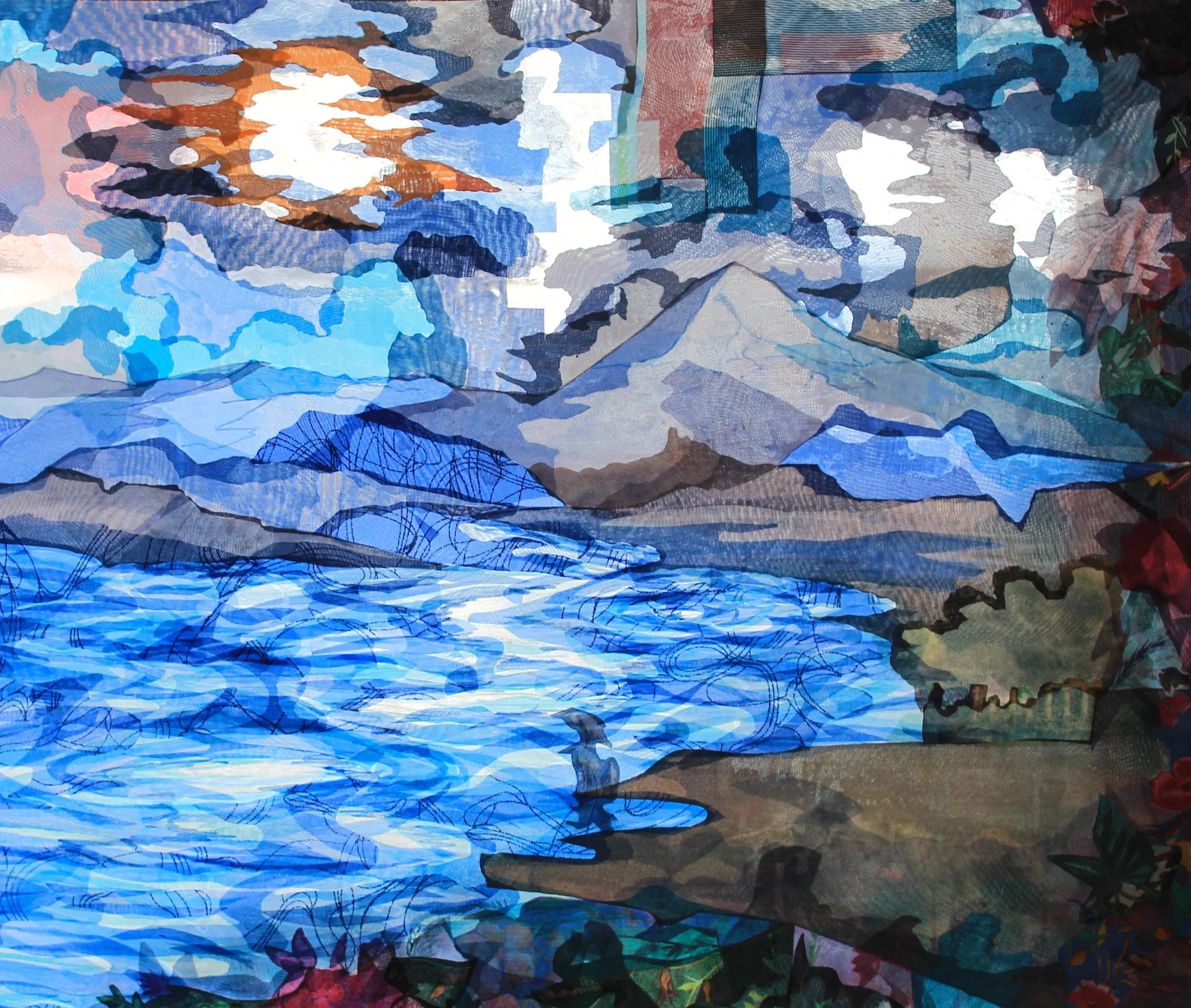
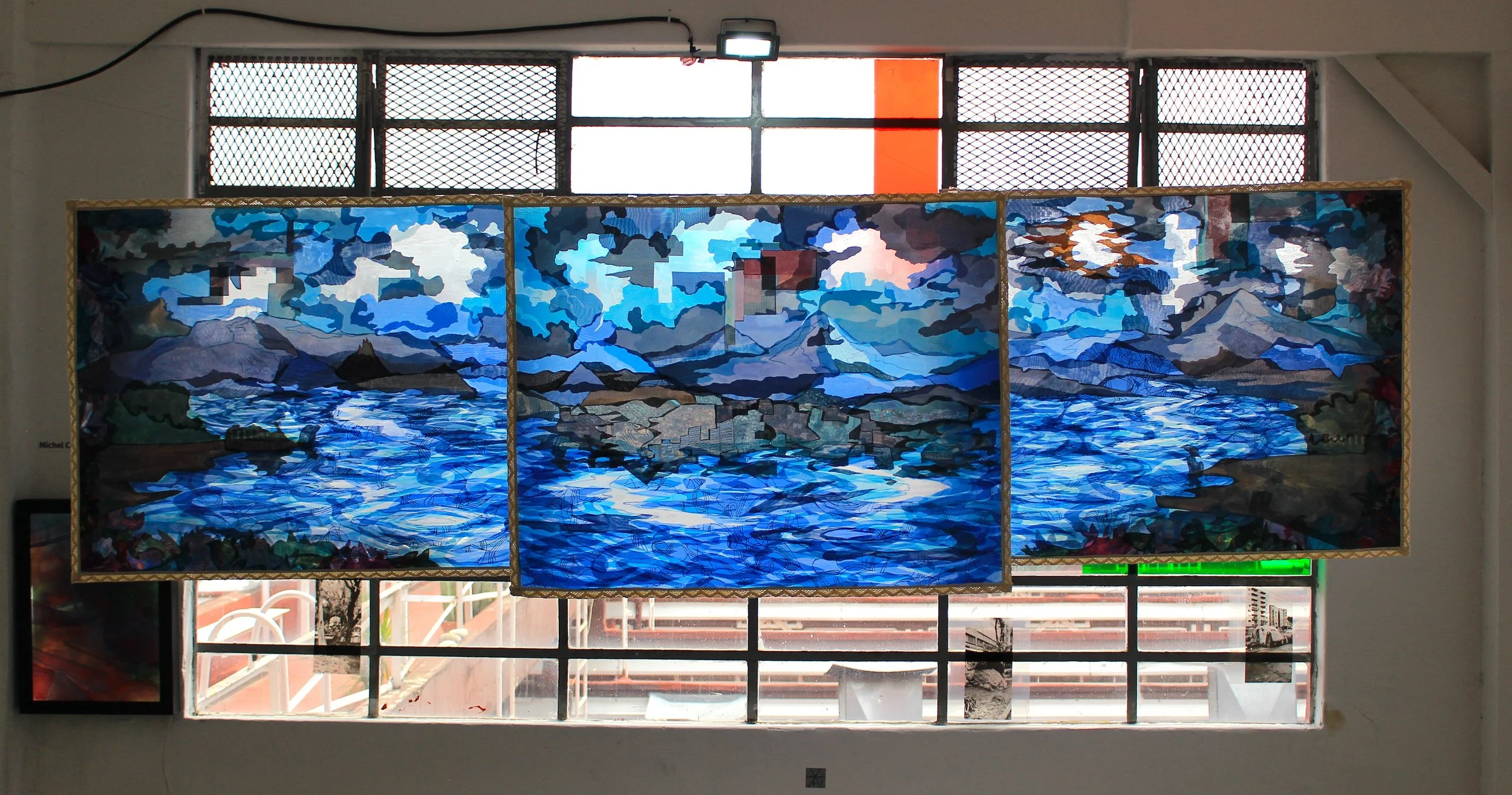
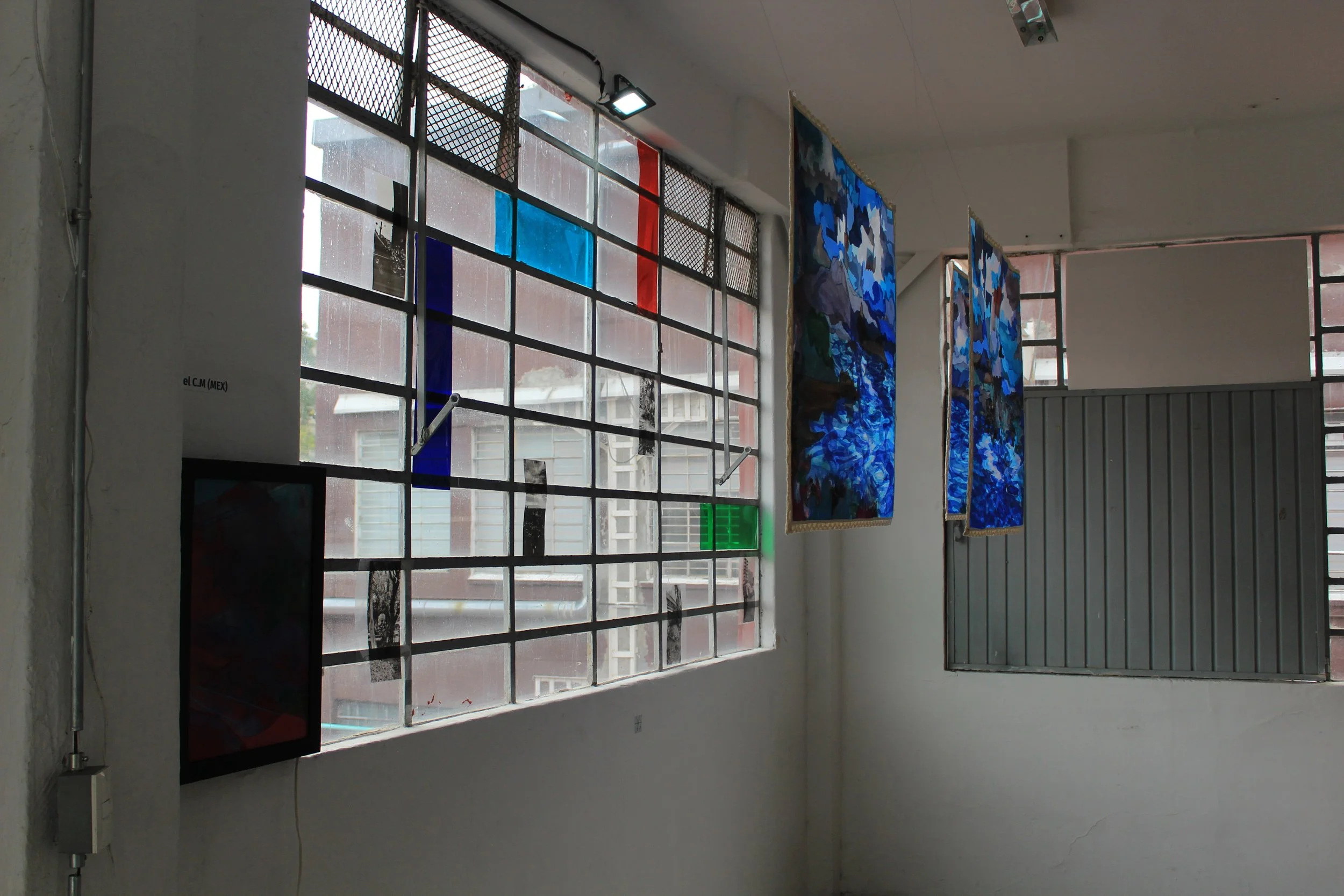
In the case of Michel Cárdenas, his practice starts from installation and painting, and is articulated through his own technique of translucent textile collage, developed out of his research into color, light, and the intervention of space. Using materials such as gauze and organza, combined with paint and spray paint, he builds images that come close to stained glass. Manual work holds a central place in his practice, as a way of questioning mass production and reflecting on technology, globalization, and contemporary power structures. During the residency, we discussed landscape as a construction and the different ways in which it can be perceived and represented. The resulting works bring together different times of a single place, along with a series of images that accompanied the artist throughout his creative process.
In Paulina García’s practice, painting works as a space for exploring the relationships among body, gesture, and presence. During the residency, questions about what it means to paint and what a painting can become led her to recognize the central place the body occupies in her process. In dialogue with Cortázar’s figure of the mancuspia, a creature whose presence is built without ever being fully revealed, she made the largest-format painting she has produced to date, inhabited by anthropomorphic figures that oscillate between specters and bodies, between apparition and movement. How much does something need to show itself in order to acquire presence? This question runs through the work made during the residency and opens a new exploration of gestuality, the uncertainty of the image, and the bodily dimension of painting.
In Viviana Lorenzo’s practice, intuition works as a form of observation and discovery, drawing on images, memories, atmospheres, and colors that remain as traces of experience. During the residency she worked on a series of drawings based on the fossils found in Mexico City’s Metro, thinking through notions such as fossil, memory, sediment, evidence, and recognition. At the same time, reading Cézanne’s Doubt led her to look more deeply into perception and into color’s capacity to produce an experience rather than describe an image. These reflections resulted in a large-format painting that oscillates between recognition and abstraction. In this process, Lorenzo identified something that runs through her practice: painting as a way of understanding.
Romeo Mijangos’s practice starts from a deeply personal imaginary, built from references that cut across art theory, post-internet culture, science, and various expressions of popular culture. Through them he constructs his own archetypes and systems of meaning to critically address contemporary social and cultural structures. During the residency, these concerns took the form of an installation in which painting overflows its condition as an image and becomes an inhabitable space: it appears as a rug, a cushion, a lamp, or a soft object that can be touched, deformed, and even intervened upon. From a deliberately naïve and irreverent aesthetic, Mijangos questions the idea of the artwork as an untouchable object and proposes instead a physical, playful, and changing relationship with painting.
A key element, which emerged as a suggestion from the artists themselves, was the interest in holding weekly group reviews, in which we looked at and commented on each person’s work. The different voices added nuance to the questions that the works themselves raised. The group’s attentive listening and openness to different points of view were fundamental in building the complicity that ended up being a central part of the residency. Talking privately with some of the artists, I also understood why even those who already have an established studio and practice in Mexico City decided to apply: constant feedback, group reflection, and even the contamination of visual elements generated by the space itself produced a fertile jolt in the work of many.
Perhaps what I value most from this exercise was the chance to create the conditions for thinking of painting as an open process, one nourished by other gazes and other subjectivities, by conversation, friction, and doubt; spaces where what seemed resolved can once again become a question.
Andrea Bustillos Duhart
Michel Cárdenas
Michel Cárdenas
Michel Cárdenas
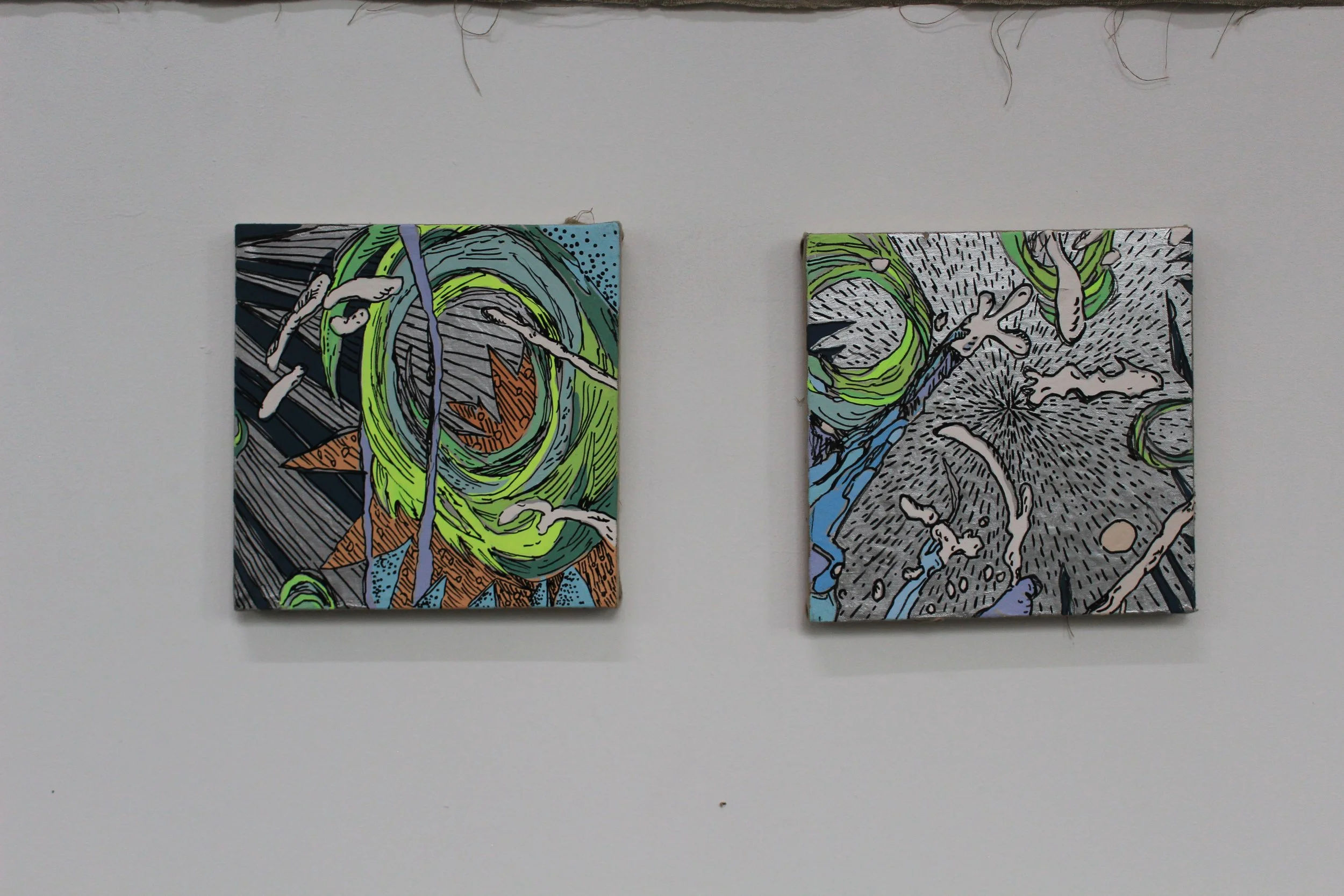
Fernanda Brunet
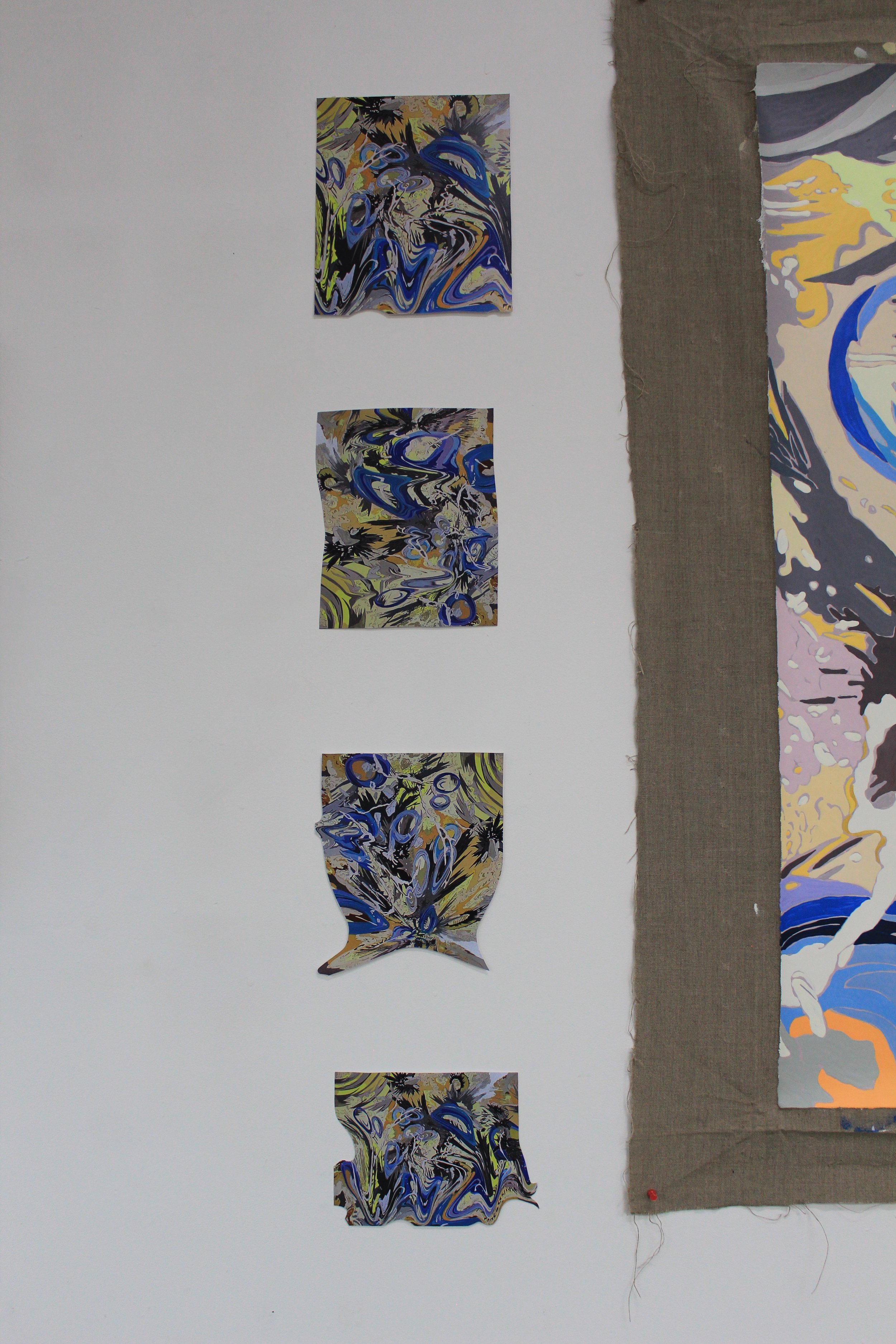
Fernanda Brunet
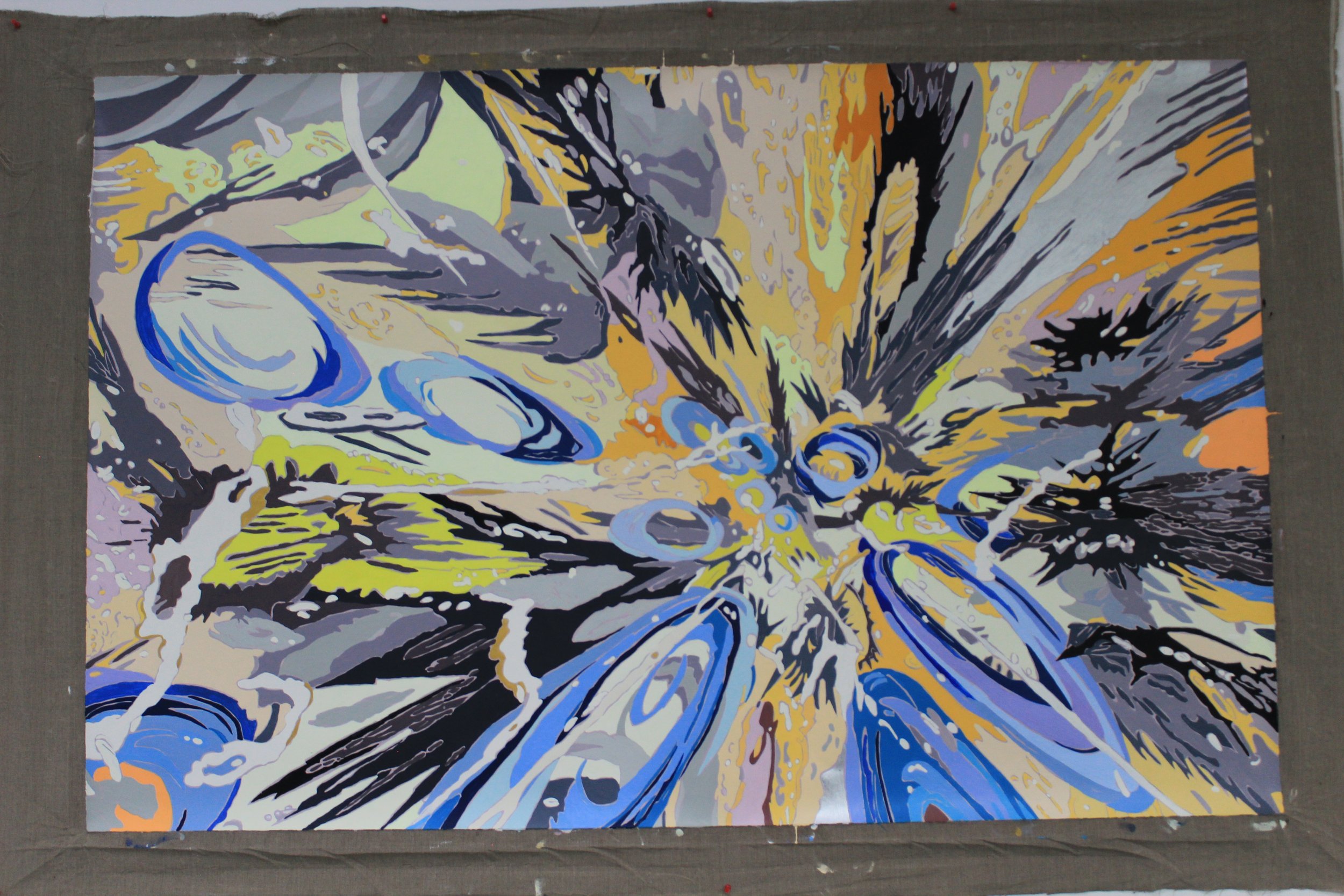
Fernanda Brunet
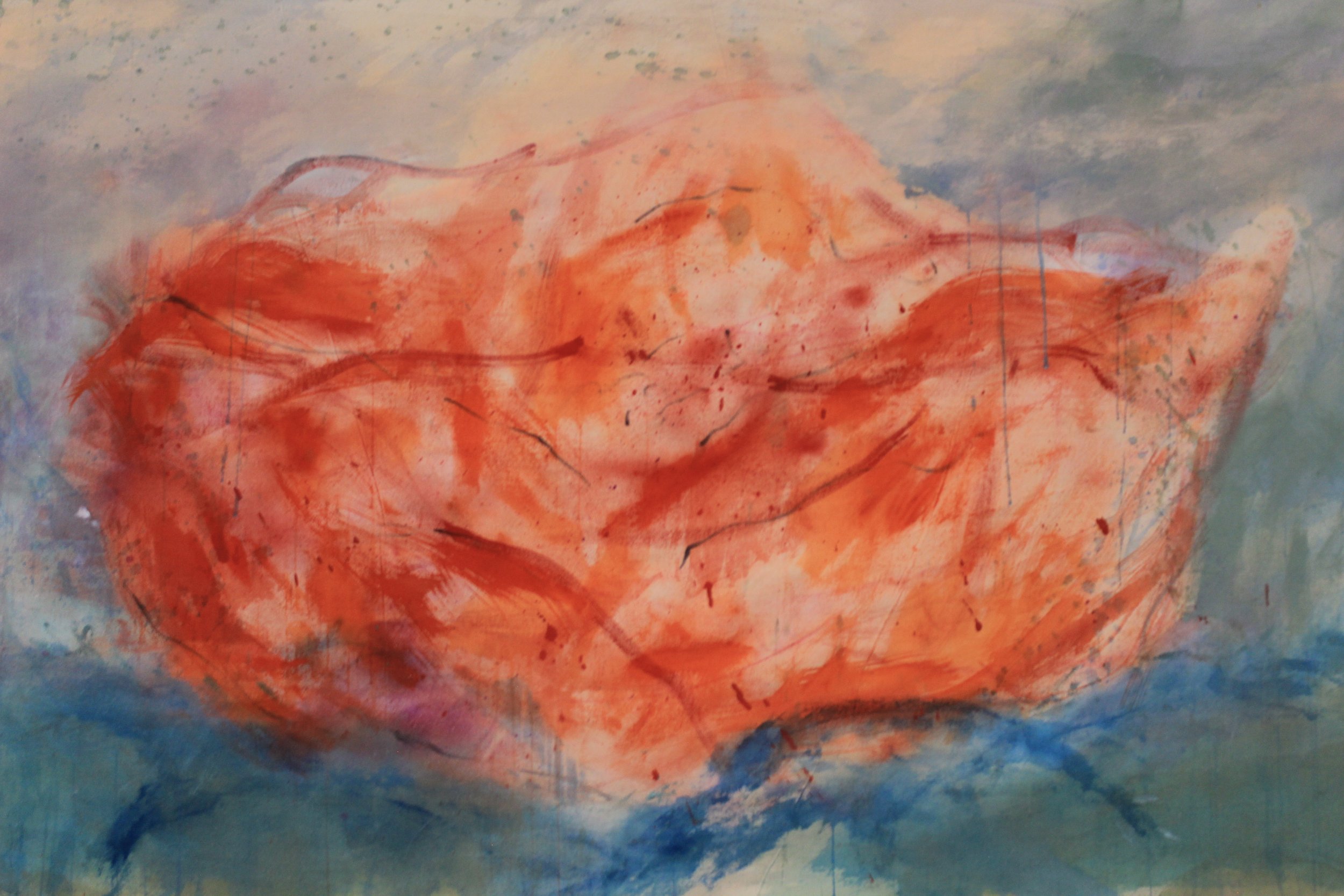
Viviana Lorenzo
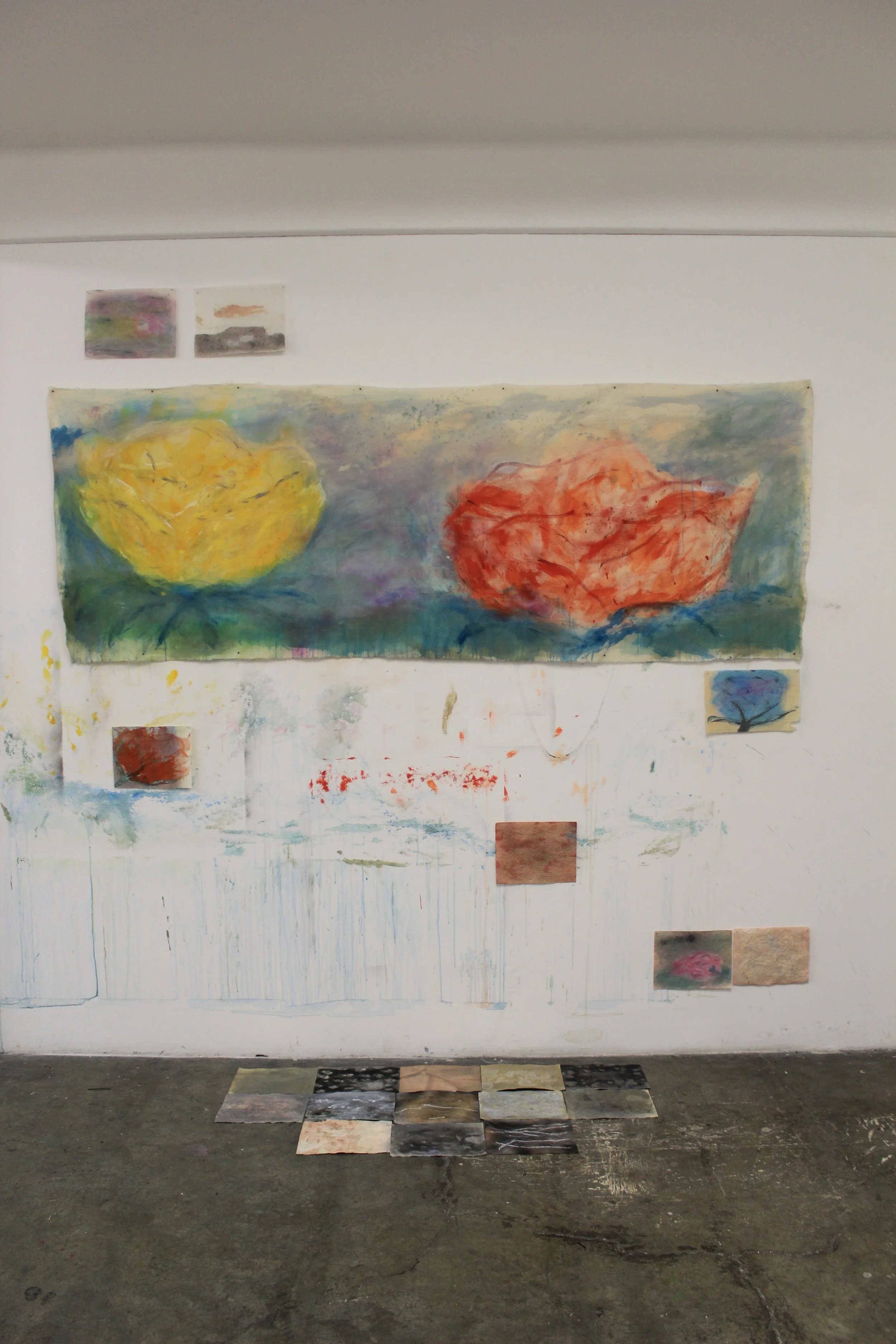
Viviana Lorenzo
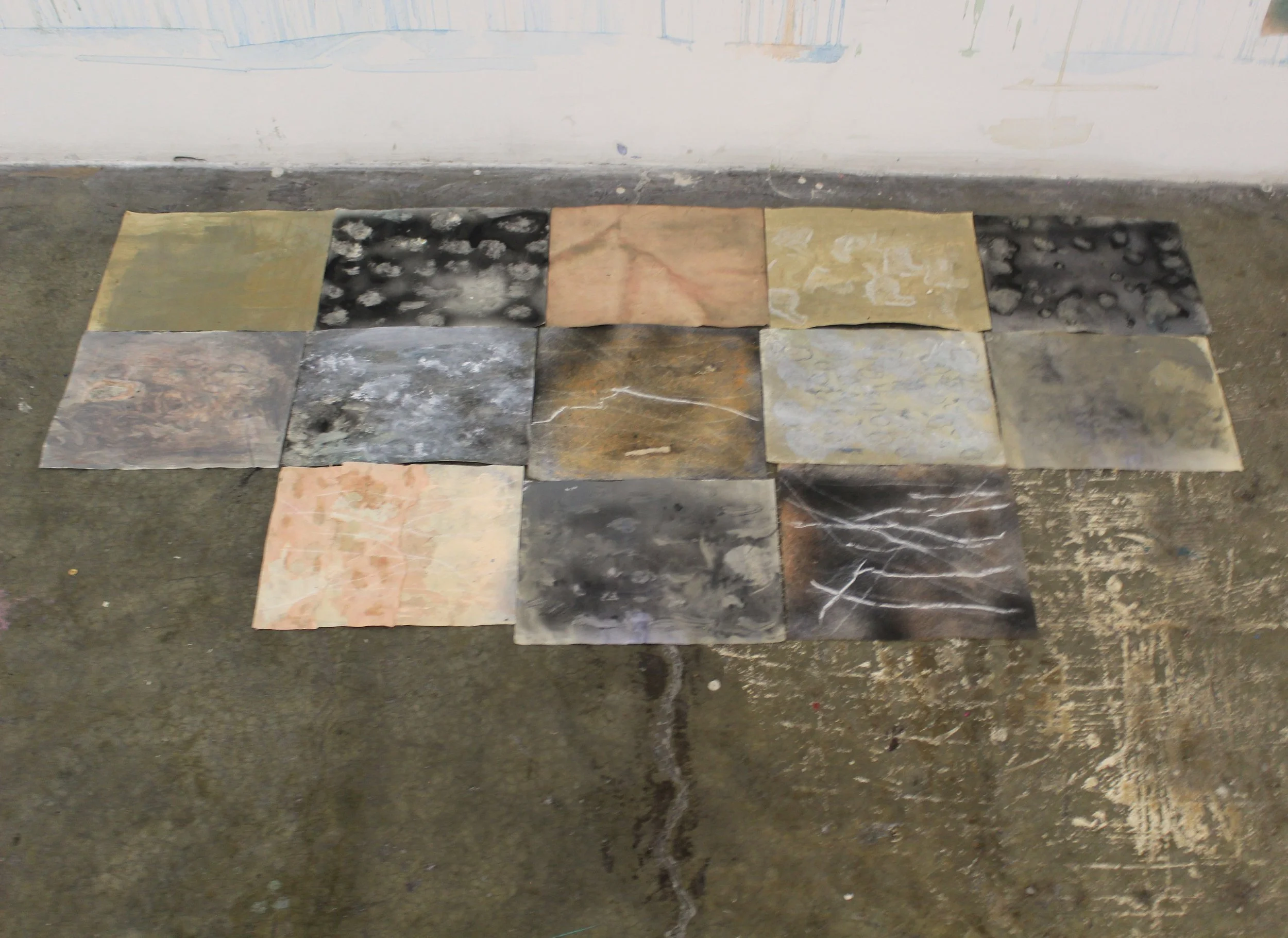
Viviana Lorenzo
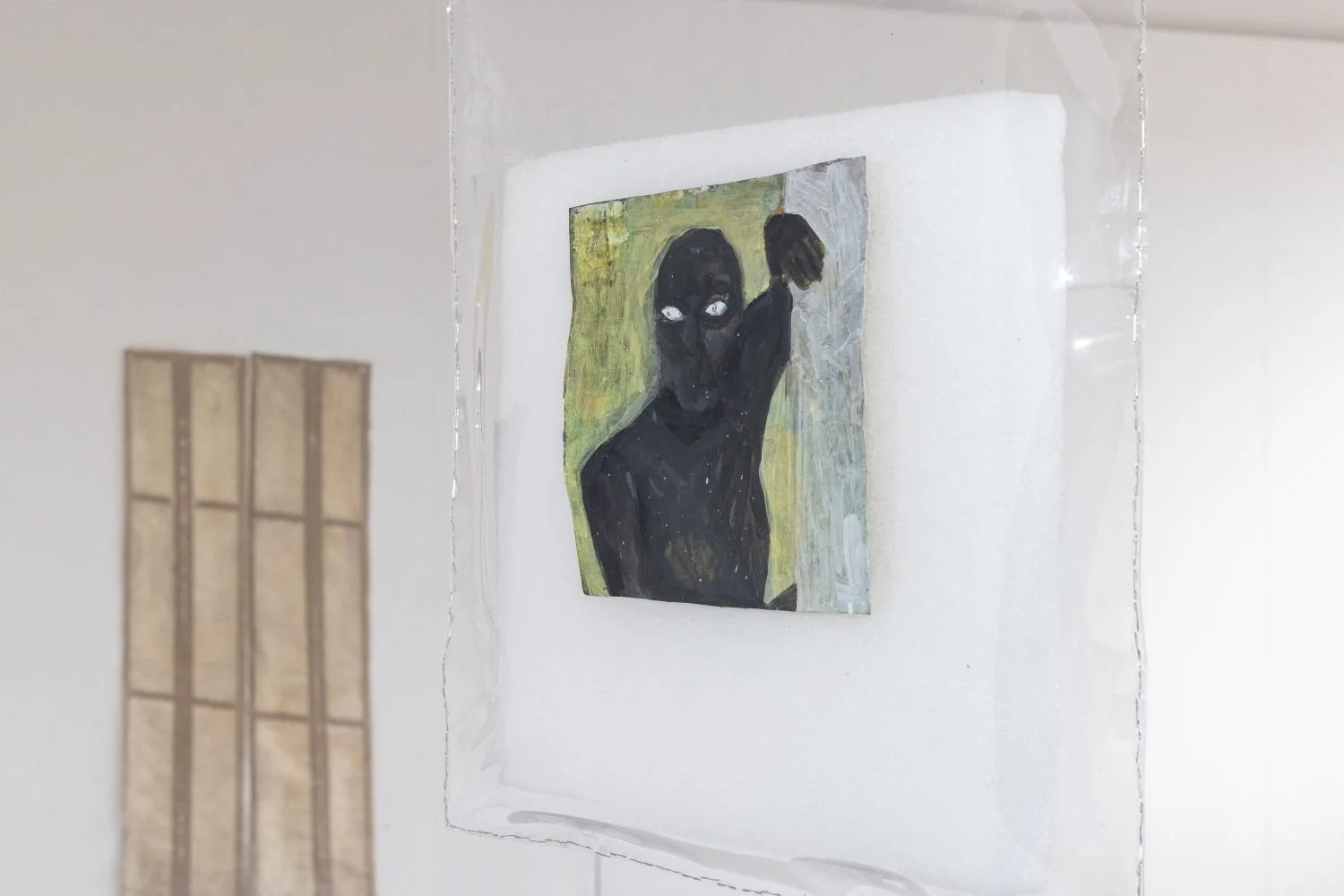
Romeo Mijangos
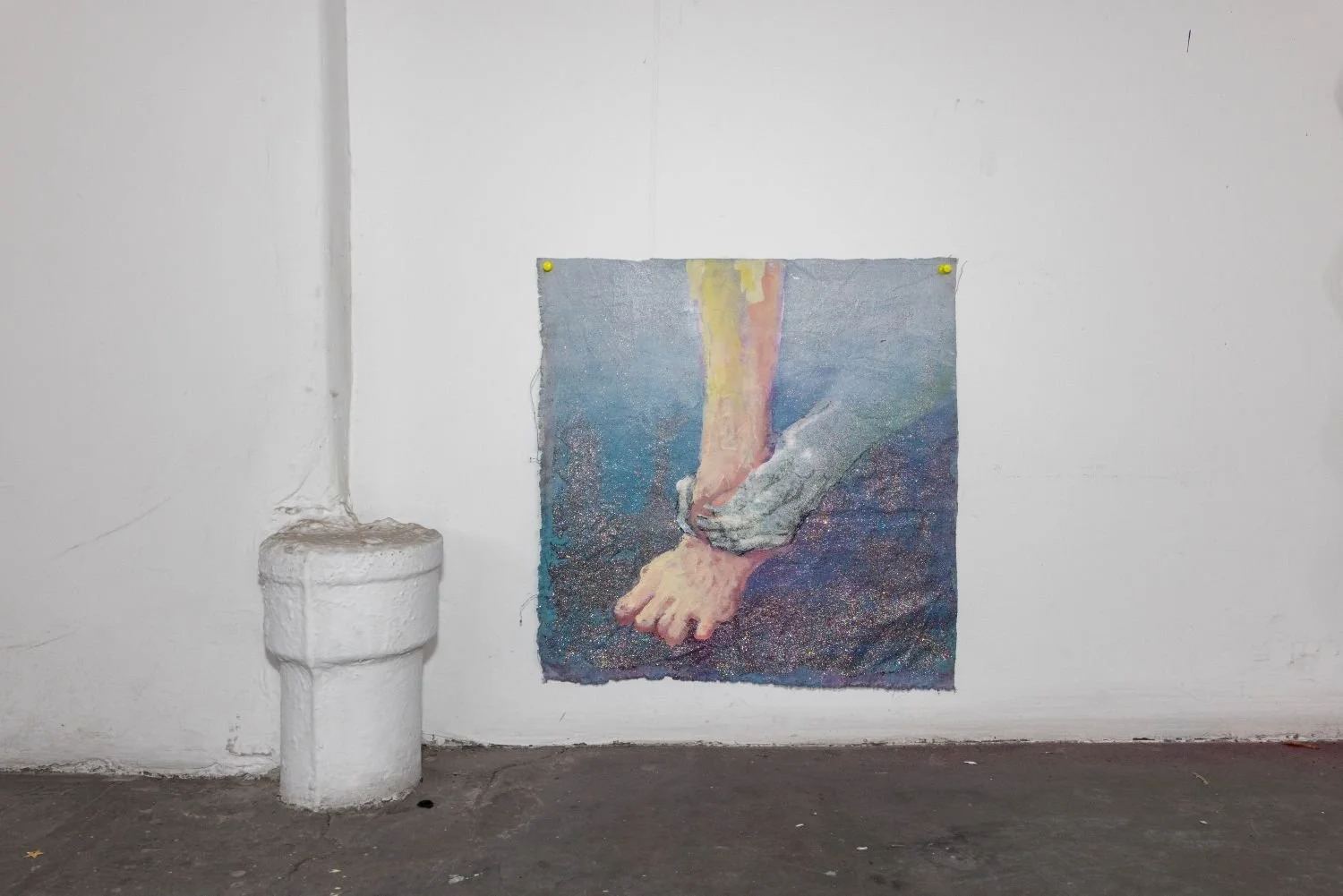
Romeo Mijangos
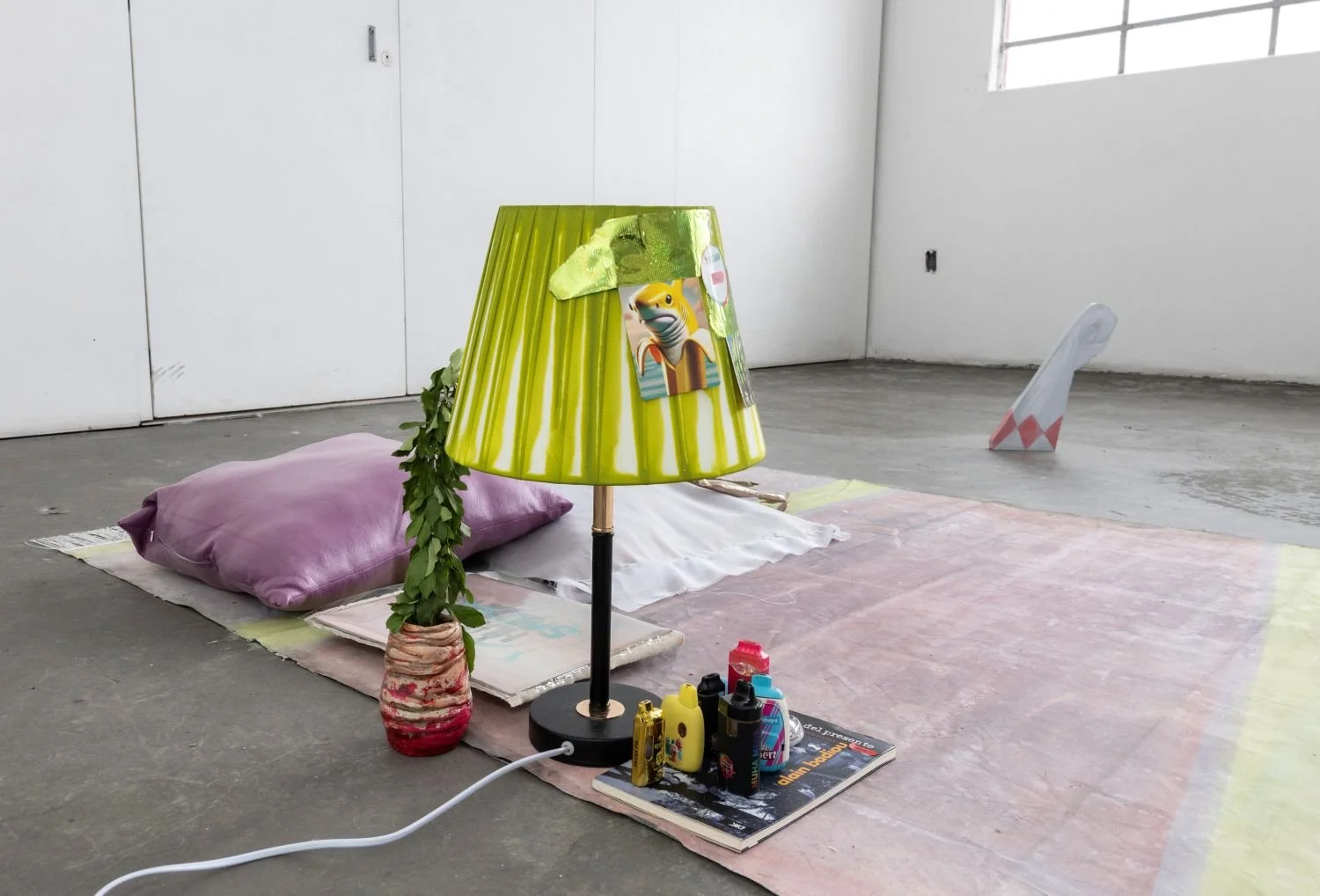
Romeo Mijangos
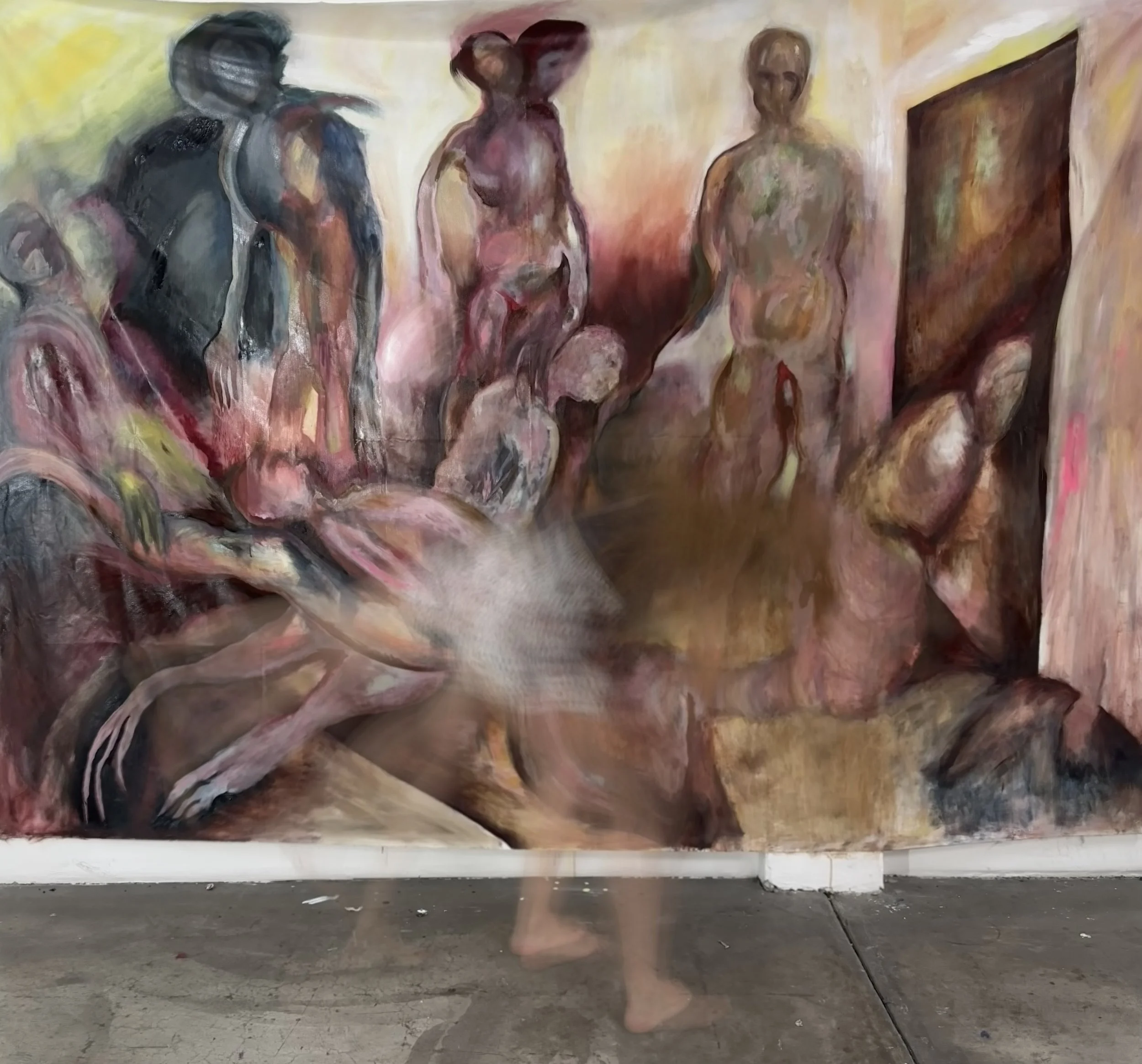
Paulina García
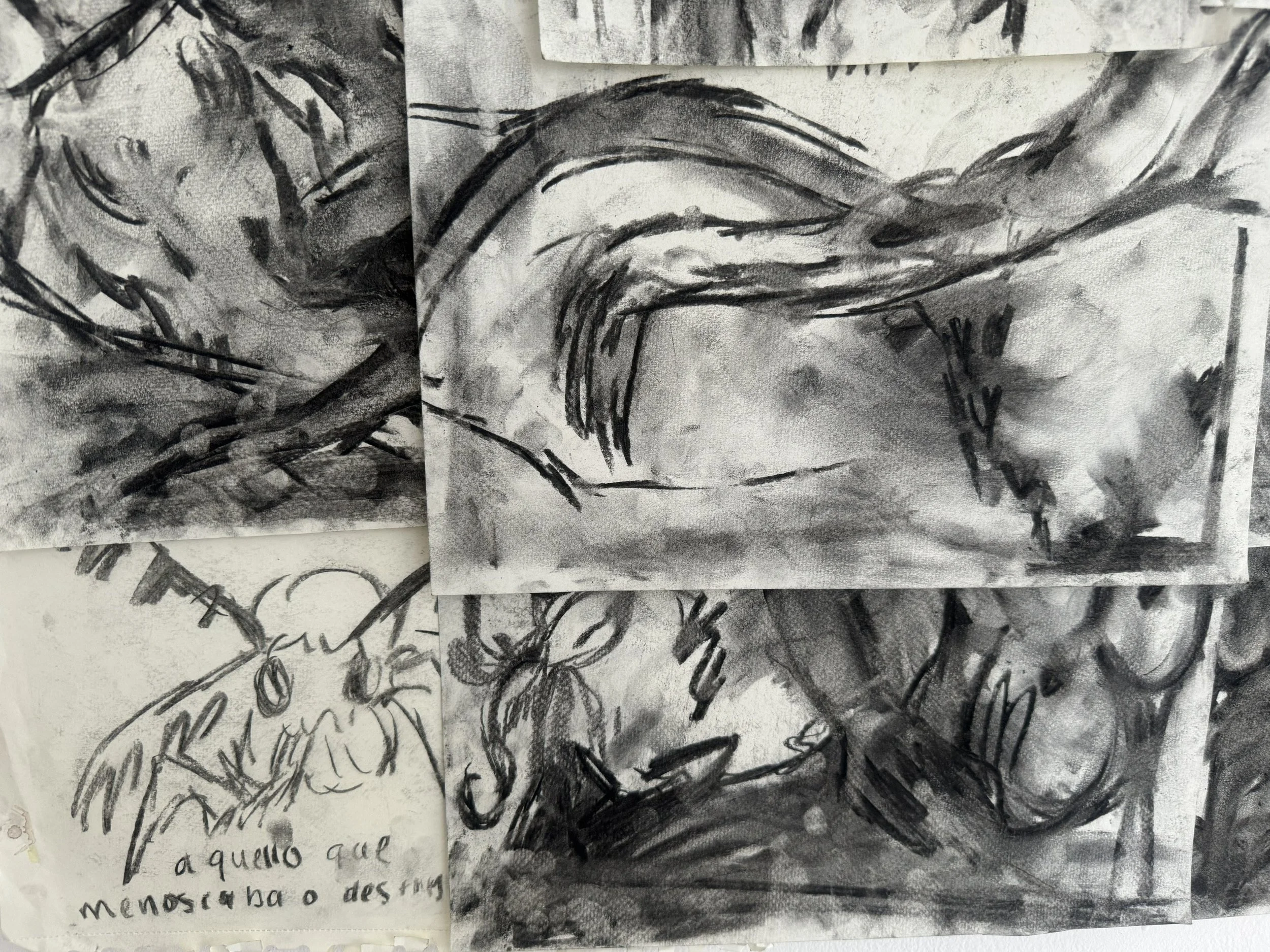
Paulina García
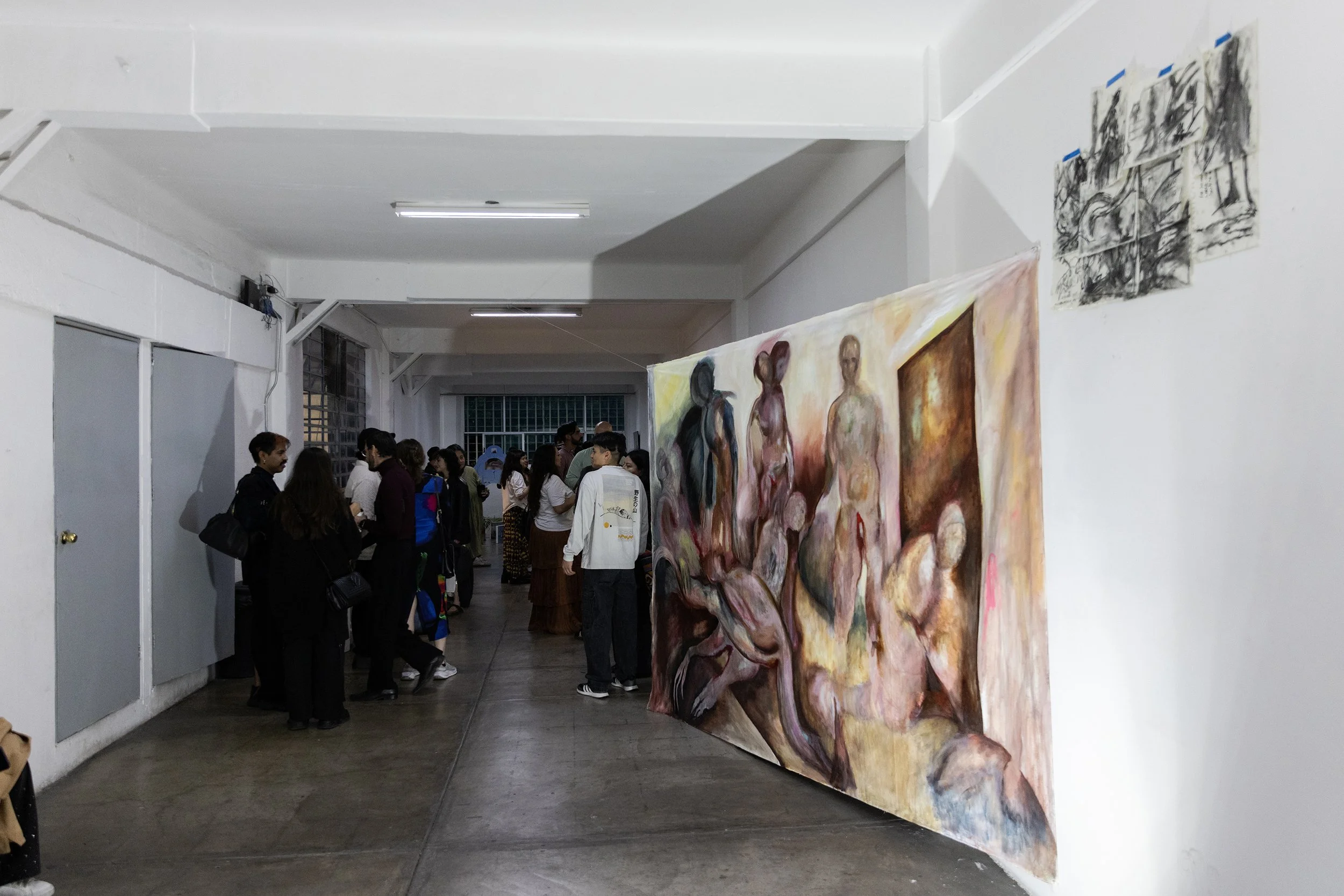
Paulina García