29/08/2026
For more than 20 years I have kept up a constant dialogue about painting with Luis Carrera-Maul, founding director of Lagos. We think it, make it, question it, and take part continuously in its pedagogical processes. We see painting as a vital node within contemporary art, capable of drawing on an immense complexity of meanings. For centuries it has sustained the dimension of the visual arts and of art in general, and today it presents itself under concepts such as a metabolic centrality that absorbs current flows, a post-hegemonic leadership open to the present, or a transhistorical power that reactivates memories on a single plane. These options allow us to move from the discipline's traditional hegemony toward the idea of a fertile anachronism. On that premise we conceived this situated residency, focused on weaving together a community of interlocutors, participants, accomplices, and replicants who would shape an experience oriented toward relationality around thinking, making, and collectivizing painting today in Mexico.
Along this journey, the fourteen artists who make up the residency took a chance on this project and trusted in it, and we owe them a debt of gratitude for their fibrous and neuralgic commitment, always ready to place their practice in a dynamic, replicating dialogue with the mentoring of Andrea Bustillos, Luis Manuel Perea, and the author of these lines, olgaMargarita dávila.
To strengthen this deep sense of the residency, Fertile Anachronism, we planned a series of visits and tours with a radical approach. We went to touch, think, converse, and be in front of the murals of the Palacio de Bellas Artes and the tour of Mexican painting at the Museo Nacional de Arte (MUNAL). We also expanded the horizon toward contemporary spaces that show the great breadth of pictorial practice, such as the visit to Gonzalo García's studio; Nicole Chaput's vibrant exhibition on women's bodies, their other meanings, and their feminist, dialogical power; Tahany Lee's studio; and the review of the Colectivo Sector Reforma, which emphasizes "Together we go further."
The dimensions of this process were also articulated through strategic visits to the galleries of Karen Huber, CAM, and La Guerrera. We selected these spaces very consciously because each embodies a rich, powerful, and diverse form of management that helps us understand the different ways of situating artistic practice within its commercial circulation. We also invited Guillermo Santamarina, Carlos Palacios, and Mónica Castillo to share the intimate drive that serves as the guiding principle of painting in each artist, creating a careful balance between the dimension of the market and the dimension of discourse and the inner power of the work.
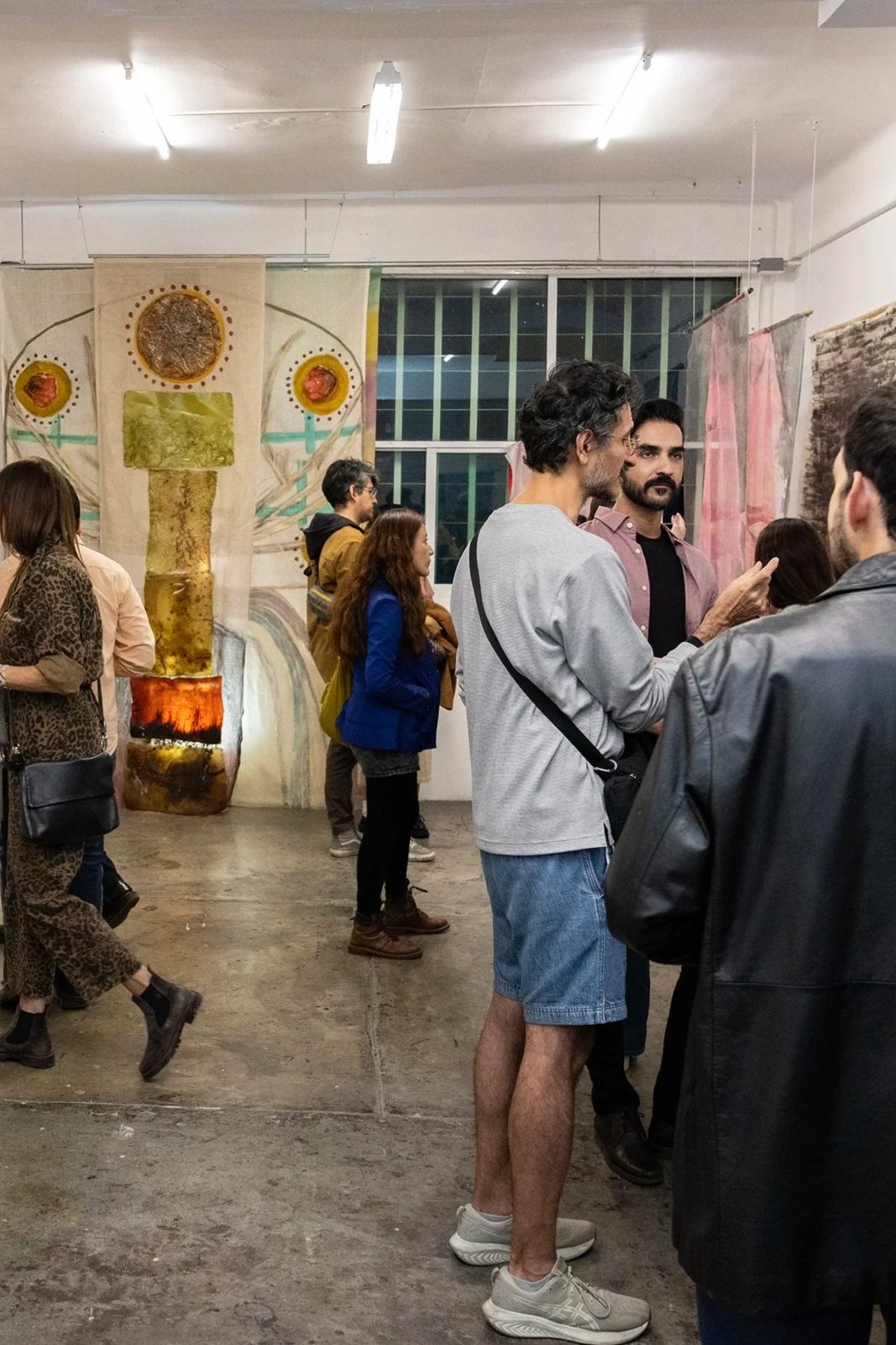
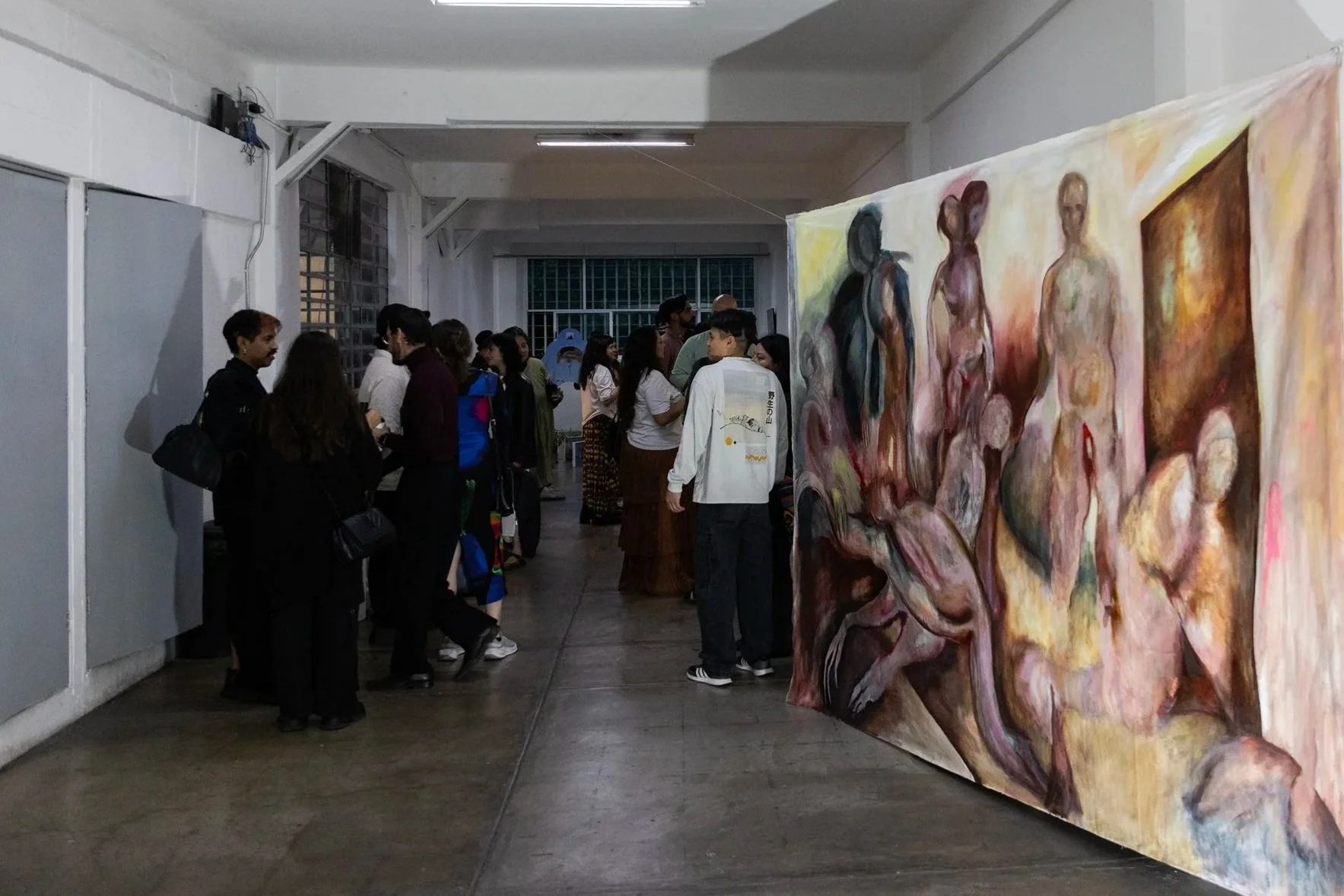
All these impulses and forces gave rise, in the 14 commitments of the 14 participants, to the possibility of thinking that, although painting may seem an anachronism in the face of contemporary digital media, it of course possesses a fertility that goes far beyond the strict boundaries of technique. For painting is, ultimately, that bridge and manifestation, a trace that connects the present with illusions of change and with the infinite possibilities of imagination, healing, repair, and hope. Today, at this Open Studio, we present the tangible fruits of this shared work, a living testimony to what it means to inhabit and rethink painting from the present.
olgaMargarita dávila